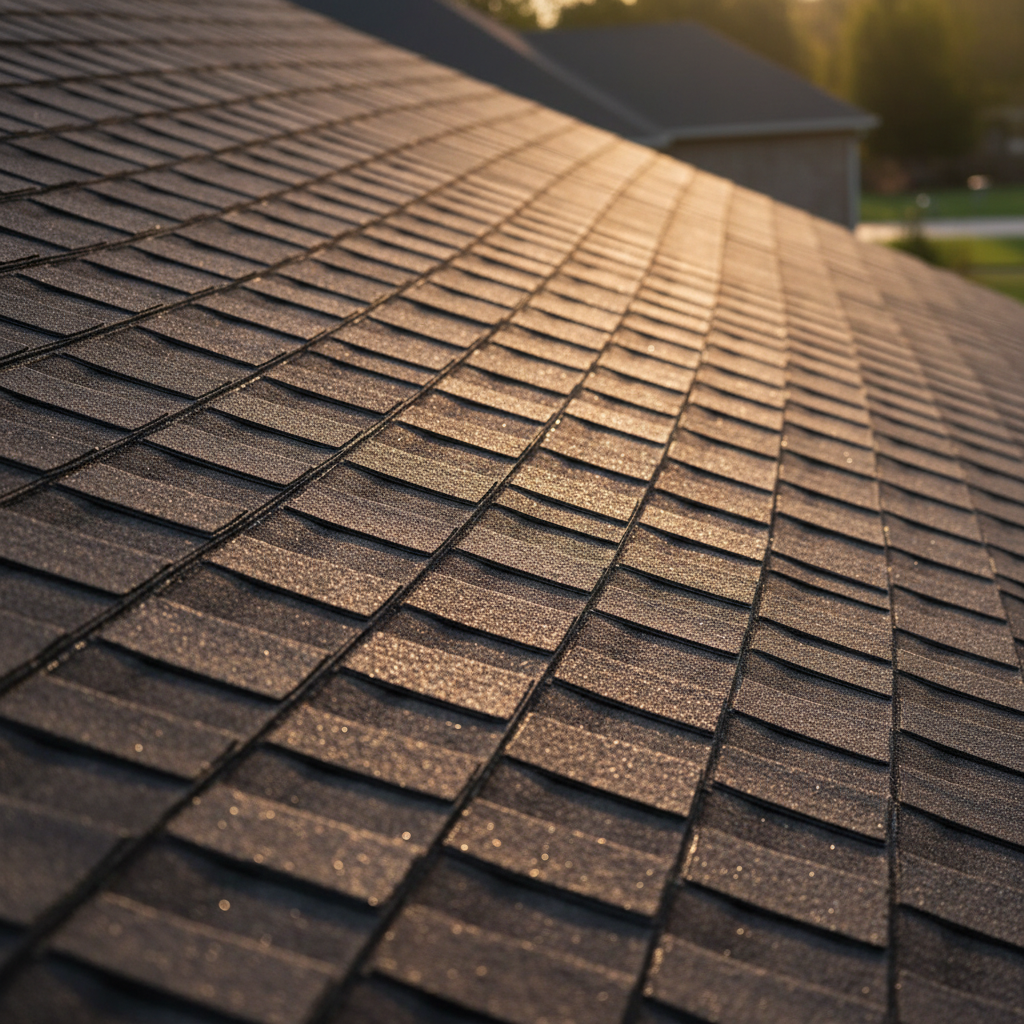
Will you get on my roof, and if so, how do you avoid cracking shingles or scuffing shingles? A reputable company will only walk it when conditions make it safe and low-risk. When they do, they’ll use controlled steps and techniques that minimize scuffs and granule loss.
If you’re in coastal North Carolina, you already know a roof can look fine from the yard and still hide the one problem that turns into a leak. You also know how fast dew or wind can turn “just take a look” into a slip hazard or a bunch of fresh scuff marks. This guide lays out the go/no-go criteria a pro should cover before anyone climbs up. It also covers how pros walk asphalt shingles carefully, and what you should get instead (photos or drone shots) when walking isn’t the right call, since each step wears granules down.
Will Roofers Walk on My Roof?

You hire someone to “take a quick look,” and an hour later you’re staring at fresh scuff marks and a little pile of granules in the gutter, with no clear answers about what they checked.
Sometimes, yes, but a reputable company won’t treat roof-walking as a given. Walking on asphalt shingles always moves some granules, so the standard is whether they limit and control contact and can explain when they won’t step on the roof at all, as noted by InspectApedia.
Before anyone climbs up, the contractor should spell out the go/no-go criteria, including pitch, surface moisture (morning dew counts), and required safety gear, plainly, since roof-walking is commonly treated as conditional in inspection guidance (see InspectorWatch). Anything less is unacceptable, and Consumer Reports ratings can help you vet who follows those basics. If they can’t name the conditions that trigger a ladder view or binocular/drone photos, they’re improvising and your shingles pay for it.
A thorough inspection can still document problem areas with date-stamped photos and notes even when conditions make roof-walking a bad idea. Read more in our article: [Typical Roof Inspection]
The Go/No-Go Checklist for Walking
A careful crew shows up early, checks the dew line, and switches to photos from the ladder without turning it into a big deal. A sloppy one climbs anyway, then tries to explain away the marks as “normal.”
Morning dew and coastal humidity can make an asphalt shingle surface slick even when it hasn’t rained, which is why pros often switch to ladder or drone documentation. Read more in our article: [Salt Air Humidity Shingles]
When you’re evaluating a company, don’t judge them by whether they “always get up there.” Judge whether they can explain when they won’t step on it. In coastal NC, treating every roof day the same is how you end up with asphalt shingle roof scuffing. Let’s not make a mountain out of a molehill, but one wrong step can crease a shingle like a bent playing card.
Granules in gutters aren’t always a crisis, but they are a measurable signal that abrasion or aging is accelerating on asphalt shingles. Read more in our article: [Granules In Gutters]
| Scenario | Typical conditions | Approach | What you should get (deliverables) | Key limits to understand |
|---|---|---|---|---|
| Green light (limited, careful walking) | Dry surface; mild temps; good traction; reasonable pitch; clear purpose for each step | Limited, careful walking with controlled steps | Photos/video of inspected areas; notes on findings | Walking still causes some granule movement; quality depends on minimizing/timing contact |
| No-go / ladder- or drone-only | Morning dew or recent rain; strong winds; very hot shingles in full sun; steep pitch; brittle/aged tabs; any area requiring twisting/sliding/dragging feet | Ladder-based viewing, binocular/drone photos, and roof inspection without walking on roof via limited-contact checks | Date-stamped photos/video of main slopes and penetrations (pipe boots, vents, chimney flashing) and any concern areas; ladder-based edge check of shingle edges, gutters, and flashing | Photos can show lifted tabs, missing shingles, and obvious flashing issues, but they will not confirm every soft spot or subtle fastener issue without hands-on access, and that’s why Nextdoor contractor picks alone are not enough. |