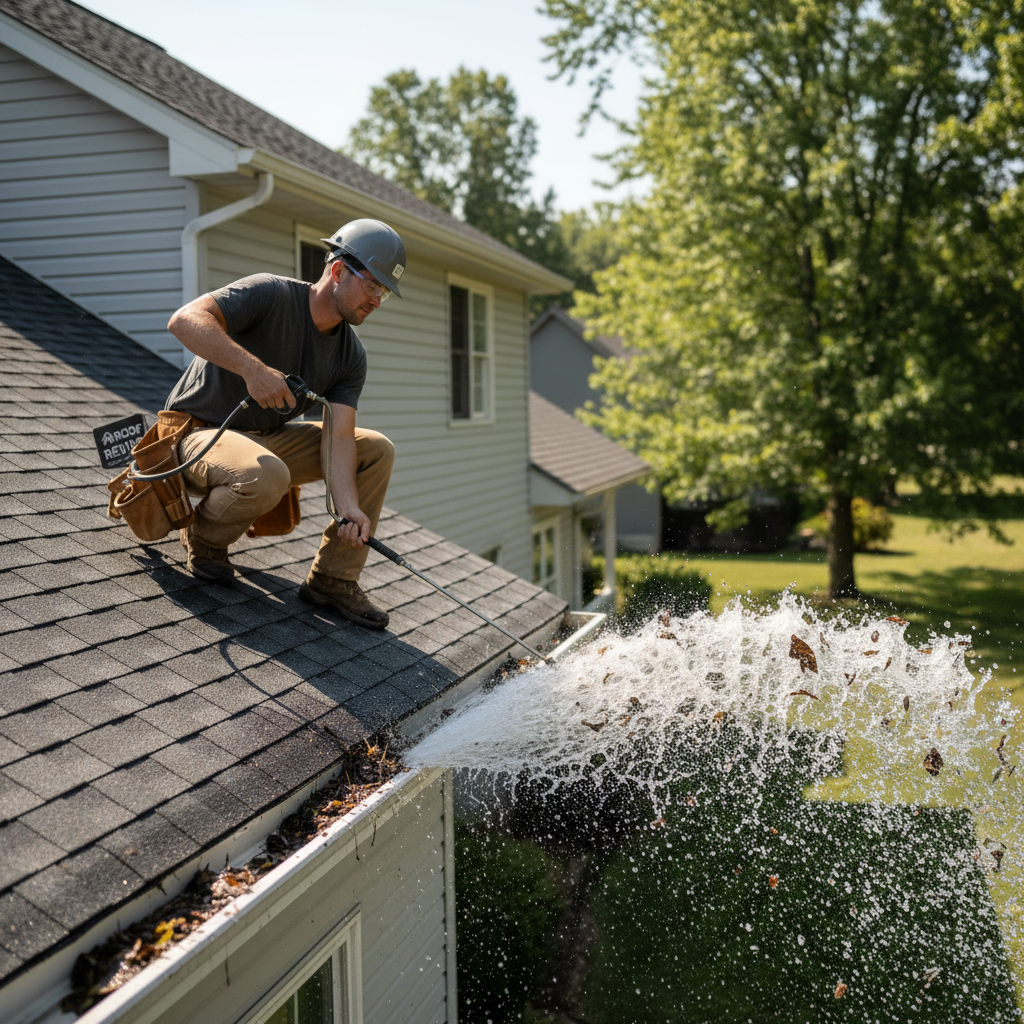
You’re usually looking at about 24–48 months of a noticeably cleaner roof after a professional soft wash. In coastal North Carolina (Wilmington and nearby beach communities), 2–3 years is a more realistic expectation for many homes because humidity and salt air help staining return sooner.
If you’re staring up at the shingles and wondering whether the job “worked,” you’re not alone. Soft washing moves on two timelines: the treatment kills algae and mildew quickly, and then weather cycles gradually bring the roof back to a fully even look, especially in valleys or on north-facing slopes (it’s common for remaining growth to loosen and weather off after rain/sun cycles; see softwash before-and-after results). In this guide, you’ll see what “normal” looks like in the weeks after treatment. It is a measure twice, cut once checklist for 3, 12, and 24 months.
How Long Should My Roof Stay Clean?

Most professionally soft-washed roofs stay noticeably cleaner for about 24–48 months, in other words, soft wash roof how long does it last is usually measured in years (a range many providers cite, though it varies by environment; see 24–48 month soft wash results), but in coastal North Carolina, many homes land closer to 2–3 years because warm humidity, shade, and salt-air moisture help algae recolonize faster.
“Clean” still plays out in stages: the growth may be neutralized fast, but visual uniformity can lag until a few rain and sun cycles finish the job, which is the roof cleaning treatment time to work most homeowners miss. Consumer Reports home improvement guidance is clear about this kind of lag. If you expected a perfect, same-day “new roof” look that lasts four years, that expectation is just wrong.
Why Wilmington Roofs Re-Stain Sooner
You finally get that dark streaking off, and a few months later the north side starts looking dingy again, a common roof cleaning in coastal climate pattern. In a coastal climate, that isn’t automatically a failed cleaning, it is the environment doing what it does.
Along the Wilmington coast, your roof often stays wet longer and dries out more slowly (coastal environments commonly have elevated humidity and moisture that keep surfaces wetter; see coastal environment moisture factors). Overnight dew and persistent humidity can leave shingles damp well into late morning. That gives algae a head start even after it’s been killed. Add shade from live oaks or pines, and the north-facing slope becomes a slow-dry zone where staining returns first.
Salt air makes this worse by leaving a thin film that holds moisture and airborne grime. It becomes a money pit for curb appeal in soundside and beach communities. If you expect the same “stays clean” window as a drier inland town, you’ll read normal coastal regrowth pressure as a bad job.
In coastal NC, humidity plus salt film can keep shingles damp longer, which is a big reason algae and staining return faster even after a good soft wash. Read more in our article: Salt Air Humidity Shingles
Clean-Looking vs Killed-and-Protected

A soft wash can be “working” even when your roof doesn’t look photo-ready yet, this post treatment roof appearance timeline is normal. Clean-looking is the immediate cosmetic result, killed means the algae/mildew (and some moss/lichen) is dead, and protected means the treatment left enough residual effect to slow how fast new growth grabs on.
By way of example, a bid that promises an instant rinse-and-reveal may look better on day one, but that is the wrong way to judge value. Angi (formerly Angie’s List) contractor reviews/estimates often over-reward that day-one shine. When comparing quotes, ask what they’re optimizing for: same-day appearance or long-term inhibition.
If your roof still looks uneven after treatment, that often improves as dead growth loosens and washes away over a few rain-and-sun cycles. Read more in our article: Roof Treatment Appearance
What to Notice at 3, 12, 24 Months
A homeowner takes the same three photos after every season change, then notices the first faint streaks returning in one shaded corner long before the rest of the roof changes. That simple habit makes it easy to tell normal fade from a spot that truly needs a re-check and to track overall roof treatment longevity.
| Time after soft wash | What’s normal | What’s not normal / action |
|---|---|---|
| 3 months | A few stubborn spots (especially valleys or north side) still fading after rain and sun cycles, like tide lines that fade a little more with each rain | Sharp, untouched black streak “stripes” matching spray reach, or large patches that never changed; take photos and ask for a re-check |
| 12 months | Roof looks broadly even; first hints of return usually start in shaded corners | , |
| 24 months | Light streaking in slow-dry zones is common (coastal NC) | Widespread dark staining across sunny slopes; schedule an inspection and discuss a maintenance treatment |
How to Choose a Treatment Plan
You want a plan that keeps the roof looking steady without paying for full cleanings on a panic schedule, i.e. roof cleaning how often is worth doing. The right cadence depends less on the last invoice date and more on the few places where regrowth always shows up first.
If your roof is mostly sunny with few overhanging trees, plan on a 2–3 year maintenance cycle and just keep photo-checking the valleys and north slope each season (sun exposure vs. shade is a common predictor of how long roofs stay clean; see site factors that affect soft-wash longevity). If you’re in heavy shade or near the water, budget for a lighter re-treatment around 12–24 months instead of waiting for the whole roof to go dark.
Book an inspection (not just another cleaning) if staining returns across sunny slopes within a year. Take the Atlantic hurricane season forecast mindset here, and follow a checklist for the same stubborn patches and granule loss (especially if you’re asking is soft washing safe for shingles). Waiting until it looks awful is just kicking the can down the road.
A predictable re-treatment cadence is usually cheaper than waiting until the whole roof looks dark again and then paying for a full cleaning. Read more in our article: Roof Cleaning Schedule
Roof not getting any younger? Contact us or call 703-673-6301 to find out where you stand.If the streaks are winning, our soft wash roof cleaning in Wilmington resets the roof in a single visit.