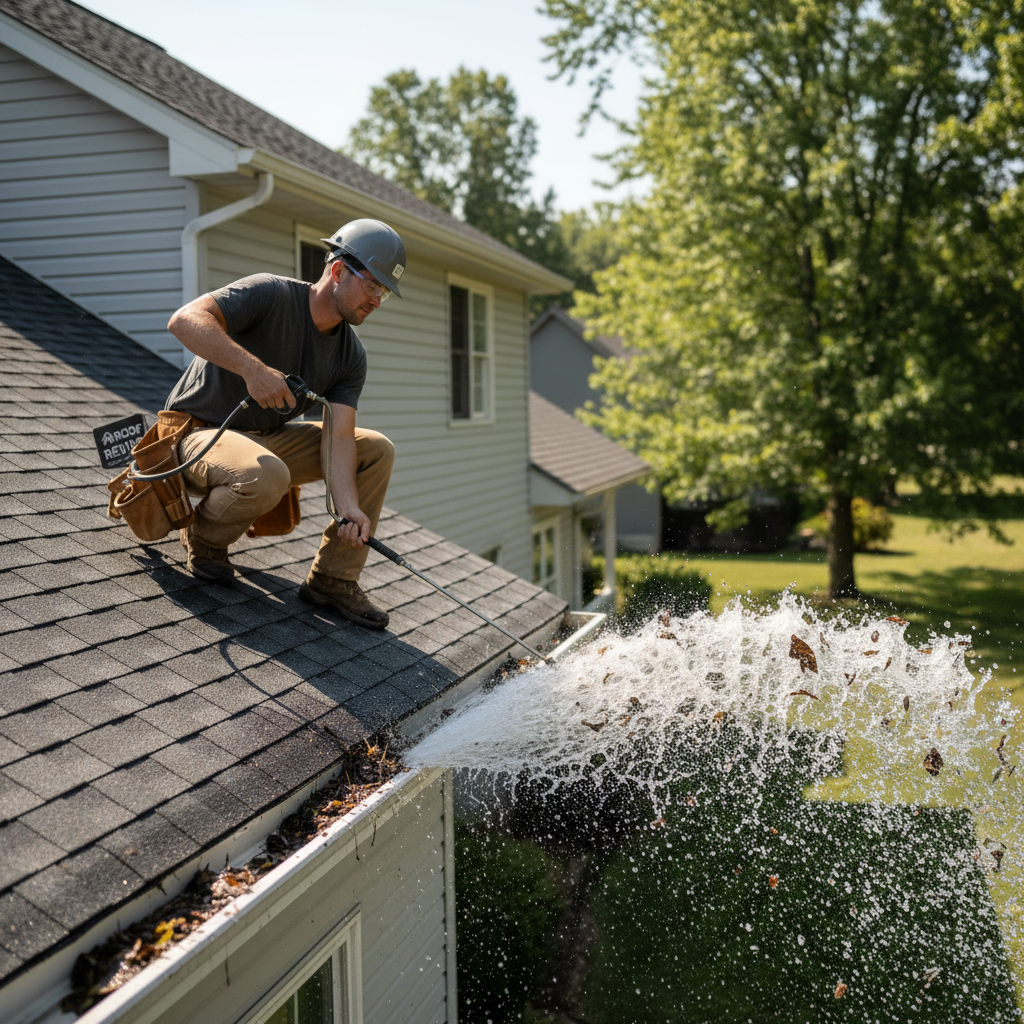
Does soft-washing help with roof leaks, or is it only for looks? Soft-washing mainly improves appearance and removes organic growth. It won’t repair the entry points that cause most leaks.
If you’re in Wilmington and you’re seeing black streaks or moss and you’ve also got a ceiling stain or drip, you’re probably trying to solve two problems at once. This guide separates them so you don’t waste money or make things worse: what soft-washing can and can’t solve, and what to do first when water’s getting in. It also explains why leaks sometimes show up during or after washing and what to ask a roof cleaner so “power washing” marketing doesn’t turn into forced water where it doesn’t belong.
| What you’re noticing | Soft-washing helps? | Likely issue | Best next step |
|---|---|---|---|
| Black streaks/algae, mildew film, light moss; no ceiling stain | Yes | Organic growth on shingle surface | Soft-wash for maintenance/appearance |
| Ceiling stain, damp drywall, or active dripping (any roof appearance) | No | Water-entry point (flashing, pipe boot, lifted shingle, etc.) | Inspection + targeted repair before any cleaning |
| Leak seems to “start” during/after washing | No | Existing weak spot revealed by soaking/sideways water | Stop washing; have a roofer trace and repair the entry point |
| Roof recently repaired and you want it to look clean / monitor surface | Yes | Staining/film remains after leak is fixed | Schedule soft-wash after repairs; expect periodic retreatment |
What Soft-Washing Can and Can’t Solve

Soft-washing helps when your “problem” is biology: black algae streaks or mildew film and the slick grime that builds up fast in Wilmington’s humid, salty air that sticks like sea spray on a docked boat. It can make an aging asphalt shingle roof look dramatically better and reduce organic buildup that holds moisture against the surface.
Soft-washing won’t stop leaks because the usual failure is at a water-entry detail, not on the stained shingle face. It can’t reseal a cracked pipe boot, and it won’t restore failing chimney flashing. If you’re seeing a ceiling stain or active dripping, treating the roof like it’s a dirty driveway is a band-aid fix that leaves you paying for a cleaning and still calling a roofer later.
If You Have an Active Leak, Do This First
You can spend money on a wash and still end up with a bigger ceiling repair if water keeps feeding the stain from above. Stop the entry point first; deal with streaks after.
Begin indoors. Move valuables and catch dripping water so you don’t end up with a bigger drywall collapse. Then take clear photos of the stain or drip. Note when it happens (hard rain or wind-driven rain) so a roofer can trace the path faster.
Next, schedule a roof leak inspection Wilmington NC and targeted repair before any roof cleaning. If anyone argues, that is flat-out backwards advice. Wetting the roof, even gently, can push water into marginal flashing or lifted shingles and make the leak seem “new” or worse. If your goal is to spend wisely, don’t pay for a wash until you’ve stopped the water, no matter what Angi (formerly Angie’s List) listings promise.
In many cases, a quick inspection can pinpoint common leak sources like pipe boots, chimney flashing, and lifted shingles before any cleaning is scheduled. Read more in our article: Roof Inspection Wilmington Nc
Why Leaks Show Up During or After Washing

A homeowner books a “gentle roof wash,” and that night a drip shows up in the same room that has been fine for years. It feels like cause and effect until you look at how water can be pushed where rain rarely goes.
When a leak shows up during or right after a wash, it’s often exposure of an existing weakness rather than new damage. The soak pattern is different from rain, so a marginal detail can finally show itself. It is like a hairline crack that opens only under a hard flex, especially on older shingles and tired flashing.
To illustrate this, a wand or nozzle can send water sideways or upward. This “forced water intrusion” risk is a common reason many roofers warn against pressure washing roofs. It can do a quick once-over of your defenses by driving water under a lifted shingle edge or behind chimney flashing, places rain usually hits from above and sheds off. That timing can fool you into blaming the wash when the real issue was a marginal detail waiting to fail.
Even “gentle” washing can push water into vulnerable details like vents and chimneys if those seals or flashing are already marginal. Read more in our article: Roof Leaks Chimneys Vents
When Soft-Washing Is Still Worth Doing
After the leak is repaired, you get to make decisions with clear eyes instead of guessing through grime and streaks. A proper soft-wash can reset the roof’s appearance so changes are easier to spot over time.
Soft-washing is worth doing when the roof is watertight and your goal is maintenance or appearance, not leak repair. Pretending otherwise is just wishful thinking. For instance, after a roofer replaces a cracked pipe boot or resets flashing, a soft-wash can remove algae streaks and mildew film so you can see the shingle surface and track future changes. It also makes sense as periodic upkeep on coastal North Carolina roofs where humidity and shade keep organic growth active, especially if you are basing your timing on Nextdoor neighborhood recommendations.
Just don’t confuse “looks new” with “is fixed.” What you should expect is biological growth control. You should expect a cleaner-looking roof that typically needs retreatment every few years (often around 2–5), not a permanent reset. If you’re planning it, schedule cleaning after repairs and treat it like routine exterior maintenance, the same way you’d plan gutter cleaning or siding wash cycles.
If algae or moss comes back quickly, it’s often because shade, humidity, and roof run-off patterns keep feeding regrowth between cleanings. Read more in our article: Prevent Algae Moss Return
What to Ask a Roof Cleaner in Wilmington
Most roofs that look great after a wash start to show regrowth again within about 2–5 years, which is why the process matters more than the sales pitch. The right questions keep “soft-wash” from turning into water pressure where it does not belong.
If you’re hiring cleaning after repairs, don’t let “power washing” language slide, soft wash vs pressure wash roof matters, because chasing a whiter roof can turn into forced water where it doesn’t belong, like a garden hose shoved into the seams of your roof. A legit soft-wash operator should be willing to walk you through the process. They should answer the following clearly
Ask: “What PSI will hit my shingles (roof work typically isn’t over 500 PSI, often far lower)?” (See one trade definition of soft washing at or below 500 PSI.) “How do you apply chemical and control dwell time?” Ask: “What roof conditions make you stop and recommend a roofer (lifted shingles or failing flashing)?” “Can you show proof of liability insurance and workers’ comp?”
Roof not getting any younger? Contact us or call 703-673-6301 to find out where you stand.Rather than rent equipment, book our soft wash roof cleaning in Wilmington and let the crew bring the right pressure and chemistry.