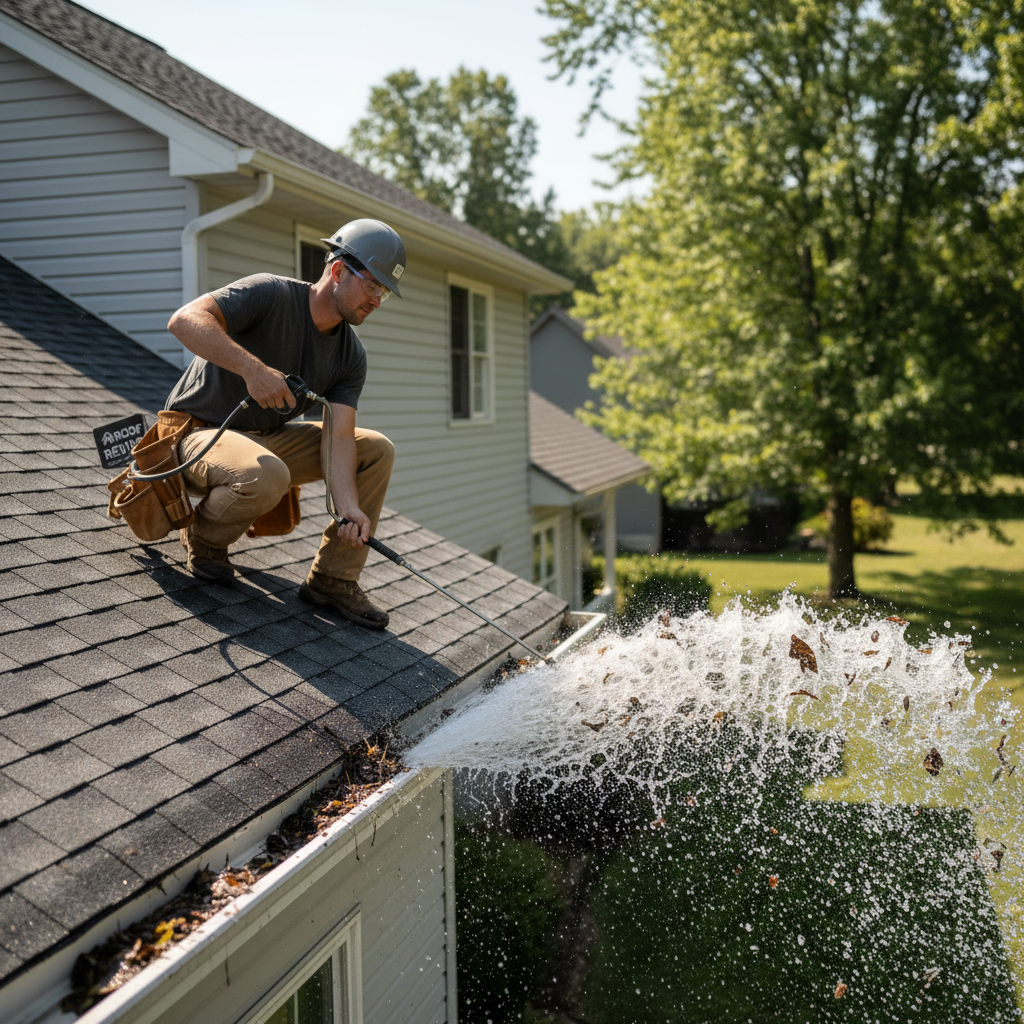
Will roof cleaning stop algae and moss from coming back, and for how long? It won’t stop it permanently, especially around Wilmington. In most cases, you get a couple of years before it shows up again.
How long you get depends on what you mean by “back” and whether you kill the growth or just wash off what you can see. In the sections below, you’ll learn why coastal NC roofs regrow faster and what prevention add-ons like zinc or copper strips can and can’t realistically do.
| What you’re measuring | What to expect | Typical timeline (from draft) | What can shift it sooner |
|---|---|---|---|
| “Back” = first faint shadowing | Light discoloration can reappear before growth is active again | Often within a couple of years | North-facing shade, damp hours, debris in valleys/dormers |
| Soft-wash biological kill | Organisms can be neutralized quickly even if stains remain | 24–72 hours | Under-treatment, short dwell time, rinse-only approaches |
| Roof looks clean again (stain/residue fade) | Visual cleanup often lags the kill and improves with weathering | 30–90 days | Low rainfall, heavy shade, judging by same-day curb appeal |
| Maintenance re-treatment (coastal NC) | Expect periodic upkeep rather than permanent prevention | Every 2–4 years (most roofs) | Shaded/north-facing planes may need sooner intervals |
What “coming back” actually means

You can do everything “right” and still end up arguing about whether the roof is already dirty again. The frustration is usually a definition problem, not a cleaning problem.
When you ask how long roof cleaning lasts, you need to pick the measuring stick. Are you talking about the first faint shadowing on the north side or actual living moss that’s holding moisture and forming clumps?
For example, in an HOA neighborhood, you might call it “back” the moment light gray shading reappears near the ridge. But for roof health, the more meaningful threshold is when you see textured, raised growth or green patches that stay damp. If you don’t define this up front, a “3–5 year” claim can sound like a promise. It can act like a misunderstanding.
Why Coastal NC Roofs Regrow Fast
A homeowner in Wilmington cleans the roof in spring, then by the next damp season the north slope starts ghosting over again while the sunny side still looks fine. Same roof, same year, two completely different drying schedules.
Around Wilmington, algae and moss don’t “come back” because a cleaning failed—this is the reality of coastal roof algae prevention. The real driver is moisture time: your roof stays wet longer, so regrowth starts sooner. Coastal humidity and frequent dew keep shingles biologically active for more of the year, so any remaining spores recolonize faster.
The biggest accelerators tend to be shade and orientation (the north-facing plane that never really dries), plus debris like pine needles and leaf grit that stays lodged in valleys and behind dormers. If you’re assuming one treatment should match a drier inland timeline, you’re setting yourself up to be wrong. Even Nextdoor neighborhood groups can’t vote coastal humidity away.
Coastal salt air and consistently high humidity can keep shingles damp longer, which shortens the window before algae shadowing shows back up. Read more in our article: Salt Air Humidity Shingles
Soft-wash longevity: kill vs clean

Technical soft-wash guidance is blunt about the mismatch between biology and curb appeal: the kill can happen in 24–72 hours, while the roof may take 30–90 days to look fully bright again as weather does the last part—roof cleaning treatment longevity is often misunderstood. If you expect those to happen on the same timeline, every treatment will feel like it “didn’t last.”
Think of soft-wash as two separate timelines: biological kill first, visual improvement later. With a typical soft-wash, the kill often lands in the 24–72 hour window. The staining and dead residue often need 30–90 days of rain and weathering to fade, like a tide line slowly washing out.
If you judge success by same-day curb appeal, you’ll call a good treatment “temporary” when it’s still doing its job. That is good enough for government work, not for your roof. Case in point: that north-facing plane may look only slightly better for a few weeks, even though the growth is already inactive and drying out.
The Method Choice That Changes Outcomes
You want the kind of clean that stays boring for longer, not the kind that looks perfect for the weekend photos and then starts coming back. The difference is usually process discipline, not the label on the bid.
The biggest swing factor is whether you’re killing the organisms or just moving them. A proper soft-wash relies on a low-pressure chemical dwell. If a contractor on HomeAdvisor or Angi can’t explain their 15–20 minute target, that is a red flag (see ARMA’s algae discoloration guidance). That tends to buy you longer before shadowing returns, especially on older asphalt.
A pressure wash or “rinse-only” cleaning can look amazing the same day. It is the wrong choice for most algae and moss problems on shingles. If your priority is a fast, photo-ready roof for an HOA letter, you can accidentally pay for a quicker comeback and a shorter roof life.
Low-pressure soft washing is designed to treat roof algae at the source without the shingle damage risks that come with high pressure. Read more in our article: Soft Wash Roof Cleaning
The Hidden Tradeoff: Rinsing vs Residual Protection
A detail most homeowners never hear: the more you “chase a perfect look” with aggressive rinsing, the more you can reduce the residual inhibitor that helps slow regrowth (as noted in technical softwash guidance). Some soft-wash approaches rely on proper dwell time (often around 15–20 minutes) and then let rain finish the cleanup over time. Heavy rinsing right away can strip the inhibitor, so the effort can backfire.
If you want a result that stays inhibited, ask your contractor
-
What dwell time do you target before any rinse?
-
Do you rinse for appearance, or do you leave product to weather off when appropriate?
-
If you do rinse, how do you balance plant protection and runoff control without stripping the residual that slows regrowth?
Prevention Add-ons That Actually Help

If you are hoping for a one-time upgrade that means you never think about algae again, this is where people most often overbuy and underget. The hardware can help, but it will not rewrite your roof’s shade and moisture reality.
Zinc or copper strips can extend the time between cleanings, but they don’t erase what’s already on the roof—think of a zinc strip for roof algae as a helper, not a reset button (per GAF’s zinc strip instructions). They work by releasing metal ions that wash down with rain and make the surface less friendly to algae and moss, so they’re best as a follow-up after you’ve killed existing growth.
The catch is coverage. It is six of one, half a dozen of the other. If your roof runs more than about 14 feet down-slope from the ridge, a single ridge strip may not protect the lower courses, and regrowth can still show up there unless you add another strip mid-slope. If you’re thinking “I’ll install strips and never deal with this again,” you’re buying a weekend-aisle myth from Lowes or Home Depot. You’ll likely be disappointed, especially on shaded north-facing planes.
Most long-term prevention plans in coastal climates still involve periodic touch-ups, plus steps that reduce shade and keep roof valleys free of debris. Read more in our article: Prevent Algae Moss Return
Your Re-treatment Plan vs Roof Replacement
A couple compares a $300 re-treatment to a five-figure replacement and assumes the cheaper choice always wins—this roof cleaning vs roof replacement decision depends on roof condition. The smart move depends on whether you are maintaining a sound roof or cosmetically propping up one that is already failing.
If your shingles still have solid granule coverage and lie flat, treat roof cleaning like exterior maintenance. You spend money to save money. In coastal NC, plan on a light-touch soft-wash re-treatment every 2–4 years for most roofs, and sooner on north-facing planes where the first shadowing shows up. If you wait until you see thick clumps again, you’ll always pay more and get less time back.
Stop spending money on cleaning and start pricing replacement when the roof shows age-related failure. Then you’re paying for delay, not solving the underlying problem. A cosmetic clean can also mask a roof that’s already beyond maintenance.
Roof not getting any younger? Contact us at Contact us or call 910-241-1152 to find out where you stand.