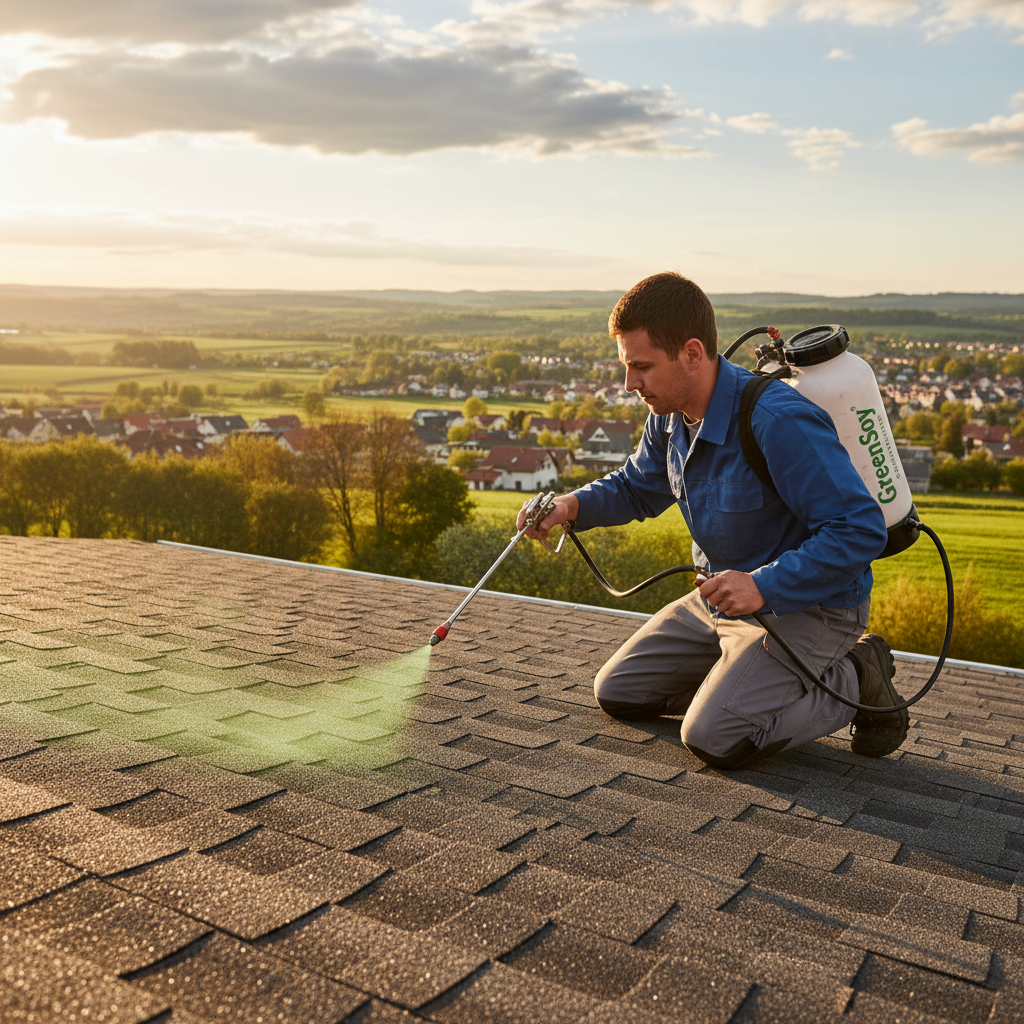
If you’re considering roof rejuvenation in Wilmington, you’re probably not looking for marketing lines about “restoring” shingles. You want to know what you’ll see afterward, what should change in the first week versus the next storm season, and how to tell whether the treatment bought you time or just made the roof look better.
This guide breaks roof rejuvenation results into signals you can observe. It covers cosmetic shifts and performance clues.
| Timeframe | What you can observe | What it can suggest |
|---|---|---|
| First 1–2 days | Darker/richer shingle color; lighter algae streaking; roof looks more even | Mostly cosmetic change; not proof of leak prevention |
| First week | Less dry/dusty granules showing up in gutters/downspouts; edges feel slightly less brittle | Possible conditioning of the surface layer; still not a system repair |
| Next storms / months | Fewer new cracked tabs; fewer new granules after storms; no new attic/ceiling water spots after hard rain and wind | Better real-world performance if the roof system details are sound |
| Any time (red flags) | Water spots/musty attic after rain; flashing gaps; nail pops; failed seal strips | Leak pathways or system failures that rejuvenation won’t fix |
You’ll also get a clear “candidacy window” for coastal asphalt shingles. Not gonna lie, that window can shut fast in salt air.
Results You Can Observe

Right after rejuvenation, the easiest roof rejuvenation before and after changes are cosmetic. So read that early change as appearance, not protection. Up close, you may also notice less dry, dusty granule shedding in gutters and at downspouts. Shingle edges can feel slightly less brittle.
What you can’t reliably “see” is leak prevention, no matter what Consumer Reports-style checklists you run. A better-looking roof can still have flashing gaps, nail pops, or failed seal strips. Real performance shows up over months: fewer new cracked tabs and no new water spots in the attic or ceilings after hard Wilmington rain and wind.
Your Roof’s Candidacy Window
Two Wilmington roofs can look equally “tired” from the street, yet one takes a treatment well and the other leaks on the first wind-driven rain because the real weak point was never the shingles.
Roof rejuvenation tends to deliver its best, most noticeable “buy-you-time” results when your asphalt shingle roof is aging but still structurally in the game. In practice, that’s often around the 10–15 year mark. Past that, you may be kicking the can down the road. Coastal Wilmington conditions can shorten that window. It’s like a lifeguard flag going from yellow to red fast.
Once a roof is pushing roughly 20–25 years old, results get much less predictable because you’re no longer dealing with “drying out” so much as “coming apart.” Even after a visible cleanup, a first wind-driven rain can still find flashing or seal-strip failure and leak. If you’re using appearance as your main eligibility test, you can end up treating the wrong problem.
A quick candidacy gut-check you can do before you spend money (signs you need roof rejuvenation): you’re in the likely-to-respond window when you see age and minor wear, not active failure.
In coastal Wilmington, salt air and humidity can accelerate shingle aging, which is why some roofs lose their “good candidate” window earlier than homeowners expect. Read more in our article: Salt Air Humidity Shingles
-
More likely to respond: shingles lie flat, tabs aren’t curling, you see only isolated small cracks, granule loss is light-to-moderate (not bare fiberglass), and you’re not chasing recurring leaks.
-
More likely to disappoint: brittle tabs that snap when lightly flexed, widespread cracking/crazing, frequent blow-offs after coastal wind, exposed mat, sagging decking lines, or repeated interior water spots after heavy rain.
The First 30 Days After Treatment

You want the next hard rain to feel like a test you’re prepared for, not a guessing game you’re doomed to lose. A little documentation now makes the difference between real confidence and false reassurance.
Expect the earliest shift to show up in how the roof looks, not how it performs. If Nextdoor says it “looks amazing,” remember that’s still just looks. What you won’t prove in 30 days is whether you “fixed” leaks (can roof rejuvenation stop leaks) or bought years of life. Mistaking that visual pop for performance can hide unchanged weak points like flashing, fasteners, and seal strips.
Create a baseline now so you can evaluate the next storm season against it. Take wide photos and close-ups and check the attic after the first hard Wilmington rain.
A simple attic check after heavy rain is one of the fastest ways to confirm whether leaks are still active even if the roof looks improved from the street. Read more in our article: Early Roof Leak Signs
What Rejuvenation Will Not Fix
Picture a roof that looks freshly “restored” from the curb, then you notice a new ceiling stain two weeks later. That swing usually traces back to a system detail the treatment didn’t change.
Roof rejuvenation may condition the shingle surface, but the roof system stays the same. It doesn’t reseal failing flashing at chimneys and walls or replace missing or torn shingles.
Most post-treatment disappointment comes from thinking the shingles were the problem when the real failure point was flashing, penetrations, or a small repair that didn’t address the leak path. Read more in our article: Damaged Shingles Flashing
That matters because Wilmington-style wind-driven rain finds the weakest detail. It’s like a chain that only holds at its weakest link. A dark, even look from the street can distract from a single failure point, like a lifted flashing edge, a failed pipe boot, or a seal strip that never re-bonds.
Rejuvenation vs Replacement Decision
Many rejuvenation programs are marketed as adding up to about five years per treatment and often come with a 5-year warranty. That sounds concrete until you price what you’re paying per year of reduced risk.
If you want one lens that cuts through the sales pitch, use cost-per-year of risk reduction, not before-and-after photos. Take your roof rejuvenation cost quote and divide it by the credible added life you’re buying (often marketed as up to about five years per treatment). Compare it to replacement, which buys a new roof system plus storm-readiness from new underlayment, flashings, and clean detailing.
Rejuvenation usually makes sense when your roof is still performing and you’re paying to slow aging; replacement makes sense when you’re paying to eliminate failure risk before the next Wilmington storm season. Before you decide, read the warranty like a contract: confirm the term (often five years) and whether it’s transferable. If the numbers look great but leak pathways stay active, it’s not worth the money. You’re renting surprise repairs.
Roof not getting any younger? Contact us or call 703-673-6301 to find out where you stand.For a local answer instead of a national average, HardShore’s roof rejuvenation in Wilmington quotes free with no pressure.