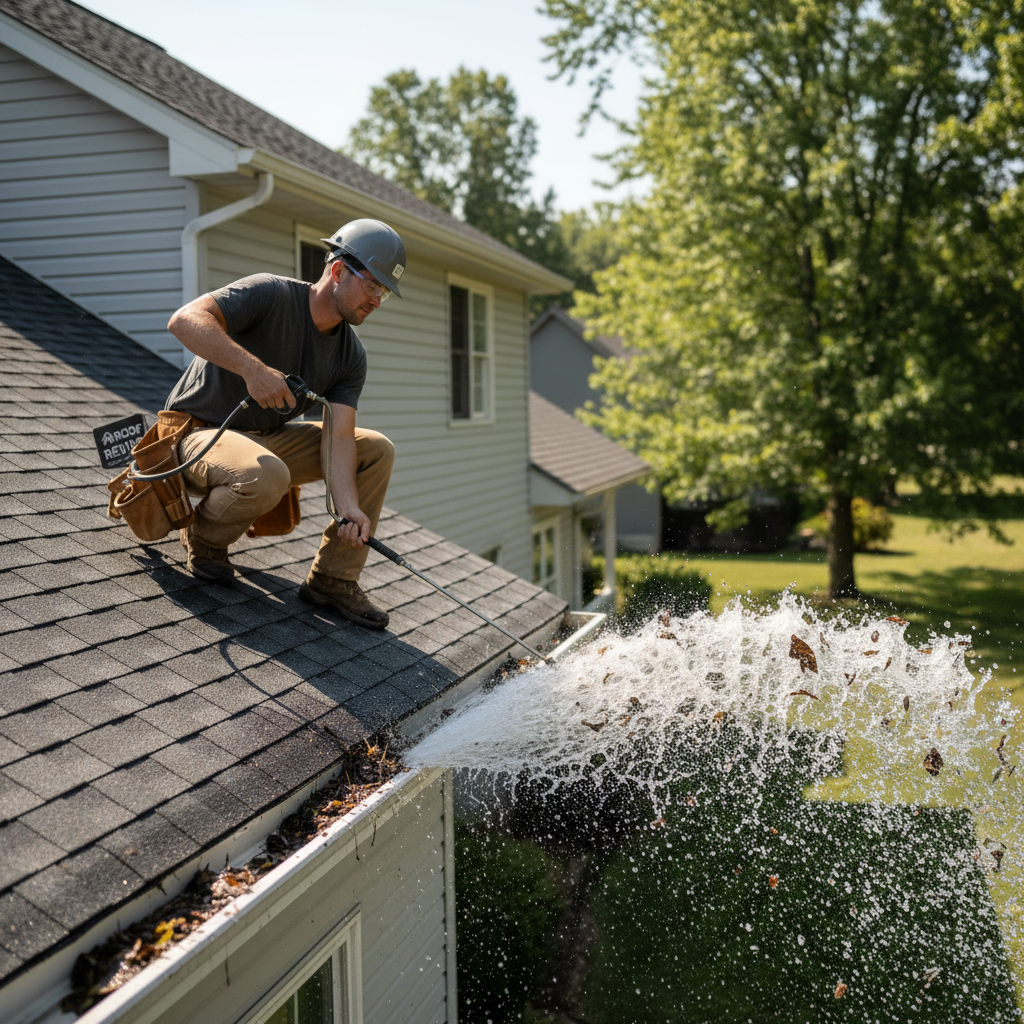
Yes, it can, if you’re dealing with living growth, not shingle failure. Black streaks usually fade after a low-pressure, chemistry-first treatment kills the organism. Light moss can improve too, but thick, raised clumps often need more than a simple spray.
The catch is that the same “dirty roof” look can come from totally different roof discoloration causes. The wrong approach can waste money or accelerate wear. In Wilmington’s humid, coastal conditions, the safest wins usually come from treating algae like a roof algae removal kill-and-wait problem (then letting rain and dew cycles do the cleanup), and treating moss like a severity problem (thin film versus pillow-like tufts along seams). This guide will help you match what you’re seeing to what a treatment can realistically do. Think of it like diagnosing a lawn before you spread fertilizer. It will also cover what to ask about pressure and plant protection before you commit. Get three quotes.
| What you’re seeing | Likely cause | What treatment can do | What to expect / watch for |
|---|---|---|---|
| Black streaks (flat staining) | Algae/cyanobacteria | Usually improves after low-pressure, chemistry-first kill | Fades over rain/dew cycles; often 30–90 days |
| Thin green film / light moss | Early moss/light growth | Often improves with soft-wash/rejuvenation approach | Gradual loosening/rinsing; regrowth can happen in humid areas |
| Raised moss “pillows” lifting edges | Thick moss clumps | Spray-only often underperforms; may need gentle removal + biocide | If left in place, dead moss can still trap moisture and look uneven |
| Curling/cracking tabs, bald spots, brittle shingles, leaks | Shingle failure/age wear | Treatment cannot repair shingles or restore granules | Consider repair/replacement; avoid high pressure promises |
What a Treatment Can Fix

Many homeowners buy the fastest “dirty roof” fix available, then learn the stains were biological growth and the shingles paid the price. Getting the diagnosis right is where most of the savings and safety come from.
If your roof is structurally sound, a true soft-wash approach is primarily about killing the organism and letting weather cycles do the visible cleanup over time. Read more in our article: Roof Rejuvenation
Roof soft-wash or rejuvenation treatments are most useful when discoloration comes from living growth. With algae or cyanobacteria, the treatment aims to kill the organism so rain and dew cycles can do the slow cleanup over the following weeks. It can also improve light moss or thin green film, especially in damp, coastal North Carolina conditions where regrowth is common.
What it can’t do is repair shingles. A treatment won’t reattach loose granules. Curling tabs, cracking, and active leaks still require repair work. Anyone claiming otherwise is selling snake oil, not service. Consumer Reports home maintenance buying guides get this right. When shingles are deteriorating or unevenly weathered, cleaning won’t reverse the underlying wear. Use this gut-check instead: raised moss lifting edges or brittle shingles means you’ve moved beyond a simple kill-and-wait approach.
Black Streaks: What to Expect

Industry guidance often puts real results on a very different clock than contractor marketing: black streaks can take about 30–90 days to fade after treatment, not 24–48 hours. That timeline is usually a feature of the safest method, not proof that nothing happened.
Black streaks usually respond well because they’re typically caused by a living organism (often described as gloeocapsa magma roof algae or cyanobacteria), not “dirt” embedded in the shingle. A good low-pressure, chemistry-first treatment works by killing that growth and letting time do the roof cleaning without pressure washing, instead of blasting your shingles to force an instant visual change.
That’s why the roof may not look dramatically different the next day. More often, the change shows up slowly over repeated rain and dew cycles, with full fading commonly landing in the 30–90 day range. If a contractor promises a like-new roof in 24–48 hours, you should ask what they’re doing to create that speed. That “instant result” path is usually where appearance gets purchased with shingle wear. That is a belt-and-suspenders approach in reverse. It is like sandblasting driftwood to make it look new.
Algae-related black streaks are biological growth, so the right expectation is fading over weeks, not an overnight “pressure washed” transformation. Read more in our article: Roof Algae Black Streaks
Moss: When It Works (and When It Doesn’t)

For light moss, soft-wash or rejuvenation treatments tend to perform best while growth is still a thin film or low patchwork with little height. At that point, the solution can penetrate and kill the growth, and later weather can loosen and rinse it away.
But raised moss tufts on moss on roof shingles are a different job. When moss builds into “pillows” along seams or nail lines, it stops behaving like a surface stain. You’re dealing with a spongey layer that holds moisture and physically changes how water moves across the roof. If someone just sprays over thick clumps and calls it done, that’s asking for trouble. The common outcome is dead moss left in place, patchy visuals, and continued moisture retention. Angi (Angie’s List) contractor reviews/quoting flow is full of this exact complaint.
As an example, if you can see moss lifting shingle edges or bridging across multiple courses, many pros will do gentle mechanical removal first (think stiff-bristle brushing, not scraping with a blade), then apply a biocide and give it real dwell time. That sequence matters more than you’ve probably been led to believe by “spray it and it’s gone tomorrow” promises.
What you can do: before you buy any treatment, walk the perimeter and look up at the worst area. Wilmington’s stormwater materials specifically flag cleaning agents from pressure washing/cleaning activities as potential pollutants in runoff, so runoff planning matters. If you see height and clumping, ask the provider exactly how they handle physical removal, how they prevent pushing debris under tabs, and how they’ll manage runoff into gutters and downspouts so you don’t trade a cleaner roof for damaged landscaping or a messy discharge near storm drains.
Thick moss that’s lifting shingle edges often needs a different plan than a simple spray because the clumps can keep holding moisture even after they die. Read more in our article: Eliminating Moss Roofs
Decision Checklist: Is This Worth It for Your Roof?
Ignore the warning signs and it is easy to pay for a “quick fix” that swaps cosmetic improvement for runoff headaches, plant damage, or shingle wear you cannot undo. A few clear yes-or-no checks up front can keep the project from turning into an expensive rerun.
You should consider treatment if you’re mostly seeing black streaks or a thin green film on shingles that still look structurally sound (no widespread cracking/curling or bald, granular loss). Expect gradual improvement (often weeks, sometimes 30–90 days), not a next-day makeover. If you need instant “like new,” you’re more likely to pay for pressure and wear.
You should pause or skip it if moss is raised and lifting edges, the roof feels brittle or near end-of-life, or runoff is hard to control (downspouts dumping onto beds or toward storm drains). Red flags: promises of 24–48 hour perfection and vague answers about pressure used. That is kicking the can down the road. It is like sweeping grit into the gutters and hoping it vanishes.
Roof not getting any younger? Contact us or call 703-673-6301 to find out where you stand.