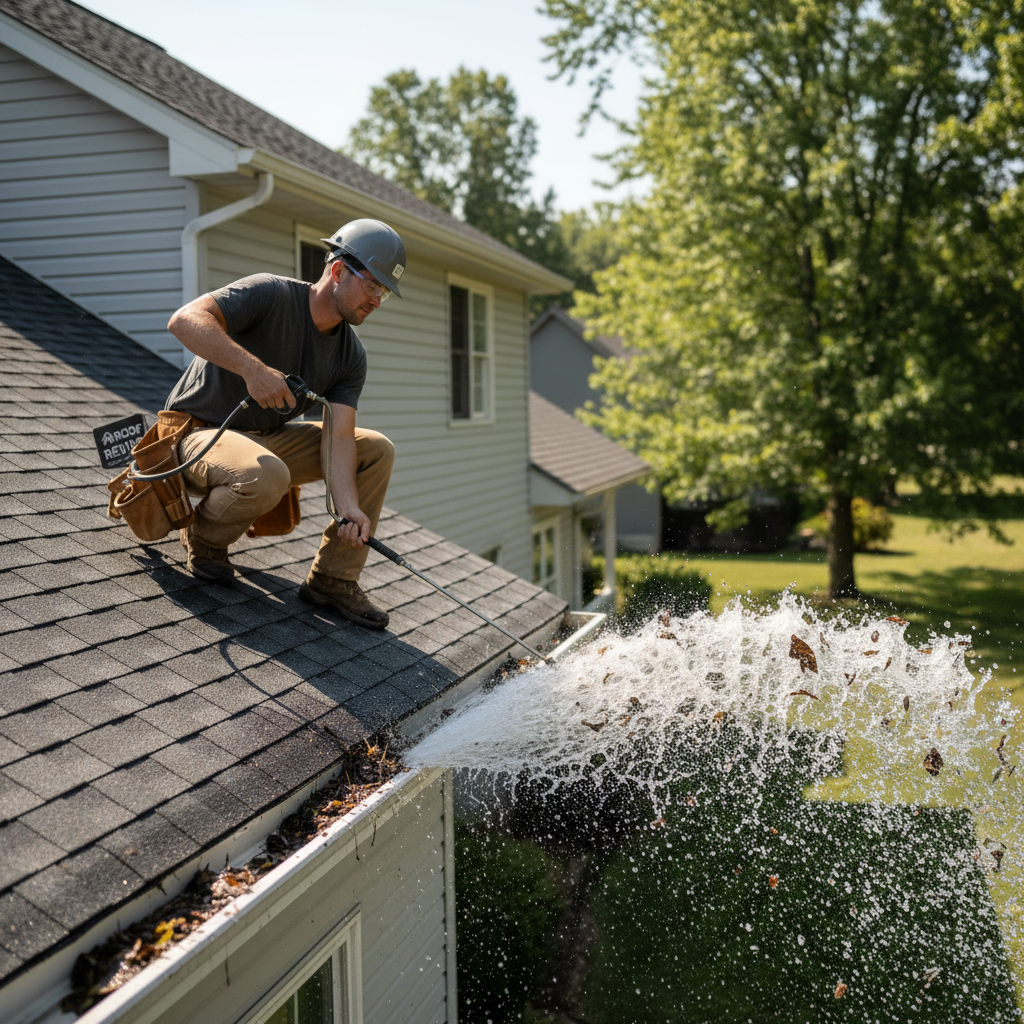
You can’t make algae and moss stay gone forever between cleanings. You can slow regrowth by reducing moisture and debris where it starts, and by using a method that kills growth instead of just rinsing stains.
If you live around Wilmington, Porters Neck, or Carolina Beach, you’ve probably seen the same spots come back first: the north-facing slope and valleys that catch pine needles. This guide helps you set realistic timelines and pinpoint what drives regrowth on your roof. It also shows low-risk between-cleaning habits that buy you the most time.
Set Realistic Regrowth Timelines

On an asphalt shingle roof in humid coastal North Carolina, your goal isn’t “never again.” It’s buying time. A proper low-pressure softwash that kills growth instead of rinsing stains typically buys 18–36 months before algae staining returns in the usual trouble zones (see National Softwash Authority guidance).
Even when the roof looks perfect right after cleaning, regrowth can still happen. Spores and organisms are always around, and chasing “never again” is a mistake in that HGTV-style “weekend refresh” mindset. Your roof has microclimates that stay damp longer. For instance, the north-facing slope under pine canopy or the area below an overflow-prone gutter can stay shaded and wet enough to recolonize first. If you expect a permanent fix, you’ll keep “upgrading” chemicals or pressure when the real lever is a maintenance cadence that matches the coastal climate for the sections that never fully dry.
Dark roof streaks are usually algae staining, and understanding what’s causing them helps you prevent the same trouble zones from reappearing first. Read more in our article: Roof Algae Black Streaks
Find Your Roof’s Regrowth Triggers
You clean the roof, it looks great for a while, and then the same dark streaks show up again in the exact same places. Miss what’s feeding those zones and you’ll keep chasing symptoms while the same pattern repeats.
Regrowth tends to cluster in the damp, debris-fed sections rather than spreading evenly. If you treat the whole roof the same, you’ll waste effort and still get stripes and patches back in the same places.
After a rainy day, do a walk-around (or use binoculars) and note the areas that dry last: the north-facing slope, valleys, and shingle keyways that hold pine needles like a wet sponge so you can address them early. Those are your priority zones for between-cleaning touch-ups and checks.
Moss that’s already established often needs a kill-first approach because scraping or aggressive washing can damage shingles and spread fragments. Read more in our article: Kill Moss On Roof
Between-cleanings prevention checklist
A homeowner clears one clogged valley and fixes a gutter overflow, and the “always dirty” corner suddenly stops being the first spot to turn. Small, safe habit changes usually beat another round of harsher cleaning.
Most regrowth prevention is moisture math, not stronger chemicals, think roof algae prevention tips, not harsher mixes. Focus on the areas that stay wet and you’ll extend the time between cleanings the most.
Start with what you can safely do from the ground or a ladder: clear pine needles and leaves from valleys and along lower edges (use a leaf blower, not scraping) and keep gutters and downspouts flowing so water doesn’t sheet onto shingles (roof drainage prevent moss); debris left on shingles holds moisture and promotes moss (University of Missouri Extension).
| Regrowth trigger (common spots) | What to do between cleanings (low-risk) |
|---|---|
| Valleys, shingle keyways holding pine needles/leaves | Blow out debris (avoid scraping) so it doesn’t mat and hold moisture |
| Below gutters, downspouts, overflow/runout points | Keep gutters/downspouts flowing so water doesn’t sheet onto shingles |
| Shaded edges under tree canopy / north-facing areas that dry last | Trim back overhanging branches to improve sun exposure and airflow |
| After heavy pollen or storms (especially in prior trouble zones) | Gentle hose rinse to remove organic “food” before it builds up |
Zinc or copper strips: worth it?

Some ridge-strip manufacturers put a hard number on how far the protection reliably reaches: about 14 feet downslope from the ridge. On taller roof planes, that single detail can explain why the top stays clean while the lower sections still discolor.
Metal strips can slow algae and moss, but their protection tapers as runoff moves down the shingles. On longer slopes, the effect fades as you go downslope, so you can still see regrowth in the lower sections even if the ridge area stays cleaner. Some manufacturer instructions even call out coverage limits around 14 feet down from the ridge, which matters on many Wilmington-area homes with tall roof planes (for example, GAF’s zinc strip instructions).
The bigger catch: adding strips to an existing asphalt shingle roof often means sliding metal under shingles, and that can crack, lift, or disturb shingle seals, so it becomes a quick rinse and repeat with a band-aid that risks turning into a leak; some industry maintenance guidance does not recommend retrofitting strips for this reason (ARMA roof maintenance PDF). If you’re thinking “a strip is a permanent fix,” you’ll be disappointed, and you might create a leak risk trying to retrofit.
If you want strips, they usually make the most sense during a re-roof (or as part of a pro install) when they can be integrated without prying up aging shingles.
Many homeowners get better results and less shingle wear when they use soft washing instead of pressure washing for organic roof growth. Read more in our article: Soft Wash Vs Pressure Washing
When to stop DIY and call a pro
If you see moss lifting shingle edges, you’re on a clock. That growth can hold water, pry at shingle seals, and turn a “cleaning” into a repair. Also call if staining returns fast (months, not years), if your roof is steep or brittle with age, or if runoff could hit sensitive landscaping, a rain barrel, or a pond.
When you book, ask what low-pressure method they use for soft washing roof Wilmington NC. Ask whether they apply a solution strong enough to dwell and kill (not a quick rinse), how they protect plants and control runoff (roof cleaning runoff protection), and what interval they expect for your shady trouble zones because hiring cheap is how roofs get damaged, so vet them on Angi and Google Reviews so you can plan the next touch-up before it’s obvious.
Roof not getting any younger? Contact us or call 703-673-6301 to find out where you stand.