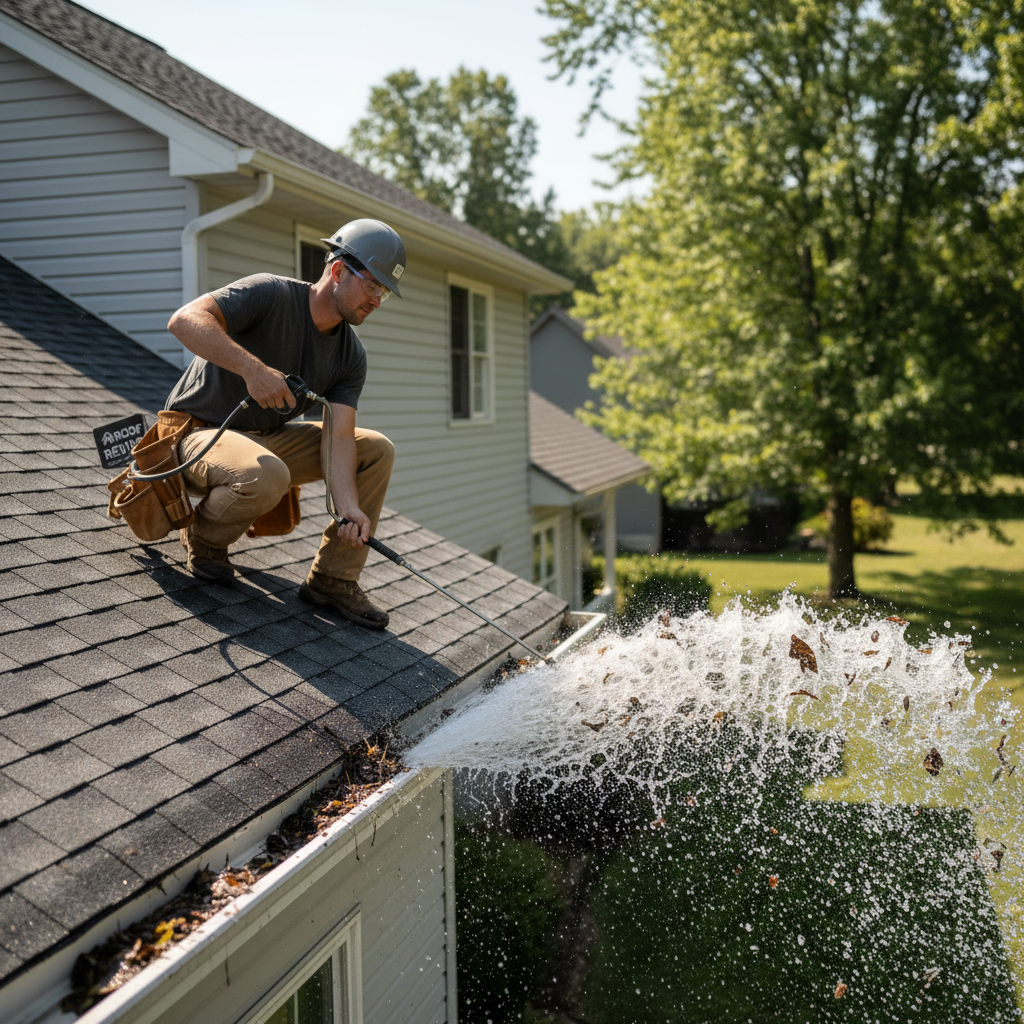
You just cleaned your roof, it looked great, and now the dark streaks are showing again. In coastal North Carolina, a properly done soft-wash usually keeps your roof looking meaningfully better for about 3–5 years.
If stains return sooner, the cause is usually simple. You can often spot it by looking at where the roof stays damp. It’s almost always moisture and shade patterns, like a damp towel that never dries or a cleaning that only rinsed the surface. You can kick the tires by watching how fast it comes back and where it reappears first.
How long should the results last, and what makes the stains come back?

In coastal North Carolina, you should expect a properly done soft-wash to look meaningfully better for about 3–5 years. Anyone promising more is selling you a fairy tale and not a roof plan, and Consumer Reports would call that out fast. That’s a typical window, not a guarantee. Shade and humidity speed up regrowth.
In coastal NC, humidity and salt air can keep shingles damp longer and accelerate both algae regrowth and overall shingle wear. Read more in our article: Salt Air Humidity Shingles
Also, “results” doesn’t have to mean “looks brand-new forever.” If your roof looks uniform from the street, that’s fine for now. Recurrence over time is a known reality of algae staining, not automatic proof the cleaning failed, especially on a shaded Wilmington roof line that stays damp.
What Makes Stains Come Back
ARMA’s June 2024 technical bulletin makes one point clear: even when you clean algae discoloration the right way, it can still come back. The real question is whether you’re seeing normal biology returning or a job that never fully killed it.
Those dark streaks come from algae (and the grime it traps), and it behaves more like a lawn than a paint mark: it can regrow once conditions favor it. In coastal Wilmington-area neighborhoods, nightly dew and salty humidity give algae repeated chances to grow back. It comes in like the tide after a calm day, even after a correct soft-wash.
That’s why “it came back” doesn’t automatically mean the contractor messed up. You should judge recurrence by how fast and where it returns.
| What you notice | Most likely cause | What to do next |
|---|---|---|
| Faint streaks slowly reappear over months/years, starting in the same damp/shaded zones (north slope, under canopy, valleys) | Normal algae regrowth driven by moisture/shade patterns | Plan for periodic maintenance; focus prevention on those zones (trim shade where possible, improve dry-down, consider metal-ion runoff strategies where appropriate) |
| Dark bands look “back” in days to a few weeks, often in the exact same shaded lanes | Incomplete kill (surface rinse/insufficient dwell/coverage), not normal coastal regrowth | Ask what was applied and the dwell time. Get it in writing, then request a call-back re-treat under warranty and ensure full coverage on valleys, lower courses, and north-facing planes. |
| Only certain “lanes” stay cleaner directly below metal (flashing/strips), while adjacent areas re-stain sooner | Zinc/copper runoff suppressing algae in those lanes | Treat this as a durability clue; consider prevention approaches that leverage similar runoff patterns when appropriate |
| One roof plane (often north-facing) re-stains first while sunnier planes stay cleaner longer | Orientation-driven dry-down differences | Expect different timelines by plane; plan touch-ups targeting the problem side rather than assuming the whole roof failed |
If the first streaks reappear in the same damp zones (under overhanging oaks or below ridge vents), you’re seeing biology and moisture patterns, why do roof stains come back, not a mystery failure.
If black streaks keep returning in the same damp lanes, it helps to know exactly what those stains are (and what they aren’t) before you pay for another round of cleaning. Read more in our article: Roof Algae Black Streaks
The Few Factors That Change Your Timeline Most

Even with the same approach, results can vary from house to house. One owner gets years of curb appeal, while the other sees the first faint streaks before the season even feels over.
Even equally competent soft-wash work can produce different timelines in the same neighborhood. One roof bakes in sun and dries fast after dew, so it may stay visually clean for years. The other sits under live oaks, stays damp on the north slope, and starts showing faint streaks sooner. If you’re shopping bids, do your homework, especially on lead-gen sites that sell contractor listings. A single-number promise is lazy estimating.
The big levers to look at are
-
Shade and tree cover: More shade means longer wet time, and algae loves that. If you’ve got branches overhanging the shingles or a canopy that blocks midday sun, expect faster return.
-
Roof-plane orientation (especially north-facing): In coastal NC humidity, the side that gets less direct sun dries slower. If your streaking always starts on one side of the house, that’s usually your “clock.”
-
Shingle age and porosity: Older, more weathered shingles tend to hold moisture and grime more easily between granules. If your roof is 15–25+ years old and looks rough or thin in spots, plan for a shorter clean-looking window.
-
Pitch and drainage details: Lower-slope areas, valleys, and spots that don’t shed water cleanly stay wetter longer. As an example, the roof section below a ridge vent line can re-darken first. In valleys, longer wet time often makes those sections the first to re-darken.
-
Metal-ion runoff (a longevity wild card): Even small amounts of zinc or copper washing down from certain flashings can suppress algae growth, which is why you sometimes see cleaner “lanes” below metal. If parts of your roof consistently stay clearer under metal areas, you can treat that as evidence your site can support longer-lasting results in similar conditions.
When Fast Relapse Means the Cleaning Missed Something

Sometimes the same dark lanes reappear quickly, even while the roof still looks freshly cleaned. When that happens, the problem usually isn’t the weather; it is what did or didn’t happen during the wash.
If streaks look like they’re “back” in days or a few weeks, you’re probably not seeing normal coastal regrowth, soft wash roof cleaning why stains return is usually the real issue. You’re more likely seeing survival. If that explanation doesn’t pass the sniff test, it is because the roof got rinsed but the organisms in the shingle texture didn’t get fully knocked down by a true soft-wash process. For example, a roof can look great the day it’s cleaned, then the same shaded bands under a live oak darken again soon because the growth never fully died.
Treat these as call-back signals: the contractor relied on pressure or a quick surface rinse, or the coverage missed key areas like valleys and the north-facing plane. Don’t accept “that’s just Wilmington humidity” as the answer. That excuse doesn’t hold up when the timeline is weeks, not years. Your practical move: ask what was applied and whether it was meant to kill algae (not just brighten).
Choosing the Right Upkeep Plan
You can stop treating roof stains like a surprise expense that shows up on its own schedule. With the right plan, you know what “good enough” looks like and when you will handle it next.
If you want the lowest-hassle path, treat roof cleaning like other coastal maintenance: either a one-time “reset” or a planned cycle. A single soft-wash makes sense when you’re selling or dealing with HOA curb-appeal pressure. If you don’t want surprises, a retreatment plan fits better than hoping for the long end of 3–5 years. In HOA neighborhoods, that is often the only sane way to stay ahead of the architectural review committee.
If algae keeps winning on your lot, don’t keep buying the same outcome. You can add prevention (zinc/copper runoff strategies where appropriate), and when you replace the roof, algae-resistant shingles change the timeline model. Also separate goals: “stain-free” is cosmetic, while rejuvenation aims at shingle performance, roof rejuvenation vs. soft-wash longevity, so choose based on what you’re trying to pay for.
If your roof sits under trees or stays shaded, small prevention steps can slow regrowth and stretch the time between cleanings. Read more in our article: Prevent Algae Moss Return
Roof not getting any younger? Contact us or call 703-673-6301 to find out where you stand.