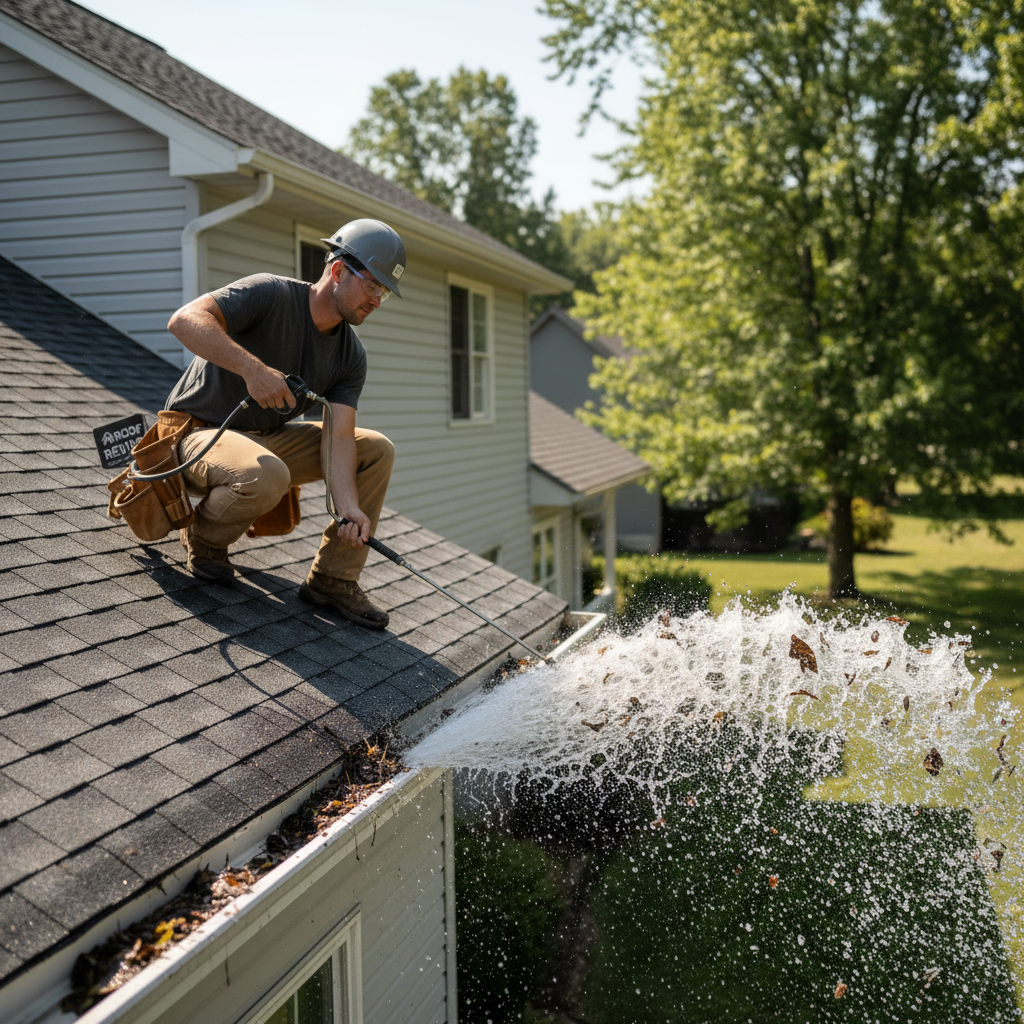
You clean the roof, it looks better, and then the dark streaks come back on the shaded side. In Wilmington’s dew-heavy humidity, streaks usually return when the roof stays wet long enough for algae to take hold again or when the last “cleaning” never killed the growth in the first place. To keep it from returning, you need a safe reset (low-pressure, chemistry-based cleaning), not a patch or a fix, and you need to change the conditions that let streaks start in the first place, like putting primer on before the topcoat.
This guide explains how to prevent roof algae on asphalt shingles in coastal North Carolina by focusing on the few prevention levers that matter. It covers where regrowth begins, why pressure washing often backfires, what to do about shade and debris, and when zinc or copper products can help (and when they can’t). You’ll also get a simple 12-month plan so you can decide what to handle yourself and when it makes sense to hire a soft-wash pro.
Why Your Roof Streaks Keep Returning

Even without rainfall, coastal North Carolina leaves roofs wet for long stretches thanks to morning dew. That frequent dew, plus long shade lines (north-facing slopes or tree cover), creates the exact window algae needs to re-establish. If you treat streaks as a one-time stain instead of a moisture-and-shade pattern, you are going to keep paying for the same cosmetic reset, and that is a bad bet, even by This Old House standards.
As an example, you’ll often see regrowth start where water lingers: the lower half of shaded slopes and around valleys. Walk your yard and note where streaks begin, not where they end. That origin point is what you need to change or manage.
Start with a Cleaning That Resets the Clock

You can spend good money on a roof that looks “clean” on day one and still be right back to streaks by the next humid stretch, or worse, you can shorten shingle life trying to keep it spotless. The reset only works if it removes the living film without chewing up the roof to do it.
If you want streaks to stay gone longer, you have to start with a cleaning that kills what’s living on the shingles. It has to do it right the first time. In Wilmington’s humid, salty air, a quick rinse can remove loose grime while leaving algae spores and biofilm behind, so the dark lines rebuild fast. The tempting “blast it clean” approach can also strip shingle granules, which is like sanding your roof with grit, and you can create the next round of streaks while you’re trying to prevent them, so treat pressure washing roof bad idea as a rule, not a suggestion.
A proper soft-wash is about chemistry and time, not force: many pros use sodium hypochlorite (bleach) diluted to an active chlorine strength around 3%–5% and give it roughly 15–30 minutes of dwell time so it can do the killing.
If you’re hiring this out, ask what they’re using and how they control runoff to protect gutters and landscaping. If the pitch is “we’ll just pressure wash it real quick,” you’re not resetting the clock, you’re rolling the dice.
Soft-wash roof cleaning is designed to remove the living algae film without stripping shingle granules the way high pressure can. Read more in our article: Pressure Washing Roof
The Prevention Levers That Matter Most
After a proper cleaning, your job isn’t to “keep it spotless” as roof algae treatment aftercare. It’s to keep shingles drier for longer stretches so algae can’t re-establish a foothold. Expecting one wash to last forever in Wilmington’s dew and shade sets you up for disappointment, even when the job’s done correctly.
Prioritize the fixes that change daily conditions on the roof, not the ones that only make the surface look better, because chasing cosmetics is a waste of money and even Consumer Reports would call that a bad value. Case in point: a roof that stays damp because of pine needles in the valleys or an overflowing gutter will streak faster than a roof that gets more sun and sheds water cleanly.
| Priority lever | What to do | Why it helps |
|---|---|---|
| Cut shade and “roof compost.” | Trim back limbs that shadow the worst slope; keep valleys clear of pine straw, leaves, and oak catkins. | Debris holds moisture like a sponge right where streaks usually restart. |
| Make water exit fast. | Clean gutters; confirm downspouts discharge away from the foundation; treat overflow lines on fascia after storms as a streaks issue. | Overflow/back-up re-wets the eave line and keeps shingles damp. |
| Watch for attic moisture clues. | Check for musty attic smell, damp rafters, bath fans that don’t vent outdoors, or rusty nail tips. | A humid roof deck can “feed” algae from below by keeping the deck area moist. |
| Adopt a simple cadence. | Do quick visual checks twice a year (spring/fall) and after big pollen drops; spot-treat early peppering on shaded sides. | Early action prevents small regrowth from turning into long dark runs. |
Gutter overflow and clogged downspouts can keep the eave line wet longer, which speeds up algae regrowth on shaded slopes. Read more in our article: Safely Clean Gutters |
Zinc/Copper and Algae-Resistant Options: What They Can’t Do
Most homeowners picture a strip as a whole-roof force field, but in real use the effect is often limited to roughly 3–4 feet below the ridge. If the streaks are starting mid-slope, that mismatch shows up fast.
Zinc and copper strips (and algae-resistant shingles/granules) can reduce regrowth, but they don’t “fix” the conditions that caused streaks, and they don’t protect the whole roof evenly. You’ll get the best results when you treat them as a slow, rain-activated inhibitor that buys you time, like a faint wash that only shows up where water runs, not as a one-and-done shield. If you’re counting on a strip to cover mid-slope streaks across an entire plane, you’re likely to be disappointed, especially after a too-light cleaning.
Use this quick framework before you spend money
-
Coverage is limited. In real-world use, strips often only influence a band a few feet below the ridge. If your darkest streaks start halfway down the slope (common on shaded sides), strips alone may not reach the problem area.
-
Rain pattern matters. These systems rely on rainfall to move metal ions down the roof. In coastal NC, short, heavy downpours can leave you with uneven distribution, which can look like “it worked here but not there.”
-
They won’t remove what’s already there. Install strips after you clean. Otherwise you’re inhibiting new growth while leaving the existing staining and living film in place.
-
Material compatibility can bite you. Copper shouldn’t directly contact aluminum (think aluminum drip edge, gutters, or flashing) because galvanic corrosion becomes a risk. If you have lots of aluminum at the eaves, ask how the installer isolates dissimilar metals.
-
Runoff is part of the decision. Anything designed to leach zinc/copper will send some amount into gutters and downspouts. If you collect rainwater, have sensitive plant beds at discharge points, or already see staining on concrete, plan for that reality before you “upgrade” prevention.
Your 12-month roof streak prevention plan (DIY or hire)

A homeowner does one quick spring check, clears a handful of pine straw from a valley, and never sees the peppering turn into long black runs that year. Another waits until the streaks are obvious again, and pays for the same reset twice.
Plan on maintenance, not a one-time “fix,” because in Wilmington the dew cycle is the system you’re fighting, and that’s the real answer to how often to treat roof for algae. Spring and fall: do a 5-minute ground check of the shaded slope and gutter line; clear visible roof debris you can safely reach from a ladder, then confirm gutters flow cleanly after the next rain.
DIY vs. hire: DIY only if you can stay on the ground and you’re not tempted to pressure wash. Hire a soft-wash pro if the roof is steep, you can’t control runoff, or streaks return fast after a proper reset. If you see bald shingles, heavy granule loss in gutters, or widespread staining that doesn’t respond to cleaning, treat it as a roof-condition problem. It is not an algae problem, and Mike Holmes would tell you not to ignore it.
If streaks keep coming back quickly after a proper clean, it often means the roof is still staying wet too long due to shade, debris, or ventilation issues. Read more in our article: Roof Algae Returning
Roof not getting any younger? Contact us or call 703-673-6301 to find out where you stand.To stop the growth instead of just rinsing it, our Wilmington roof algae treatment kills the colony at the spore level.