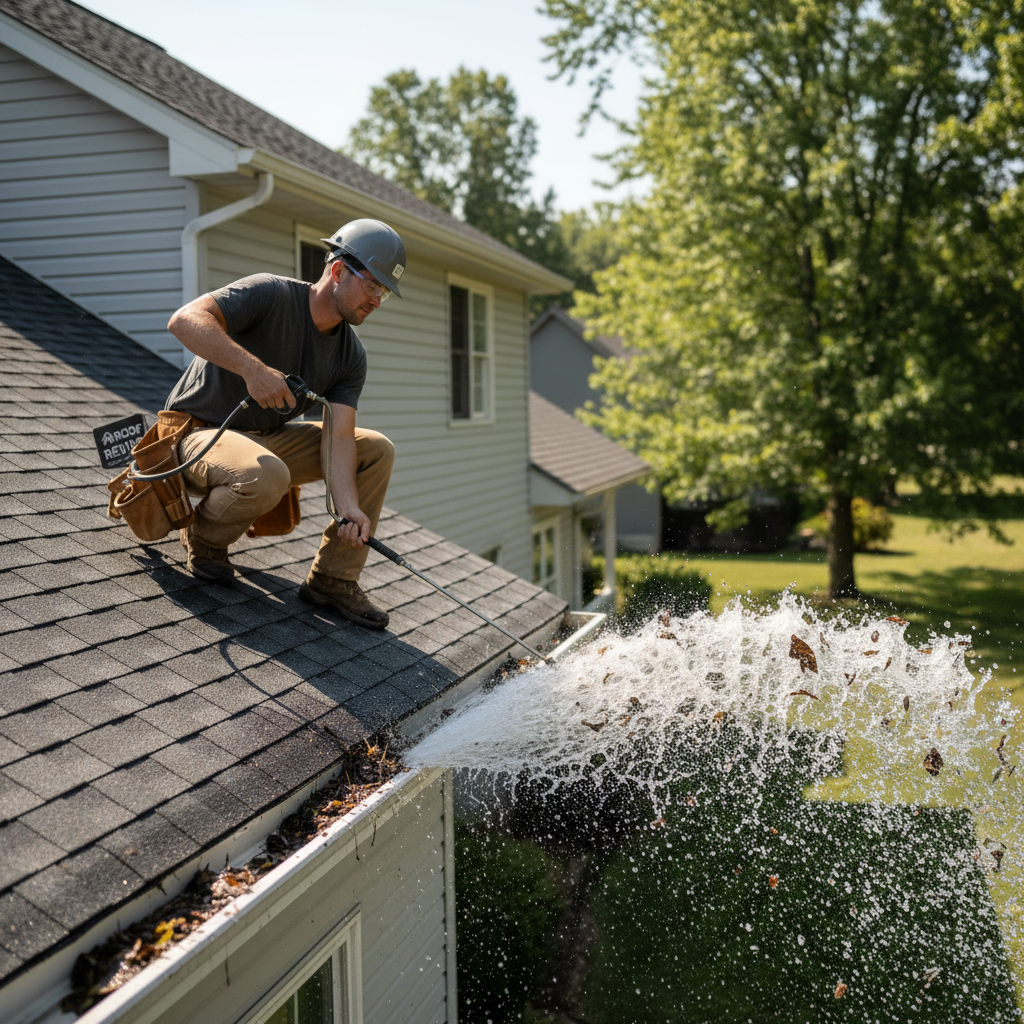
How soon after soft-washing can it rain, and will rain mess up the results? Usually, no, as long as your roof gets its full dwell time first. Give it a rain-free buffer of about 15–30 minutes after application.
What causes problems is rain during that short working window, so watch the forecast timing. It can dilute the mix or rinse it off before it has time to work and kill algae.
| When rain starts after application | Likely impact on results | What to do |
|---|---|---|
| Within 0–15 minutes | Highest risk of dilution/rinse-off before the kill is complete | Expect possible patchiness; ask contractor if re-application is needed |
| ~15–30 minutes (critical dwell window) | Risk depends on whether full dwell time was achieved | Confirm last-treated areas got full dwell; consider touch-up if not |
| Later the same day (after full dwell) | Usually does not “undo” the treatment; roof may still look streaky at first | Don’t judge immediately; allow days/weeks for fading |
| Ongoing wet conditions / mist on heavy streaking or moss | Can shorten effective dwell and may require more contact time or multiple visits | Plan a more conservative rain-free block or staged treatments |
After the dwell window has passed, later rain rarely reverses the treatment, even if streaks are still visible at first. You’ll often see the bigger visual payoff over the next few weeks as dead staining fades and normal weather helps carry it away.
The Only Window Rain Can Ruin

Rain usually matters only if it arrives before the mix has finished its dwell and kill cycle. If a shower starts while the solution is still in its critical 15–30 minute working window (ARMA’s algae guidance points to about 15–20 minutes), it can dilute or rinse the chemistry off the shingles early. Consumer Reports would not call that a “48-hour rule” problem, and neither should you. That’s when you pay for a treatment but get an incomplete kill, especially on heavier black streaking.
For example, if your contractor finishes a section of roof and a pop-up Wilmington shower rolls through five minutes later, you can end up with patchy results that look like the wash “didn’t take” in a few spots. The practical move is simple: protect a rain-free window during and right after application, and don’t overreact to rain that happens later that day.
Most “soft-wash didn’t work” complaints trace back to algae not getting enough uninterrupted contact time during the dwell stage. Read more in our article: Soft Wash Roof Cleaning
How Soon After Soft-Washing Can It Rain?

ARMA’s algae guidance pegs the must-protect window at roughly 15–20 minutes, not “two dry days.” Miss that window and you are not just getting a wet roof, you are cutting the chemistry off mid-reaction.
Black streaks can linger even after the algae is dead because the staining often fades gradually with sun and normal weathering. Read more in our article: Roof Algae Black Streaks
To pick a safe buffer, measure it in minutes, not days. That buffer is worth the peace of mind, like letting fresh paint set before a surprise sprinkle. Most roof soft-wash mixes need roughly 15–30 minutes of dwell time to do the real work (killing algae and loosening grime), as described in industry roof softwashing guidance. Once the dwell window is complete, rain later that afternoon usually leaves the treatment intact. You might not see the full visual change right away, but that’s normal, and rain often helps carry away dead staining over the following weeks.
Where that number stretches is when you’re likely to lose chemistry to dilution or runoff before it finishes reacting (rain can shorten dwell by diluting/rinsing the mix too soon, as explained in softwashing dwell-time guidance). For instance, on a humid Wilmington morning with heavier black streaking on the north slope, a light mist can keep shingles wet enough that the solution slides off sooner. It effectively shortens dwell. In that situation, you’re smarter to insist on a solid rain-free block or plan for a second application.
If someone tells you rain within 24 to 48 hours “ruins” every soft-wash, treat that as a scheduling scare tactic, not a rule. The real question is: Did your roof get a full dwell cycle before the first raindrops?
When Rain Doesn’t Mess Up Results

A homeowner checks the roof after an afternoon shower and swears the streaks look worse, then two weeks later they are almost gone. The difference is whether the kill already happened before the first raindrops.
When the mix has already completed its working time, rain usually won’t wash the work away. The part you paid for is the kill and loosening step, and that happens up front. What throws homeowners is that the roof often doesn’t look uniformly clean the moment the crew packs up, so a shower later can feel like proof the treatment failed when it didn’t.
A cleaner way to frame it is killed vs. gone. The algae and organic staining can be dead within that initial dwell window, but the dark streaks may fade gradually as sun and normal weathering help rinse away the dead material over the next several weeks. In many cases, you’ll see noticeable change within a day or two, then continued lightening over 30–90 days.
The mindset shift is important: if you expect “instant car-wash perfection,” you’ll misread normal post-treatment lag as a weather problem, and that’s just wrong. Even the Better Business Bureau (BBB) complaint playbook won’t fix unrealistic expectations. A practical move that keeps you sane (and keeps expectations aligned) is to ask your contractor one simple question before they start: “After you apply, how long until the mix has completed its dwell on the last section you treated?” If they can protect that window, rain later that day is usually just part of the cleanup, not the undo button.
Keep, Reschedule, or Proceed Anyway

You avoid the worst outcome when you make the call like a contractor, not like a weather app. Get the timing right and you can keep the appointment without paying for solution that gets washed off before it ever finishes working.
In Wilmington, conditions can turn fast, so schedule only when the timing window is realistic. Don’t decide based on “chance of rain” alone—focus on soft wash scheduling weather. Make the call based on whether they can keep the roof dry long enough to finish application and let the last-treated area hit full dwell. If they can’t, you risk paying for chemistry that gets diluted off before it does its job.
In coastal North Carolina, booking around pop-up showers often matters more than the daily rain percentage because timing is what protects dwell. Read more in our article: Coastal Roof Scheduling
Keep it if you can reasonably get 30–60 minutes without rain during and after the application window (not two dry days). Ask: “What’s your minimum rain-free dwell time today, and what’s your plan if a shower pops up?”
Proceed anyway (with adjustments) if showers look possible but brief, and your contractor can start on the most visible/most stained slopes first and pause application if radar shows a cell within minutes.
Reschedule if radar shows an approaching band or thunderstorm timing that’s likely to hit during application, or if wet conditions will make safe movement or runoff control unreliable.
FAQ
Does Rain Within 24–48 Hours Ruin a Soft-Wash?
Not if the mix reached full dwell before the first raindrops. The “48-hour” rule usually mixes up chemistry dwell with the slower, normal process of staining fading over days and weeks.
It Rained 10 Minutes After Application. Should You Re-Treat?
Maybe, since rain that early can cut the reaction short by diluting or rinsing the mix before it finishes. Ask your contractor whether the last treated areas got at least 15–30 minutes of working time; if not, a follow-up application is the fix.
What If You Have Heavy Growth or Moss?
Heavier growth needs more contact time and sometimes more than one visit, and rain during the dwell window can make that harder by shortening how long the mix stays strong. If you’ve got thick moss that stays waterlogged, you should plan on a more conservative rain-free window or staged treatments.
Does It Matter If the Contractor Rinses or Uses a No-Rinse Method?
Yes, because your “rain sensitivity” mostly comes from the chemical stage, not the final look. A rinse-heavy approach can make the job more about safe timing and controlled runoff that day, while a no-rinse approach relies on the dwell and natural weather to finish the visual cleanup.
It Rained Later That Day and the Roof Still Looks Streaky. Did It Fail?
Not necessarily: even if it rains the next day, dead algae may still look present before it fades. Give it time to lighten, and judge results over the next few weeks unless you’re seeing obvious untouched patches that match where rain hit during application.
Roof not getting any younger? Contact us at Contact us or call 910-241-1152 to find out where you stand.