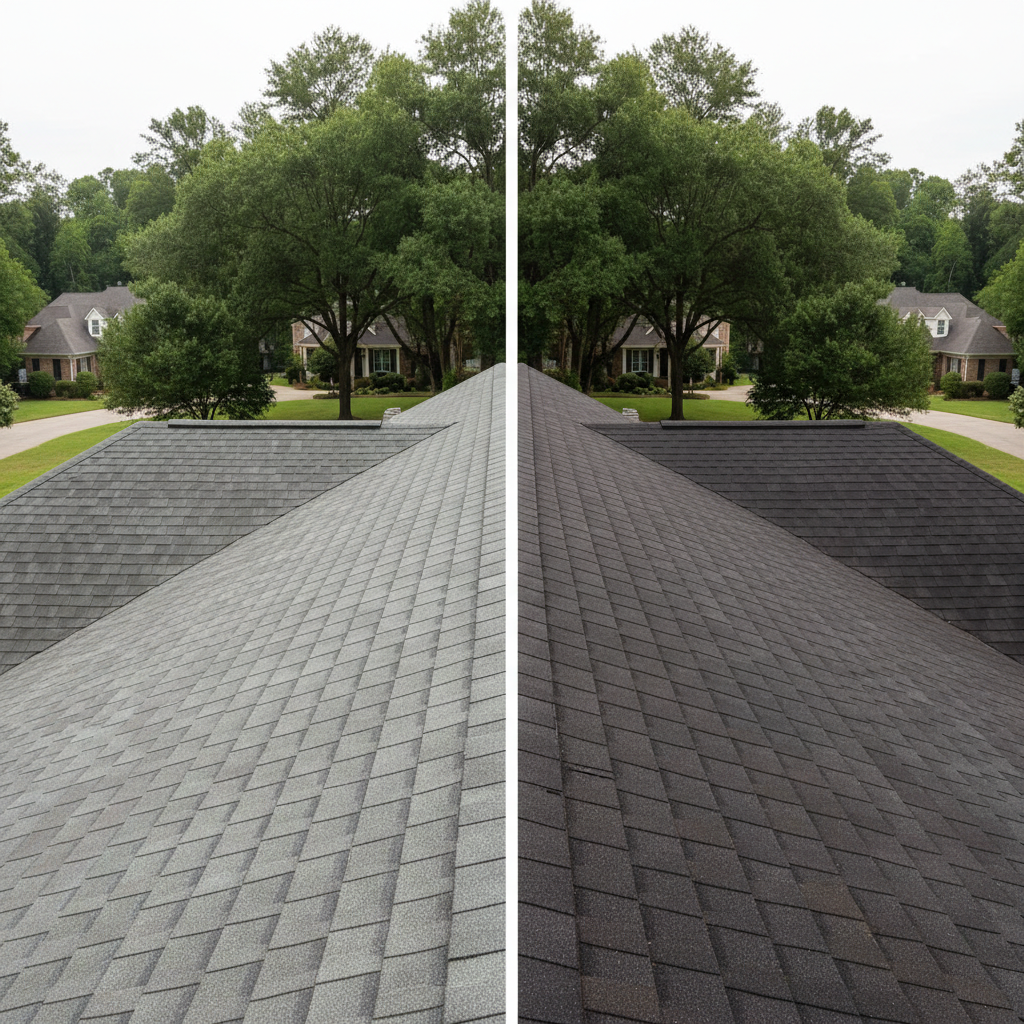
You can check the forecast and see blue skies, and still get a reschedule text the morning of your roof appointment. On the coast, wind and heavy rain don’t just change the weather; they change whether the roof is safe to walk and dry enough to treat.
This guide breaks down the real constraints crews schedule around in Wilmington-area conditions: why dew and humidity can matter as much as rainfall and why wind can cancel a “perfect” day. You’ll also learn what to ask when you book and what to prep at your home so when a workable window opens, the job can happen.
| Constraint crews schedule around | Why it changes the job | What to ask or do when booking |
|---|---|---|
| Wet roof (rain, puddles, morning dew) | Unsafe footing; cleaning/treatments can’t dry or start curing | Ask what “dry enough” means and how they confirm it before starting |
| High humidity / heavy dew (even with sun) | Shingles can re-wet; drying slows; start times shift later | Expect late-morning starts; ask temperature/humidity minimums they follow |
| Wind (breezy “sunny” days) | Safety risk on ladders/roof; spray drift can hit siding/cars/plants | Ask their wind-speed cutoff and what must be moved/covered before spraying |
| Stable rain-free window after application | Prevents wash-off or sealing in moisture; avoids rework | Ask minimum rain-free hours required and the latest go/no-go confirmation time |
The Real Constraints Crews Follow

You don’t get a reliable coastal roof maintenance job by picking a day that “looks fine.” Crews work off non-negotiables. On the coast, crews track radar closely because the work only works inside a calm, truly dry window that lets cleaning and treatments dry and begin curing without wash-off or trapped moisture.
In coastal North Carolina, humidity changes the math.
Salt air and persistent humidity can speed up shingle wear and contribute to faster granule loss in coastal neighborhoods. Read more in our article: Salt Air Humidity Shingles Even with blue skies, heavy dew can re-wet shingles fast, so a crew may start later or slide you a day to stay above temperature minimums (often around the mid-40s °F) and avoid those sticky, slow-dry conditions (see the temperature/humidity guidance in this shingle sealer product data sheet).
Roof Work Wind Limits: the Sunny-Day Dealbreaker

Spray and drift guidance often treats sustained wind near 10 mph as a practical cutoff for drift-sensitive work, with only a narrow band around 3 to 10 mph feeling manageable (for an example of a published drift-related wind range, see EPA-label wind guidance). On the coast, that means the difference between “sunny” and “workable” can be one gusty hour.
Even if National Weather Service (NWS) Wilmington calls it clear, crews may still decline the day once wind turns it from “sunny” into unsafe. Wind can change roofline safety quickly, especially on steeper pitches where footing and ladder transitions get sketchy. Crews won’t batten down the hatches on safety just to keep your calendar.
Wind also wrecks control during spray-based steps: mist can drift onto siding and cars in the driveway. A 10 mph coastal breeze can turn “aimed at the roof” into “ended up on the neighbor’s fence.” Crews may pause or reschedule even with blue skies. When you book, ask what wind speed they’ll work in and what they cover or move before spraying.
Wind-driven overspray and drift are a big reason crews ask you to move cars and protect siding, windows, and landscaping before they spray. Read more in our article: Protect Landscaping Siding Windows
Roof Work Rain Delay Policy: How Crews Schedule Around Rain
Rain scheduling isn’t about finding a day with a low percent chance, the roof treatment curing time is what drives the call. It’s about protecting the one step that can’t get interrupted: the roof has to stay dry long enough for cleaning to dry out and for any treatment to go dry-to-touch and start curing. In Wilmington-area humidity, “no rain” can still fail if the roof sweats back over with heavy dew before that happens, which is why crews often prefer a late-morning start instead of showing up at sunrise.
Most crews build the calendar around a roof treatment rain fastness window of roughly 24 hours after application (a common rule-of-thumb echoed in roof coating application guidance like Roofing Contractor’s roof coatings application notes). That window isn’t optional, and crews get more conservative when the forecast looks like a Hurricane season preparedness checklist from North Carolina Emergency Management: pop-up cells and onshore flow. That caution is about avoiding rework: rain can strip product before it sets or lock moisture into places it shouldn’t be.
Here’s what that looks like in the real world when you’re trying to plan your week:
-
They separate “prep day” from “application day” when needed. For example, they may do inspection, minor clearing, and protection setup first, then return for the treatment only when the dry window firms up.
-
They choose start times based on roof wetness, not your appointment slot. Expect a text or call like “we’re waiting on dew to burn off” and a start that slides to late morning.
-
They make an early go/no-go call to avoid half-done work. If showers move into the forecast, they’ll cancel before they’ve moved your patio furniture, covered landscaping, and asked you to pull cars out of the driveway.
To cut down on surprises, confirm two items at booking: their minimum rain-free hours after application and the latest go/no-go confirmation time (night before vs morning of).
If Weather Shifts Mid-Job

A homeowner in Ogden watched a crew start strong, then a surprise shower rolled in and they stopped with one section unfinished instead of rushing the last pass. The extra caution cost an hour that day, but it avoided the patchy rework that shows up when product gets hit before it is dry-to-touch.
When wind rises or rain arrives early, crews switch from progress to containment. They wait it out. They stop at safe breakpoints. Think of it like paint: they pause after a controlled area can dry without getting re-wet, before any treatment gets applied, or after a section is cleaned and rinsed. They secure ladders, clear hoses and tools, and check gutters so debris doesn’t push water back under an edge.
On a wash-only step, they can usually resume where they left off once the roof dries. If rain hits before a treatment is dry-to-touch, expect that area to get re-cleaned and re-treated, because partial curing can leave a patchy result. At booking, ask what they treat as a “stop point” and how they verify the roof has dried again before they restart.
After a stormy stretch, a quick check for lifted shingles and flashing movement can prevent a small issue from turning into an active leak during the next heavy rain. Read more in our article: Roof Problems After Hurricane
Your Pre-Appointment Checklist (Coastal)
You wake up to the text you want: they can start late morning and finish in one trip because the roof is accessible and everything in the drift zone is already moved. When the weather window is narrow, being ready is what turns “maybe” into “done today.”
A lot of “weather delays” are really protect landscaping during roof work delays in disguise (wind is often treated as an application-time drift/overspray constraint in guidance like FacilitiesNet’s roof coatings application overview). In HOA architectural review and exterior maintenance guidelines common in coastal communities, that is the part homeowners skip, and it is a mistake: when a narrow dry window opens, the crew can’t use it if they’re waiting on access or protecting what wind can hit. Case in point, a sunny but breezy day may still be workable if cars, patio furniture, and sensitive plants are already out of the spray-drift zone.
Before the visit, clear driveway/ladder access and move vehicles away from the house, and point out any rusted flashings you’ve noticed from salt air. Ask two scheduling questions. Confirm their required rain-free window after treatment and when you’ll get the go/no-go text (night before vs morning of) so you can plan around last-minute Wilmington schedule shifts.
Roof not getting any younger? Contact us or call 703-673-6301 to find out where you stand.Before spending on any fix, HardShore’s free Wilmington roof inspection tells you whether you need one at all.