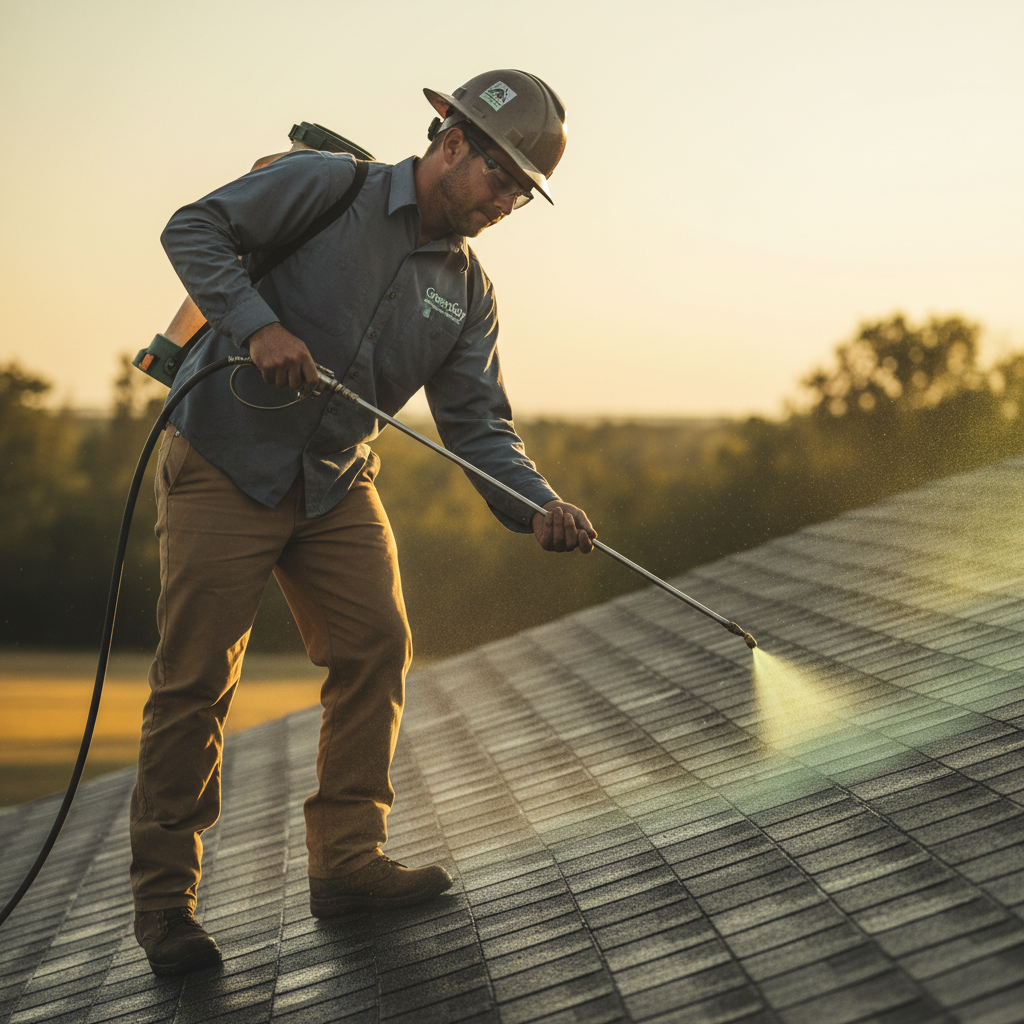
Will the treatment change the color or look of my shingles? Yes, usually a little. You’ll typically see modest darkening, not a new shingle color.
In practice, that “change” looks more like your roof returning closer to its earlier tone than getting painted over, and it shouldn’t look glossy when it’s applied correctly. The catch is that absorption and prep matter. Uneven coverage can telegraph through like a poorly laid shingle course, and algae or lichen often drives what you see more than the rejuvenator itself, especially if cleaning and weathering need time to finish the job.
| What you see after treatment | Usually means | What to do/ask |
|---|---|---|
| Modest overall darkening | Asphalt looks more re-saturated; closer to earlier tone | Expect a small shift; confirm the product is clear (not a coating) |
| More even/richer look from the street | Dry/chalky look reduced | Compare photos in similar lighting |
| Dark stripes or patchy “wet” areas | Uneven passes/overlaps or over-application | Ask about controlled, even application and how coverage is checked |
| Dark streaks that still show | Algae/lichen pattern remains until cleaned/weathered off | Confirm cleaning/softwash is included and what timeline to expect |
| Different shade at repair spots/newer shingles | Shingles vary in age/absorption | Point out repairs in advance; ask how they handle mismatched areas |
What “Change” Usually Looks Like

Most roof rejuvenation sprays don’t “recolor” shingles the way paint or a coating would (is roof rejuvenation a coating), no matter what the shingle display samples make you hope for. The typical visible change is a modest darkening (does roof rejuvenation darken shingles). It is often closer to the shingle’s earlier, less-dried-out tone because the asphalt gets re-saturated. As an illustration, the roof can read as a little richer and more even from the street, not like you switched to a new shingle color.
You also shouldn’t see a glossy shine or a plastic-looking film. If the roof suddenly looks wet in patches or noticeably darker in stripes, that’s usually application coverage showing through, not a “new color” taking hold.
In coastal areas, salt air and humidity can accelerate shingle drying and make color shifts after treatment feel more noticeable. Read more in our article: [Salt Air Humidity Shingles]
Why Shingles Can Look Darker After Treatment
If you’re bracing for a painted-on look, the better outcome is usually subtler: the roof reads a touch richer, like it got some life back, not like it got a new color job.
Asphalt shingles fade as they dry out. Over years of sun and salt-air exposure, the asphalt loses oils and the surface looks lighter and chalkier. A bio-based rejuvenation spray can re-saturate that dried-out asphalt, so the shingle absorbs and reflects light differently.
That’s why some homeowners notice the roof looks darker by a few shades right after treatment, often reading closer to the shingle’s earlier, more “original” tone rather than looking like a new color was added (Roof Maxx application guidance). If you’ve been treating any darkening as a stain, you may need to be doing your homework. It can be like judging brisket bark as “burnt” before you slice it.
When the Look Can Turn Blotchy

You can follow the instructions and still end up explaining a blotchy roof rejuvenation look to a neighbor or HOA board. The problem is that the same absorption that makes shingles look refreshed can also broadcast every overlap and missed pass.
A rejuvenation spray can make the roof read more uniform, but the same absorption effect can also create a roof treatment uneven color if coverage isn’t even (Roof Observations on asphalt shingle rejuvenation treatments). If you’re counting on this to “freshen up” curb appeal for an HOA, don’t assume a spray automatically produces a consistent finish, no matter what the Nextdoor neighborhood posts make it sound like.
Blotchiness usually traces back to a short list of issues. The two most common culprits are uneven passes and shingles that absorb at different rates. For example, a few newer shingles near a past pipe boot repair can stay a different shade than the surrounding field, even if the product itself is clear.
Roof algae and other organic streaking can keep showing through even after treatment until cleaning and weathering have time to finish the visual change. Read more in our article: [Roof Algae Black Streaks]
Cleaning and Biology Can Dominate the After-Look
Even with a proper softwash, the visual payoff can lag: dead organic material may take roughly 30–90 days to weather off while discoloration still shows.
If your roof has algae streaks or lichen, the biggest “appearance change” (black streaks on roof removal) may come from cleaning, not the rejuvenator. A clear treatment can’t magically erase what’s sitting on top of the shingle. If the roof isn’t properly cleaned first, you can end up with a “good enough for now” job that seals in the streak pattern like fingerprints under clear coat.
With a proper softwash, the biology often dies quickly, but the staining can linger until weathering finishes the cleanup. That debris can take 30–90 days to weather off, so discoloration may linger for weeks (roof cleaning changes shingle color) even while the cleanup is progressing (National Soft Wash Authority on roof softwashing). If your HOA watches timelines, ask what cleaning step is included and what you should expect to still see at day 7 versus day 45.
A professional roof cleaning step often makes a bigger difference in curb-appeal than the rejuvenator itself, especially when staining is biology-driven. Read more in our article: [Roof Cleaning]
How to Decide if You’re a Good Candidate
A homeowner books a rejuvenation to prep for an appraisal, then panics a week later when the roof looks darker in spots and the “before and after” photos don’t match the lighting. The right expectations and a tight process keep that from becoming your story.
You’re a good candidate if a temporary shift a few shades darker won’t feel alarming. You also need a roof that’s consistent enough that the after-look is still easy to assess. If your HOA expects an immediate, uniform before-and-after, you may need to rethink booking anything that relies on weathering and absorption (roof rejuvenation coastal humidity) to finish the visual change.
Before you schedule, check three areas: (1) Curb-appeal tolerance: can you live with modest darkening and possible unevenness while it settles? (2) Roof condition: do you have lots of algae streaking or lichen that will likely take treatment differently? (3) Process confidence: will the contractor specify the cleaning step and apply in controlled, even passes? If they will not take same-angle photos in similar lighting so you can separate “real change” from shadows and sun glare, that is a hard no, even if their Angi (formerly Angie’s List) reviews look great.
Roof not getting any younger? Contact us or call 703-673-6301 to find out where you stand.Our free roof inspection in Wilmington covers exactly these problem spots and hands you the findings in writing.