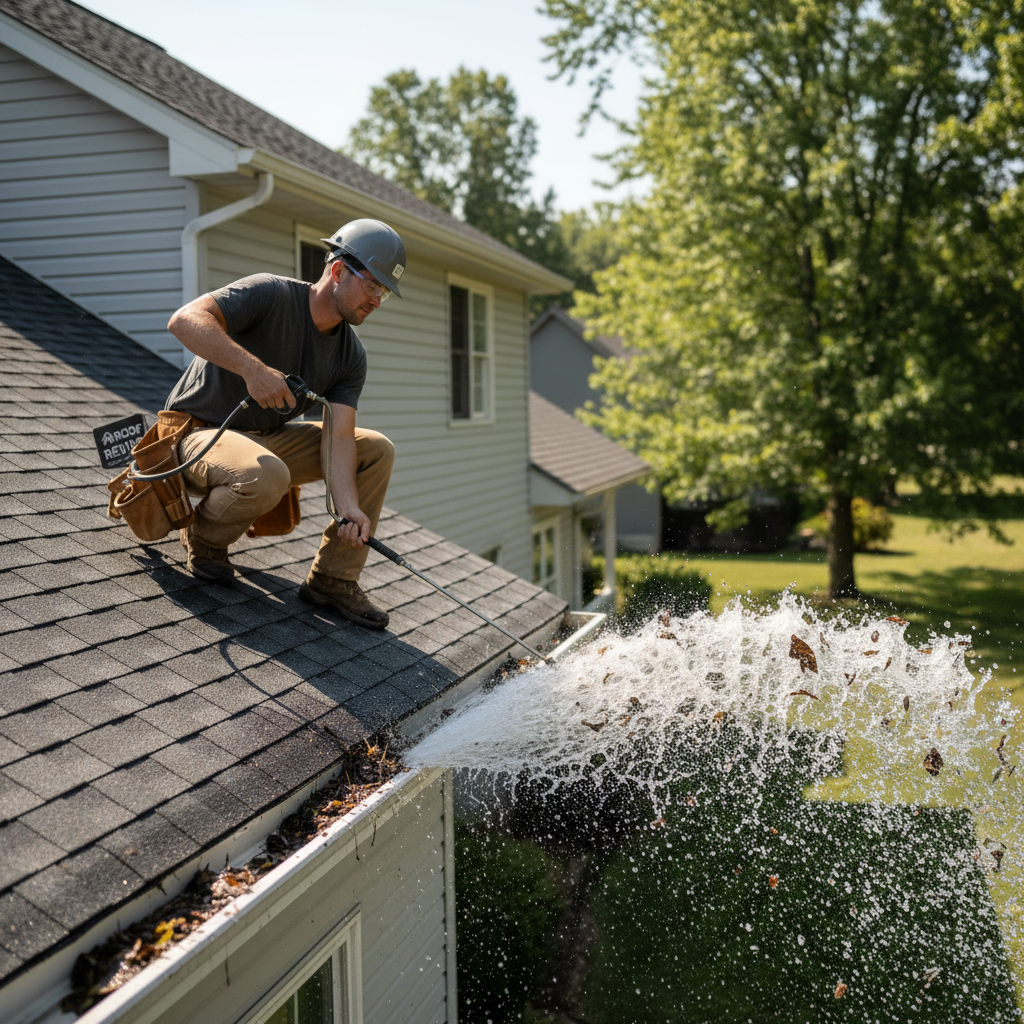
You’ll almost always notice a difference after cleaning algae stains, but it’s rarely your shingles “changing color.” It’s the dark algae film coming off and revealing the granule color that was already there.
What tends to surprise you is how that new “clean” look shows up: it can fade in gradually over rain cycles and it can look uneven between roof planes. The method you choose matters, too, and Angi (formerly Angie’s List) won’t save you from a bad process. Low-pressure, solution-based cleaning is designed to remove the staining without scouring the surface. High pressure can leave wand marks and loosen granules. That’s a red flag.
Will Roof Cleaning Change Shingle Color? What “Color Change” Really Is

In most cases, what reads as a “color change” after algae cleaning is the stain disappearing (as explained in ARMA’s Algae Discoloration of Roofs bulletin). It’s the dark algae film (often the streaky Gloeocapsa magma layer) being removed and exposing the granules that were there all along, like pulling back a dirty tarp to reveal the original blend. In Wilmington’s humid, shaded roof areas, that can look dramatic because the stain builds heavier in bands.
The worry to rethink: if a cleaned area looks lighter, that doesn’t automatically mean the shingles got stripped or bleached.
Black streaks can return faster on shaded, north-facing roof planes in humid coastal climates, even after a successful cleaning. Read more in our article: Roof Algae Black Streaks It often means you’re finally seeing the roof’s real granule blend once the discoloration is gone.
When a Roof Looks Patchy After Cleaning
You rinse the roof and instead of a clean, even finish, one side looks newer while the other still reads as streaky. That unevenness can make it seem like the job went wrong even when it didn’t.
A patchy look after cleaning usually comes from uneven algae growth, not uneven cleaning. On Wilmington-area homes, the north-facing slope and sections that stay damp longest can carry a thicker stain layer, so those zones may lighten at a different pace than sunnier areas.
You can also see “cleaner stripes” near metal features like chimney flashing or valleys, where runoff or trace metals can slow algae growth. When one roof plane looks more refreshed, it usually reflects where shade and moisture linger longest. Do a walk-through so you’re comparing the same angles.
Natural Shingle Variation vs. Cleaning Damage
A homeowner sees fresh, lighter bands after cleaning and assumes the shingles were bleached, but the gutter is also suddenly full of gritty granules. The difference between “normal variation” and “you removed the roof’s surface” shows up in small tells.
For example, once the algae film comes off, you may suddenly notice the shingle’s original granule blend and sun-fade patterns that the streaks were hiding (ARMA notes that natural color/appearance variation can be more noticeable once discoloration is gone). That “mottled” or slightly different tone from course to course can be normal, especially on older roofs where some areas have baked in the sun longer than others.
Pressure-washing damage has its own fingerprints, and it’s a poor fit for most asphalt shingles. You’ll see scoured-looking zones that repeat the path of a wand or spray pattern and shiny spots where asphalt shows through, classic granule loss from roof cleaning. BBB accreditation/ratings won’t change what you see on the roof. A sanded or bare-looking surface isn’t “true color,” it’s surface loss. You’re seeing missing granules, and that’s a problem to address.
If you’re seeing repeating “wand path” stripes or worried about scouring, pressure washing is one of the most common causes of visible cleaning damage on asphalt shingles. Read more in our article: Pressure Washing Roof Shingles
| What you see after cleaning | Most likely cause | What it usually means |
|---|---|---|
| Overall roof looks lighter than before | Algae film removed, original granule color revealed | Normal “color change” (stain is gone) |
| Patchy/uneven lightening between roof planes | Uneven algae growth (shade/moisture differences) | Often normal; can even out over rain cycles |
| Cleaner stripes near flashing/valleys | Runoff/trace metals reducing algae growth | Normal patterning; not cleaning damage |
| Repeating light stripes that match spray/wand path | High pressure/uneven mechanical cleaning | Method artifact; may indicate surface scouring |
| Shiny/bald spots or asphalt showing through | Granule loss from aggressive cleaning or wear | Damage or advanced wear; higher risk situation |
| Lots of fresh granules in gutters/downspouts right after cleaning | Granules dislodged during cleaning (or severe brittleness) | Red flag; consider inspection before further cleaning |
Methods That Affect the Final Look

Choose the right method and the roof can look cleaner without looking striped or patchy. It is the difference between lifting a stain and grinding away what makes the shingles look uniform.
For an evenly “refreshed” look, technique matters as much as the stain itself. High-pressure washing works quickly, yet it often trades speed for granule loss and wand-pattern striping, especially on older asphalt shingles.
A true soft-wash or low-pressure approach lets the cleaning solution do most of the work in soft wash roof cleaning, like a soak that loosens grime instead of a scrub that tears fibers. Get it in writing so nobody swaps in higher pressure later. The tradeoff: you may not get instant, perfectly uniform results, and some areas can keep lightening after rain cycles, which is why homeowners ask how long does roof cleaning take to show results. If you’re thinking “more pressure equals a better-looking roof,” that’s often backwards.
Soft-wash systems are designed to let the chemistry do the work so you can remove algae staining without aggressively blasting off protective granules. Read more in our article: Soft Wash Roof Cleaning
A Wilmington-Area Decision Checklist
If the roof is already tired, cleaning can turn a cosmetic annoyance into a spotlight on every weak spot. The wrong timing can leave you paying for a nicer-looking roof you still have to replace soon.
If your shingles still have grit and lie flat, cleaning now usually makes sense. Pick the good, better, best option based on your roof. Google Reviews / Google Business Profile will show you who cuts corners. If the roof looks better but re-stains fast in shaded, north-facing areas, you’re in a maintenance problem, not a one-and-done cleaning problem, so plan for periodic treatment or a rejuvenation-style approach.
Widespread curling or fresh granules in the gutters is your cue to stop treating this as cosmetic. A cleaner-looking roof that’s near end-of-life can still be the wrong call, because you’ll highlight wear you can’t unsee and you may be putting money into a roof you’re about to replace.
Roof not getting any younger? Contact us or call 703-673-6301 to find out where you stand.For this done right locally, our Wilmington soft wash roof cleaning cleans shingle-safe with bio-based products.