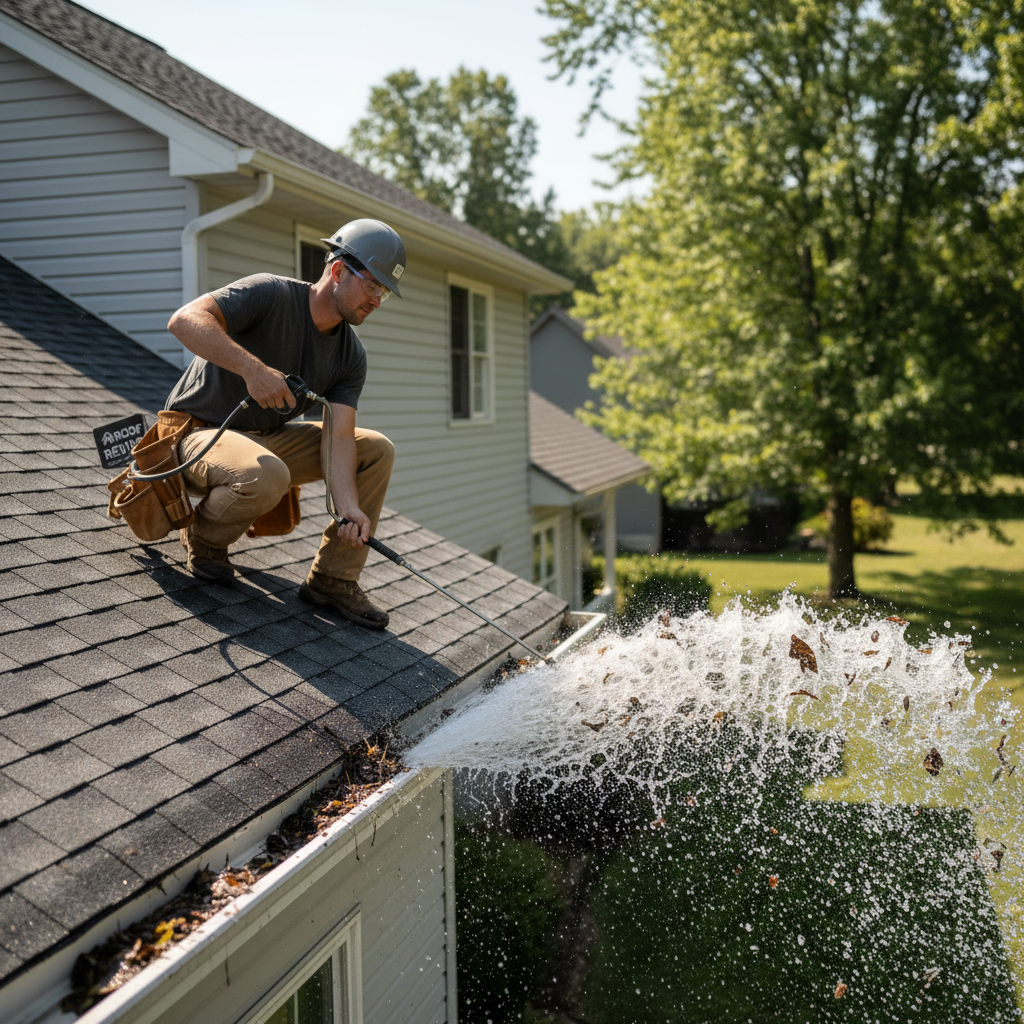
If you’re seeing black streaks or green growth on your roof, you don’t automatically need a replacement. In many Wilmington-area homes, algae staining is mostly cosmetic, and light moss can often be cleaned safely if the shingles are still in good shape.
What matters is what’s happening under the growth, not how “old” the roof looks from the yard. In coastal North Carolina’s humidity and shade, a roof can look rough and still be structurally fine, or look only mildly mossy while hiding moisture trouble near eaves. This guide walks through a few simple checks that help you decide between cleaning and maintenance versus an end-of-life roof, and where “rejuvenation” fits if you’re trying to buy time before a full replacement.
| What you observe | What it usually means | Best next step |
|---|---|---|
| Black streaks/algae staining but shingles lie flat and feel intact | Often cosmetic surface growth | Consider low-pressure “soft wash” cleaning + routine maintenance |
| Light moss/lichen patches, especially near eaves/edges | Higher risk because it holds moisture and can lift edges | Inspect shingle edges and moisture signals before deciding on cleaning |
| Curling, cracking, brittleness, or widespread bald spots/fiberglass showing | Shingles are losing protective layers; cleaning won’t restore them | Lean toward repair planning or replacement evaluation |
| Attic/decking staining, damp insulation near eaves, or dark wood around penetrations after rain | Hidden moisture intrusion even if roof looks “only mildly mossy” | Prioritize repair/replacement assessment over cosmetic cleaning |
| Active leaks, soft/spongy decking, sagging areas, repeated repairs around vents/chimney | System-level failure signals | Replacement (or major repair) is typically the right focus |
| Considering rejuvenation on a roof still in repairable condition (often under ~20 years) with no active leaks/soft decking | May buy time after proper low-pressure cleaning and verified expectations | Ask about independent testing, decline conditions, and maintenance cadence |
Moss or Algae Isn’t the Verdict

A roof with black streaks or green fuzz can look “done,” but appearances can mislead, and you still need to confirm what the shingles are doing (as noted in homeowner guidance like Hardshore Exteriors’ roof moss/algae overview). Algae staining often sits on the surface and can be mostly an appearance issue, while smaller moss or lichen patches can matter more because they hold moisture.
Focus on shingle performance under the growth instead of the roof’s color from the street.
In Wilmington’s humidity, algae and black streaks can return quickly if the underlying causes (shade, moisture, and roof conditions) aren’t addressed. Read more in our article: Roof Algae Black Streaks As an example, dramatic streaking can still sit on shingles that lie flat and feel intact, while a small moss line near an eave can hide lifted tabs or soft decking you won’t notice from inside until later.
The Few Checks That Decide

You can spend money the wrong way twice: once on a cleaning that strips life out of tired shingles, then again on an emergency repair when the first real leak shows up. A couple of quick checks beat a dramatic roof photo every time.
What decides “clean it” versus “replace it” isn’t how dark the streaks look, it’s whether the shingles underneath still behave like shingles. In coastal North Carolina, a north-facing slope under live oaks can grow algae fast while the roof is still structurally fine. But the same roof stops being a good cleaning candidate when the surface growth sits on top of shingles that are already losing their protective layers.
Start with shingle integrity. Then check granules. If tabs lie flat and edges feel tight (not flapping), and you don’t see widespread bald spots or shiny fiberglass showing through, you’re usually looking at a maintenance problem you can address with a low-pressure “soft wash” style cleaning, not a replacement trigger. If you see curling or cracking, cleaning won’t bring the roof back, and aggressive methods can speed up failure.
Then check for moisture and “hidden” failure signals. Waiting for an interior leak is a terrible rule, and even Consumer Reports home maintenance guidance treats it that way. A quick attic look after a heavy rain can tell you more than the yard view: staining on decking or damp insulation near eaves points to problems that push you toward repair or replacement, regardless of how minor the moss patch looks. When the attic stays dry and the shingles test out intact, the growth points to maintenance, not a tear-off.
When Roof Cleaning Makes Sense
Algae staining (often gloeocapsa magma roof algae) is common enough that major shingle manufacturers build it into their products, with algae-stain protection terms often listed at 10 or 25 years depending on the shingle. That’s a hint that “looks ugly” and “needs replacement” are not the same diagnosis.
Cleaning is a good fit when the roof looks stained but the shingles still have protective granules and sit flat. For example, if a shaded Wilmington slope shows black algae lines yet the tabs feel tight at the edges and your attic decking looks dry after a hard rain, a low-pressure chemical “soft wash” can remove most staining and slow regrowth without turning it into a replacement project.
What cleaning can’t do is reverse aging. It’s a coat of paint and a prayer, not turning back the odometer. It won’t fix curled or brittle shingles, and it won’t make a 17-year-old roof behave like a 7-year-old one, even if it looks dramatically better.
Avoid pressure washing asphalt shingles. It strips granules (industry guidance such as the National Soft Wash Authority’s roof softwashing guidance echoes this). High pressure strips protective granules and can lift or fracture shingle edges, which shortens roof life and can create problems you didn’t have before.
A true soft-wash approach relies on the right chemistry and dwell time rather than blasting shingles with high pressure. Read more in our article: Soft Wash Roof Cleaning
When to Consider Roof Replacement

A homeowner patches the same vent leak twice, then notices the plywood feels a little soft right where they’ve been chasing the drip. By then, the question is less about the stains and more about whether the roof system is still doing its job.
Active leaks, spongy decking, or sagging shift the call away from cleaning and toward fixing the roof system. At that point, cosmetic cleaning is a distraction, so compare replacement bids the way you would on Angi reviews and contractor comparisons. Those are “system is failing” signals, and cosmetic cleaning won’t stop water movement or wood deterioration.
Also lean toward replacement when the roof is near the end of its expected life and you see widespread shingle breakdown: curling or cracking with lots of bald spots with fiberglass showing. Even if the surface improves, neither treatment replaces missing granules or rebuilds a shingle that’s already failed.
If you have active leaks or soft decking, fixing the leak path matters more than improving the roof’s appearance. Read more in our article: Roof Leak Repair
Roof Rejuvenation: Smart Extension or False Hope?
You want the roof to make it a few more hurricane seasons without gambling on a cosmetic fix that turns into a bigger bill later. That only happens when the roof is still fundamentally sound and the claims are something you can verify, not just hope for.
Don’t lump rejuvenation in with cleaning. Cleaning removes algae or moss; rejuvenation is a separate treatment some contractors apply to older asphalt shingles to slow drying and cracking with the goal of buying time before replacement. If your roof already has widespread curling or brittle tabs, get a second set of eyes on it. Rejuvenation won’t “save” it, and it’s like patching a leaky boat to keep it pretty.
Rejuvenation is only worth considering on a repairable roof, often under about 20 years old, after you’ve handled growth with verified low-pressure cleaning (see candidacy/decline discussion in Roof Observations’ overview of asphalt shingle rejuvenation treatments). Before you say yes, push past the sales pitch and look for signals you can verify. Ask what independent testing backs the claims (some providers cite third-party lab work using accelerated weathering protocols such as PRI Asphalt Technologies) and what maintenance cadence they expect in coastal humidity. Case in point: if you have heavy shade and frequent regrowth, you may still need cleaning every 2 to 3 years, even if you treat the shingles.
Roof not getting any younger? Contact us at Contact us or call 910-241-1152 to find out where you stand.