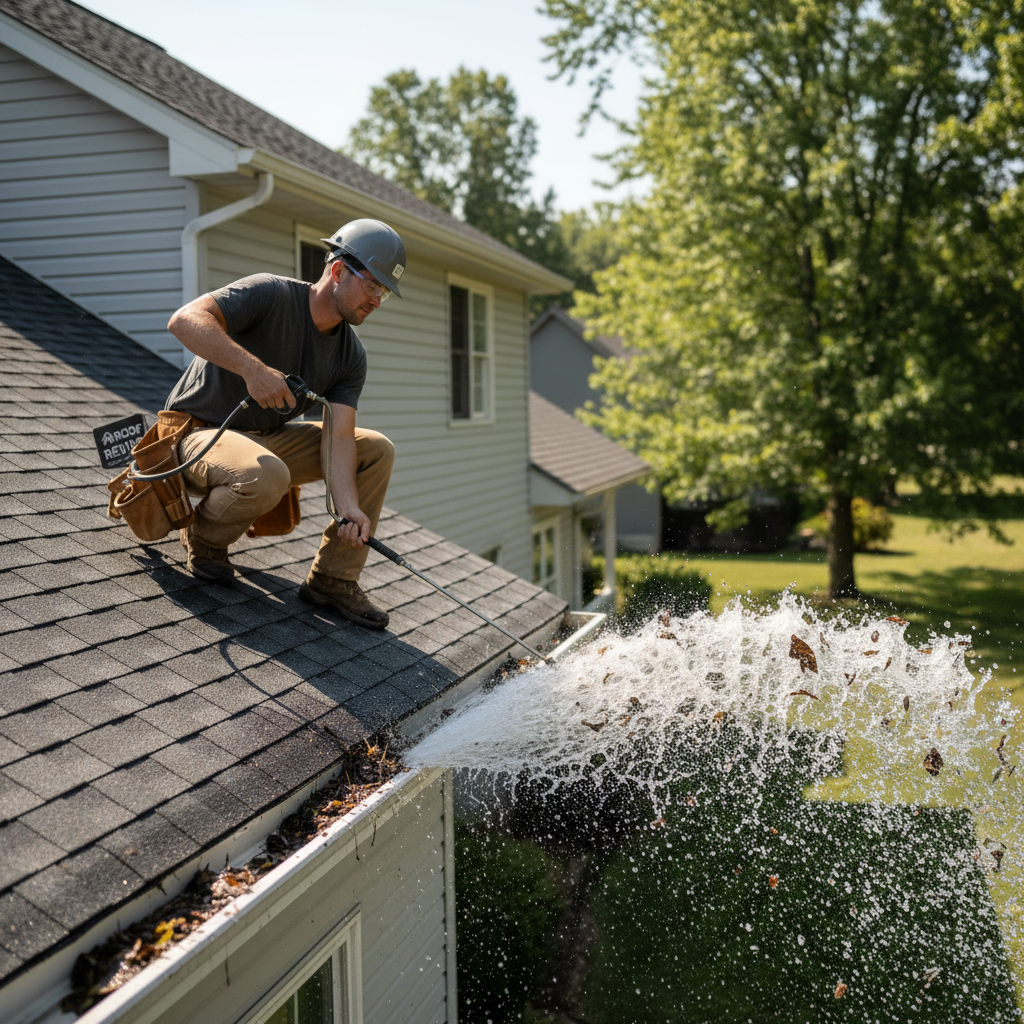
Will cleaning and treating moss or algae make your roof last longer, or is it just cosmetic? It can do either, depending on what’s growing and how you remove it. The deciding factor is whether the growth is trapping moisture or changing water flow, and whether your cleaning method damages shingles.
If you’re in Wilmington or elsewhere along coastal North Carolina, you’re dealing with the perfect mix of shade and humidity, so it’s normal to see black streaks and green patches on aging asphalt shingles. The hard part is that “no leaks inside” doesn’t prove nothing’s happening, but ripping into the roof with pressure or scraping can create the very problems you’re trying to avoid. This guide separates staining from functional trouble and helps you decide whether roof cleaning extends roof life in your situation. It also helps you spot when the juice isn’t worth the squeeze and treat your roof like it has to pass the salt-air test at the eaves and valleys, not just look clean.
Cosmetic Stain or Roof Damage?
If you’re mostly seeing thin black streaks that follow the downhill flow of rainwater, you’re usually looking at algae staining from gloeocapsa magma roof growth, not something actively “eating” your shingles. It can look awful from the yard, but on asphalt shingles it often behaves like a surface film. The bigger risk is aggressive cleaning that strips protective granules, and Consumer Reports-style caution is warranted here.
It’s more than cosmetic when growth changes how the roof sheds water or keeps parts of the roof wet. In coastal North Carolina, that tends to show up first where moisture already lingers: north-facing slopes and valleys near the eaves.
Use this as a quick decision check from the ground with binoculars (or from a ladder at the gutter line, not walking the roof). If you see thick, raised mats or valley “dams,” that’s functional.
| What you see | More likely category | Why it matters |
|---|---|---|
| Thin black streaks following water flow | Mostly cosmetic (algae stain) | Usually surface staining; bigger risk is damaging granules by aggressive cleaning |
| Thick, raised mats (moss) | Functional risk | Traps moisture; keeps shingle edges/courses wet longer |
| Shingle edges curling or lifted | Functional risk | Can signal prolonged wetting or mechanical lifting from packed growth |
| Clumps bridging between shingle tabs | Functional risk | Can wedge into overlaps, lift edges, trap grit/leaves |
| Debris-like “dams” in valleys | Functional risk | Redirects/backs up water; increases abrasion and re-wetting in the same spots |
| Overflow marks on fascia or green buildup in gutters | Functional risk | Suggests drainage issues and edge wetting that can drive perimeter rot |
Case in point: dark streaks plus constant overflow marks on fascia or green buildup in gutters suggests the roof isn’t just stained, it’s affecting drainage and wetting the edges that rot first.
Black streaks on asphalt shingles are often algae-related and can look severe even when the shingle surface is still structurally sound. Read more in our article: Roof Algae Black Streaks
When Growth Actually Shortens Roof Life

You can go years thinking the roof is “fine” because the ceiling stays dry, while the edges stay wet long enough to start the damage that costs real money later.
Algae staining by itself usually doesn’t “wear out” an asphalt shingle. What shortens roof life is when living growth changes the roof’s moisture and water-flow behavior, because asphalt shingles last longer when they dry quickly and shed water cleanly. In Wilmington’s humidity, shade plus frequent rain means the roof spends more hours damp, so anything that keeps water sitting at the surface has more time to do real work.
The failure paths are pretty specific, and ignoring them is just kicking the can down the road while moss sits there like a wet towel pressed against the shingle edges. Thick moss can act like a sponge at shingle edges and in valleys, keeping the lower courses wetter for longer. That extended wetness shows up first where roofs fail first: eaves and perimeter wood (fascia and soffit). A roof can look “fine” from inside while the drip edge area stays wet enough to soften seal strips and invite edge rot.
Growth also becomes a mechanical problem when it wedges into the overlaps. It acts like grit-packed sandpaper in the laps. If mats bridge between shingle tabs or pack into a valley, they can lift edges and redirect water sideways. That’s when you see granule loss and premature thinning, not because the plant is eating the shingle, but because the shingle is getting abraded and re-wetted in the same spots over and over.
A practical move: if you’re deciding whether it’s worth intervening, ask yourself, “Is this growth keeping parts of the roof wet or changing where water goes?” If the answer is yes, you’re no longer in the purely cosmetic category, and the goal shifts from “make it look better” to “restore drying and drainage at edges and valleys.”
Soft wash roof cleaning methods that help vs hurt

On an asphalt roof, the difference between “cleaned” and “damaged” can come down to pressure. Softwash best practices often call for very low pressure, commonly at or below about 100 PSI (see National Softwash Authority guidance).
If you clean for roof-life reasons, method matters more than the fact that you cleaned. Asphalt shingles fail faster when you strip granules or break the seal strips, and the two biggest ways homeowners accidentally do that are pressure washing and scraping. A roof can look “better” the same day and still lose years of protection because you removed the surface that takes the sun and weather.
A true softwash approach is usually the lower-risk option for shingles. It uses low pressure and a chemical that kills the organism so rain can rinse it away over time. Manufacturer-aligned guidance commonly points to a bleach-and-water mix as the effective mechanism for algae and moss, not force (as described in IIBEC-republished ARMA-aligned guidance). In practice, a contractor should talk like they’re trying to avoid abrasion, not like they’re trying to “blast it clean,” and if their Angi or HomeAdvisor pitch is all speed and power, walk away. If you hear “high pressure” or “turbo nozzle,” treat that as a roof-life risk, not a selling point.
High-pressure washing can remove protective granules and shorten shingle life even if the roof looks cleaner immediately afterward. Read more in our article: Pressure Washing Roof
Roof cleaning vs replacement cost ROI

A homeowner pays for a cleaning to buy time, then finds out the first real cost was hidden at the eaves. Another puts the same money toward replacement and avoids turning a simple reroof into a decking and fascia rebuild.
If your roof is in the 10–25+ year range, cleaning only “pays” when it buys real time. It also has to do that without increasing damage risk. That usually means you still have a roof with intact shingle surfaces and stable edges, and the growth you’re addressing is mainly keeping areas damp or clogging valleys and gutters. In that scenario, a roof-friendly softwash plus a prevention step (like ridge strips) can reduce edge wetting and help you avoid the expensive surprise: rotted decking and perimeter wood that turns a future reroof into a bigger project.
Replacement starts to win when the roof is already failing, since cleaning just delays the inevitable. Age alone isn’t the whole story, but if you’re seeing widespread granule loss or repeated edge lifting, cleaning becomes cosmetic money on a roof that’s nearing its limit. Even without interior leaks, perimeter rot and decking damage can build for a long time before a ceiling stain appears.
When a roof is already near the end of its service life, spending on cleaning often delays replacement without changing the underlying wear that drives failure. Read more in our article: Roof Restoration Vs Replacement
FAQ
Will Cleaning And Treating Moss Or Algae Make My Roof Last Longer, Or Is It Just Cosmetic?
It can extend roof life when growth is keeping areas damp or physically lifting edges, because you’re restoring normal drying and water flow. If you only have light black streaking (algae stain) and your shingles are otherwise in good shape, the life-extension is usually small and the bigger variable is whether the cleaning method damages granules.
How Fast Will Algae Or Moss Come Back In Coastal North Carolina?
In humid, high-rainfall areas like Wilmington and nearby beach communities, roof cleaning Wilmington NC results can be temporary as staining and growth often reappear in the next growth cycle if you don’t change the conditions that favor it (shade, lingering moisture). A roof can look dramatically better right after treatment because pigments lighten quickly, but that doesn’t mean recolonization won’t return.
How Often Should You Softwash An Asphalt Shingle Roof?
Treat frequency as “as needed,” not automatic annual service: you’re trying to prevent moisture and drainage problems, not chase a perfect color. If a contractor pushes a fixed schedule without looking at shade or edge wetting, that’s a bad plan, and Mike Holmes would call it out as selling shine instead of solving risk.
Do Zinc Or Copper Strips Actually Prevent Regrowth?
Yes, they can inhibit algae and moss for years (as noted in the RCABC Consumer Guide to Roofing). Placement and runoff path still matter. If the strip is too small, installed in the wrong spot, or water doesn’t sheet over the affected area, you’ll see limited benefit.
Do Algae-Resistant Shingles Or Warranties Change The Decision?
Algae-resistant shingles typically rely on embedded copper granules and often advertise algae-resistance in multi-year terms, which gives you a benchmark for how long “built-in prevention” can last versus a one-time cleaning. Separately, some manufacturers define algae-cleaning coverage windows in months or years (for example, TAMKO’s 2024 limited warranty references an Algae Cleaning Limited Warranty period), so if you care about warranty leverage, document condition and follow the manufacturer’s cleaning guidance instead of improvising.
Roof not getting any younger? Contact us or call 703-673-6301 to find out where you stand.Our soft wash roof cleaning service in Wilmington clears the growth that shortens shingle life.