You’re usually asking this because the numbers don’t make sense yet. One contractor talks about “restoration” or “rejuvenation,” another pushes a “full replacement,” and the word “reroof” gets used like a “wet paint” sign. People still step around it.
The simplest difference is this: roof restoration keeps your existing asphalt shingle roof in place and treats surface-level aging to buy time, while a full roof replacement tears everything off down to the deck so you can inspect and rebuild the roof system, think roof rejuvenation vs replacement. In coastal North Carolina, that tear-off matters because wind-driven rain can hide problems under the shingles long before you see a stain inside.
Roof Restoration vs Full Roof Replacement

Roof restoration (often called rejuvenation) means you keep the existing asphalt shingle roof in place and address surface-level aging and minor defects to extend service life, the real question is often how long does roof restoration last for your shingles. You’re not resetting the roof system; you’re buying time if the shingles and critical details are still fundamentally sound.
A full roof replacement means a tear-off down to the deck, followed by any needed deck repairs and a new roofing system, this is the practical core of roof restoration vs reroofing when contractors use “reroof” loosely. The tear-off is the dividing line. It is how you verify what’s happening under the shingles, and that’s often the real risk in Wilmington’s wind-driven rain. When a contractor says “reroof,” ask one blunt question: Are you tearing off to the deck, or going over the top (a recover/overlay)? If they dodge it, walk away. It is not optional, no matter how shiny their Google Reviews look.
The Gates: When Restoration Is Even on the Table
You can spend money on “restoration” and still end up paying for a tear-off later, right when the decking is soft and the leak is hardest to pin down. A few simple gate checks keep you from buying time on a roof that is already past the point of bargains.
Restoration only makes sense when you’re extending a roof that’s still doing its job as a system. If you’re using “no active leaks today” as your deciding factor, you’re likely to spend money in the exact window when hidden moisture and deck soft spots are easiest to miss.
| Gate | What to check | Typically points to |
|---|---|---|
| Age | Roughly 10–20 years old (not brand-new, not clearly end-of-life) | Restoration candidate if other gates pass |
| Granule loss | Widespread bald spots / heavy granules in gutters; ask about thresholds (e.g. >~30% loss vs ~75% retention or better) | Replacement if loss is high; restoration if retention is strong |
| Leak history | One isolated, well-identified issue (e.g. a single flashing detail) vs chronic leaks/recurring stains/multiple “mystery drips” | Restoration if isolated; replacement if recurring/uncertain |
| Deck uncertainty | Any reason to suspect what’s under shingles (previously covered-over roof, sagging/soft areas, past wind-driven-rain events) | Replacement (tear-off inspection + deck repair value) |
If you pass these gates, restoration can be a legitimate way to kick the can down the road.
Granule loss and age are helpful, but the fastest way to avoid a money-wasting “maybe” is to separate normal wear from true storm or defect damage. Read more in our article: Normal Shingle Wear Vs Damage If you fail one, treat any restoration pitch as a short-term patch and price it against replacement with that risk in mind.
Why Replacement Wins When You Need Certainty

A Wilmington homeowner signs off on a cheaper “fix,” then the first real wind-driven rain finds the one weak line nobody could see from the top. The bill is not just for shingles, it is for opening the system and finding what the roof has been hiding.
Replacement is less about getting prettier shingles and more about removing the guesswork, and that certainty often matters more than the headline roof replacement lifespan. Along the coast, water can work its way in and linger on the decking well before any ceiling stain shows up. A tear-off lets your roofer see the roof deck, cut out rot or soft spots, and tighten up attachment so the system performs as it’s supposed to.
It also forces reality on scope. Many codes limit homes to two layers of roof covering, so an “over-the-top” plan may not even be an option, no matter what your insurance adjuster says in a post-storm “hail-damage” roof conversation. If you want a decision you can stand behind, ask what they’ll inspect and repair after the shingles come off, not just what they’ll install on top.
Coastal North Carolina Tradeoffs
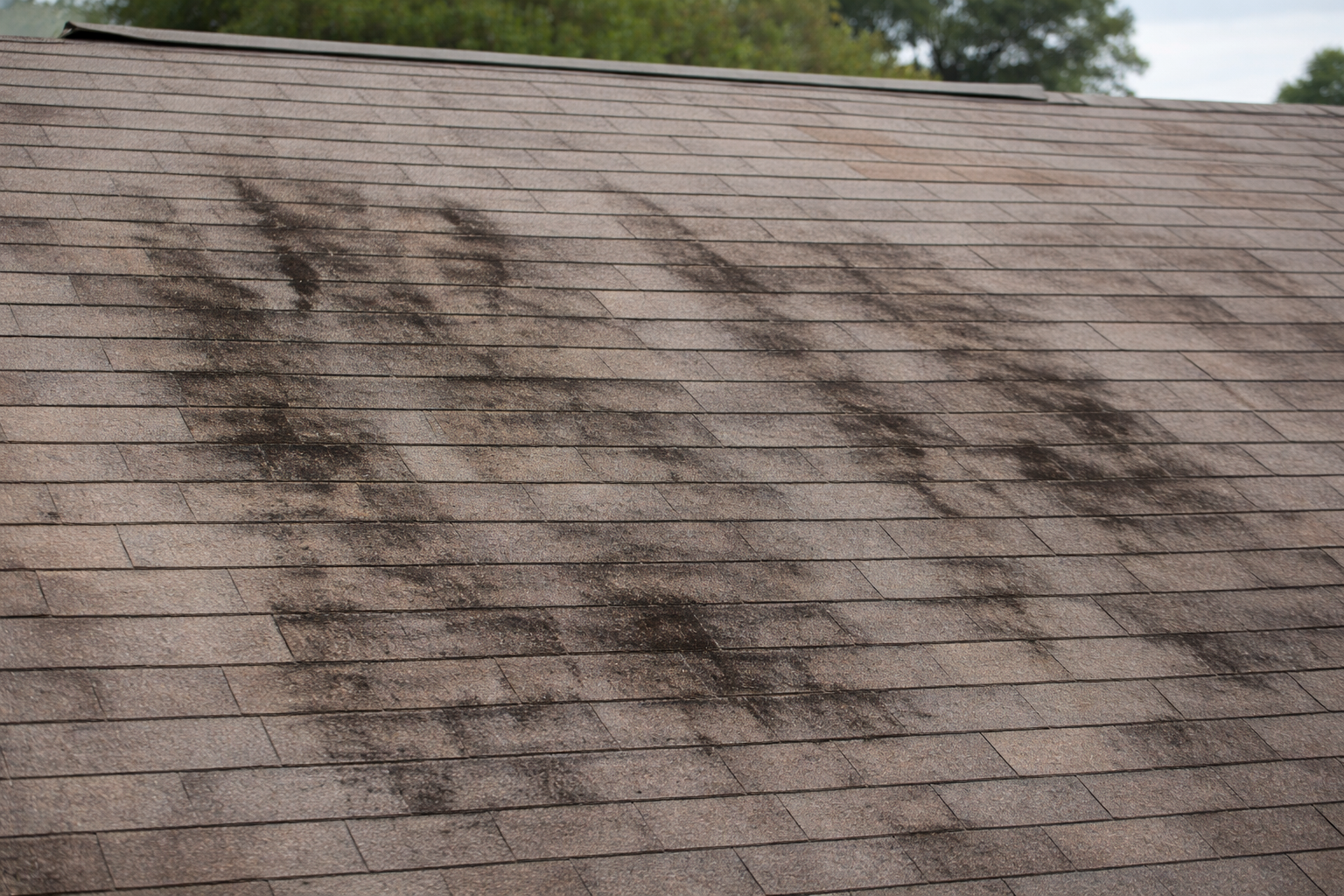
Here, humidity and algae can make an aging shingle roof look “done” before it’s failing, which can tempt you to replace when a qualifying roof could be restored. But coastal reality cuts the other way, too: wind-driven rain can sneak past tired flashing and nail lines like a tarp job in a nor’easter, and salt air roof damage can accelerate corrosion at metal details. If you’re banking on restoration to be a low-maintenance answer, you’re setting yourself up for disappointment.
For instance, if you keep seeing algae streaks and you had one small post-storm drip, restoration can buy time only if you also address the vulnerable details and plan on periodic cleaning and inspections. If you want fewer unknowns in this climate, replacement’s real advantage is that full reset and verification.
A coastal roof can look fine from the yard while salt air and humidity quietly speed up shingle aging and corrosion at exposed metal details. Read more in our article: Salt Air Humidity Shingles
Cost and Disruption Math You Can Trust

Replacement pricing is all over the map, but it is not unknowable: averages hover around $9,500, with roughly $4 to $11 per square foot as a common baseline. Without that anchor, it is easy to call a restoration quote “a deal” when it is really just an apples-to-oranges comparison.
Start by anchoring your baseline: a typical asphalt shingle full replacement often lands around $4 to $11 per square foot (with wide real-world variation by roof size, pitch, access, and material), which helps frame roof replacement cost Wilmington NC conversations. National averages hover around $9,500 with a broad overall range, and anyone pretending otherwise is selling you a story, not a scope, no matter how neat the HomeAdvisor bids look. That gives you a reality check so you don’t compare a restoration quote to a single neighbor’s “$25k roof” story.
Then compare ratios, not slogans, especially when weighing roof restoration cost vs replacement cost. If your roof passes the gates for restoration, you’ll commonly see it priced around 30% to 50% of replacement, with the tradeoff that you’re not paying for the same level of verification and reset. Disruption is usually the clearest difference: restoration may take hours, while replacement often takes multiple days and brings tear-off debris, noise, and access constraints. If you’re treating “cheaper and faster” as automatically better, you’ll miss the follow-on costs that matter, like discovering later that you still need a tear-off or paying more in the future to remove multiple layers if an overlay ever enters the conversation.
How to Choose and Protect Yourself
You leave the estimate meeting with clear, written scope answers, and suddenly the decision gets calmer because the vague promises disappear. When every bidder has to commit on tear-off, decking, details, and warranty, you stop buying vibes and start buying a roof system.
Decide based on risk and timeline, not just price. Restoration fits when the gates check out and your goal is time, not a reset. If you do not, bite the bullet and choose full replacement. If a gate fails, or you want the uncertainty stripped out in Wilmington’s wind-driven rain, go with full replacement. “It’s cheaper and faster” isn’t a plan if it leaves the real problem unverified.
To protect yourself, make every roofer answer the same scope questions in writing (including roof inspection Wilmington NC expectations): will you tear off to the deck or recover/overlay, will you inspect and replace any soft decking (and how it’s priced), what flashing is included, and what warranty applies to workmanship and materials.
A consistent inspection checklist helps you compare bids on evidence instead of confidence, especially around decking, flashing, and leak tracing. Read more in our article: Typical Roof Inspection
Roof not getting any younger? Contact us or call 703-673-6301 to find out where you stand.When the shingles are dry rather than done, our roof rejuvenation for Wilmington homes puts the lost oils back.