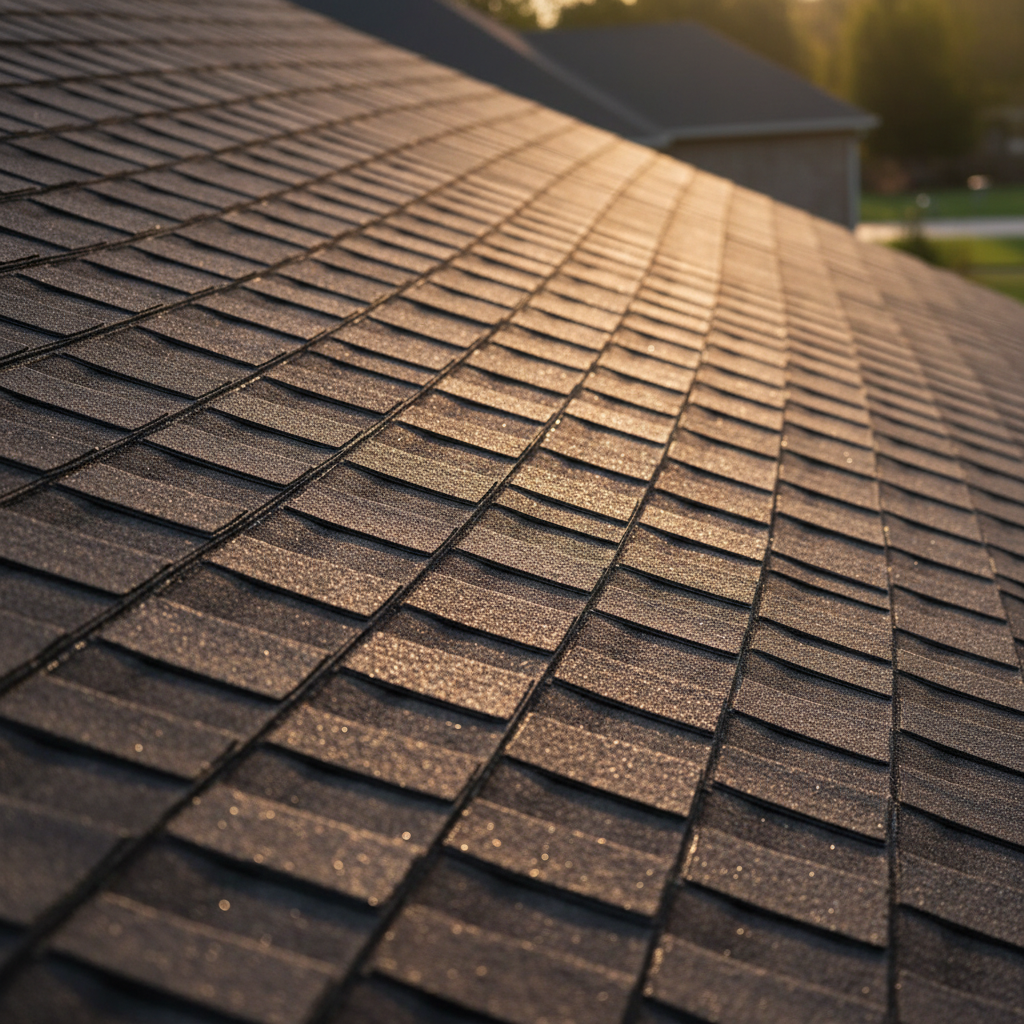
Will rejuvenation help prevent granules from coming off your shingles? Sometimes, yes, but only within limits. It may reduce future shedding on an intact roof.
If you’re finding gritty “sand” in your gutters around Wilmington, you’re probably trying to separate roof shingle granules coming off from a roof that’s simply aging or one that’s crossing a point of no return. Rejuvenation works more like conditioning than repair, so you can kick the tires on flexibility like brushing salt off a beach chair. It may restore some pliability to dried shingles. Over time, it may help more granules stay put. It can’t replace granules that already washed away or rebuild bald spots where the mat is showing. In the sections below, you’ll learn why granules come off in the first place, how to tell if your roof is a realistic candidate, what the best lab-style evidence suggests, and how to avoid making shedding worse with aggressive cleaning or sloppy prep.
Why Granules Come Off Shingles

You look in the gutters and assume the roof is failing, then spend money on the wrong fix while the real cause keeps grinding away at the surface.
Granules shed for a few very different reasons (shingle granule loss causes), and the fix depends on which one you’re seeing. Early in a roof’s life, you can get “rider” granules. They wash off after installation and collect in gutters without meaning the shingles are failing. Later on, you’ll see more loss from aging asphalt drying out or storm-driven abrasion.
Granules in gutters can be completely normal early on, and the key is distinguishing leftover install granules from active surface wear. Read more in our article: Leftover Granules Gutters
In coastal North Carolina, sun and salt air speed up that wear, so the same roof age can look “older” than you’d expect. And if you’ve had the roof aggressively cleaned, that “maintenance” can strip asphalt shingle granules in gutters fastest. That’s a bad trade, no matter how good the Angi review trail looked, and it can leave you with more grit in gutters right after the service.
What Rejuvenation Can and Can’t Do for Granule Loss
A homeowner sees grit after every storm and signs up for a spray treatment, expecting the roof to look “new” again, then gets frustrated when the same bare spots still show.
Rejuvenation products can make aging shingles more flexible by replenishing lost oils (roof rejuvenation for asphalt shingles), which may help granules hang on better going forward. In lab-style abrasion tests, treated shingles often shed less than untreated ones, so the numbers can pencil out like a light coat of wax on weathered paint. The idea isn’t pure magic (can you restore asphalt shingles). It’s about slowing future loss, not reversing past wear.
It won’t put missing granules back or reattach them to bald areas. If you can see smooth dark patches, exposed mat, or fiberglass showing, the protective surfacing is already gone there, and a spray won’t rebuild it. That’s where you stop thinking of rejuvenation as a fix and start treating it as, at best, a short delay.
Quick Triage: Is Your Roof a Candidate?
| What you see on the shingles | Likely a candidate for rejuvenation | Likely not a candidate |
|---|---|---|
| Granules in gutters (by itself) | Not enough to decide | Not enough to decide |
| Smooth dark “bald” patches | , | Yes |
| Exposed mat / fiberglass showing | , | Yes |
| Brittle cracking/curling that snaps when flexed | , | Yes |
| Active leaks or soft decking | , | Yes |
| Shingles look intact (no bald spots, no exposed mat, no active leaks) | Yes | , |
Bald spots, exposed mat, and widespread brittleness are some of the clearest signs that a roof is past the point where treatments make sense. Read more in our article: Signs Shingles Too Far Gone
| Whole slopes uniformly washed out vs. others (“age bands”) |, | Yes |
Does Roof Rejuvenation Work? The Evidence on Reduced Shedding

In widely cited lab abrasion comparisons, treated shingles showed about 46% to 53% less granule loss, including results like 1.43 g untreated vs. 0.67 g treated under one setup.
In the lab-style abrasion testing that gets cited, treated shingles often show less granule loss than untreated shingles, about 46% less in one brush-style comparison and about 53% less in another test summary (for example, 1.43 g untreated vs. 0.67 g treated under that setup), as summarized in PRI-referenced testing. That’s enough to say the category has a measurable effect on future shedding under standardized wear. In my view, that is more useful than most marketing language, and it’s the kind of framing Consumer Reports would respect.
But you shouldn’t treat those numbers like a promise for your roof in Wilmington wind or real storms (roof granule loss coastal climate), and you should get a second set of eyes on it. It’s like reading a tide chart and assuming the ocean will behave. Lab abrasion doesn’t replicate years of thermal cycling or driven rain. Once the surfacing is gone, it stays gone. If you’re looking for “zero granules in the gutters,” you’ll likely call a legitimate, limited benefit a failure.
If You Proceed: How to Avoid Making Granule Loss Worse
Done gently, you end up with a roof that stays cleaner longer and sheds less over the next few seasons, not a roof that looks “fresh” for a week and then dumps more grit than before.
If you decide to try rejuvenation, the biggest risk isn’t that it “does nothing”; it’s that the prep work (or the wrong contractor habits) accelerates the very shedding you’re trying to slow. Case in point: a hard pressure wash or aggressive scrubbing (roof soft wash vs roof rejuvenation) can strip loose granules fast, leaving you with cleaner-looking shingles and more grit in the gutters.
Treat this like a controlled maintenance step (roof rejuvenation benefits and risks). Insist on a before-and-after process, even if it feels less fun than a The Home Depot / Lowe’s Saturday-morning project run. A contractor should refuse high-pressure washing, and you should get a quick roof-walk or photo inspection to confirm you don’t already have bald spots or exposed mat, along with clear documentation. Take baseline photos of a few consistent areas (one slope and one valley), then set expectations: you’re aiming for less future shedding and improved flexibility, not “zero granules” after the next Wilmington downpour (roof rejuvenation vs roof replacement).
Roof not getting any younger? Contact us or call 703-673-6301 to find out where you stand.That’s exactly the problem HardShore’s roof rejuvenation for Wilmington homes was built for, at a fraction of replacement cost.