Could this void my shingle warranty or affect my homeowners insurance? It can, but not the way most contractors and neighbors describe it. What usually changes is what gets excluded later, and what you’ll have to prove.
If you’re in Wilmington or anywhere along coastal North Carolina and you’re weighing roof rejuvenation or repairs, you’re really managing three separate rulebooks at once: your shingle manufacturer’s warranty and your insurance company’s underwriting and claim decisions. This guide shows you what “void” means in practice, which methods create the biggest risk (especially pressure washing and film-forming coatings), and how to protect yourself with the one thing that consistently wins disputes: paperwork and before-and-after documentation.
“Void” vs “Denied”: What’s really at risk
You can do everything “right,” and still end up in a phone call where both the manufacturer and the insurer point at each other and ask you to prove what caused the damage. The fastest way to lose is to treat those two decisions like they follow the same rules.
People say “this’ll void your warranty” as if there’s a single switch that flips. In practice, you’re usually facing two different outcomes: a manufacturer warranty exclusion (they refuse to pay because your cleaning/treatment method or add-on gave them an easy causation argument), or an insurance denial/non-renewal (your carrier says the damage looks like wear or poor maintenance, or they decide the roof is too old for renewal in coastal North Carolina).
The practical split is simple: a warranty turns on compliance with written terms, while insurance turns on cause and timing.
| Situation | Who decides | Typical trigger | What they focus on | What helps you win |
|---|---|---|---|---|
| Manufacturer warranty exclusion | Shingle manufacturer | Cleaning/treatment/alteration creates an easy causation argument | Whether you followed warranty rules; whether the method created a plausible alternative cause | Manufacturer warranty language + contractor method in writing + before/after photos |
| Insurance denial or non-renewal | Insurance carrier | Wear/maintenance vs sudden damage; roof age/condition at renewal | What caused the loss and when; underwriting acceptability | Policy terms + renewal/underwriting notices + dated documentation of roof condition |
If you want to reduce risk before approving work, stop asking “will roof treatment void shingle warranty?” and start asking, “If I have a leak in 18 months, who will say it was caused by this work, and what proof will I have that it wasn’t?”
The Only Documents That Matter

A homeowner in Wilmington learns this the hard way when the installer is long gone, the shingle maker asks for the exact warranty language, and the carrier wants dates and photos, not recollections. In that moment, the paper trail is the product you’re really buying.
When a dispute happens, nobody should care what a salesperson said on the driveway, no matter how many Nextdoor neighborhood recommendations they name-drop. You win or lose based on paperwork, and each part of this problem has its own set.
For you, the controlling documents are: the manufacturer limited warranty for your specific shingle line (including any algae-stain/cleaning language) and your homeowners policy contract for claim decisions (what counts as sudden damage vs. wear). If you can’t get it in writing, treat it as a rumor.
The Methods Most Likely to Void a Shingle Warranty
Imagine approving a “safe” cleaning, then discovering a leak months later and watching the word “maintenance” turn into a get-out-of-liability card. The wrong method doesn’t have to cause the whole problem, it just has to make an alternate cause believable.
Most manufacturer warranty fights hinge on causation, not on whether cleaning happened. Once the roof has a plausible, documentable alternative cause like missing granules or disturbed seal strips, the dispute shifts fast. Think of it like scuffing the playing surface before the game and then arguing about the score. If you choose a method that makes the shingles look different afterward, you’re also making it easier for someone to say the roof changed because of the work, not because of a defect.
The highest-risk methods tend to fall into a few buckets
-
Pressure or power washing: It can strip granules and lift edges. Later, if you see premature wear or a leak, the manufacturer can point to physical disturbance and walk away.
-
Shingle coatings or “sealants” that leave a film: roof coating voids shingle warranty arguments are common because many manufacturers treat aftermarket coatings differently than normal maintenance. A coating can change heat, drying, and how the shingle sheds water, which gives them an easy “unapproved alteration” argument.
-
Harsh chemical mixes (too strong, wrong product, poor rinse control): Strong solutions can discolor shingles or attack asphalt. Even when the roof doesn’t fail immediately, it creates a clean story for why it might age oddly.
-
Unapproved modifications and attachments: Extra penetrations, hardware, or swapped materials (think non-approved accessories or questionable repair methods) can turn a future claim into finger-pointing over who changed what.
What you can do differently: before you sign, ask the contractor to state in writing exactly what they won’t do (especially no pressure washing and no film-forming coatings unless manufacturer-approved) and what product category they are applying (penetrating treatment vs coating). If they can’t describe the method plainly, you’re the one buying the risk.
How Homeowners Insurance Can Be Affected

You might spend money to make the roof look better and expect your carrier to reward that with an easier renewal and fewer questions. Then the renewal letter shows up and the roof is still treated like the same age, only with clearer photos.
Insurance usually reacts in two different moments, and they don’t work the same way. At renewal/underwriting, your carrier may judge the roof by age and visible condition, sometimes from a drive-by or drone photos, and that can feel unfair under insurance underwriting roof condition requirements if you did the right maintenance but missed the HOA architectural guidelines packet. A rejuvenation or soft-wash can make the roof look cleaner, but it rarely makes the roof “younger” in their system, so you can still get a roof age insurance nonrenewal letter in Wilmington that says the roof is too old or shows wear even after you paid to maintain it (see roof rejuvenation vs. replacement guidance).
During a claim, the question is whether the loss was sudden storm damage or ordinary deterioration and maintenance. That means a treatment doesn’t automatically hurt you, but it also doesn’t create coverage for gradual aging. If you’re counting on insurance to backstop an aging roof, you’re likely to learn that’s not what you’ve been paying for.
Some carriers in coastal North Carolina will still flag a roof as “too old” at renewal even after cleaning or rejuvenation if the roof’s install date and condition don’t meet underwriting guidelines. Read more in our article: Wilmington Roof Too Old
Proof Wins Disputes: The Documentation Checklist
When an adjuster is looking at drone photos and a file, “we had it treated last year” doesn’t help unless it’s tied to dates and condition. If you can hand over a clean timeline in minutes, the conversation changes.
If something goes wrong later, the deciding factor isn’t opinions about how it “looked,” it’s evidence of baseline condition and the exact scope of work. Treat it like a roof inspection report for insurance, with every receipt and photo in order. This matters in coastal North Carolina, where renewals and claims can turn on a quick drone photo and a file review.
Before and after the work, collect
-
Your shingle warranty PDF for your exact product line (and any algae-cleaning language)
-
A one-page method statement from the contractor: no pressure washing, mix/process, and whether it’s a penetrating treatment or a coating
-
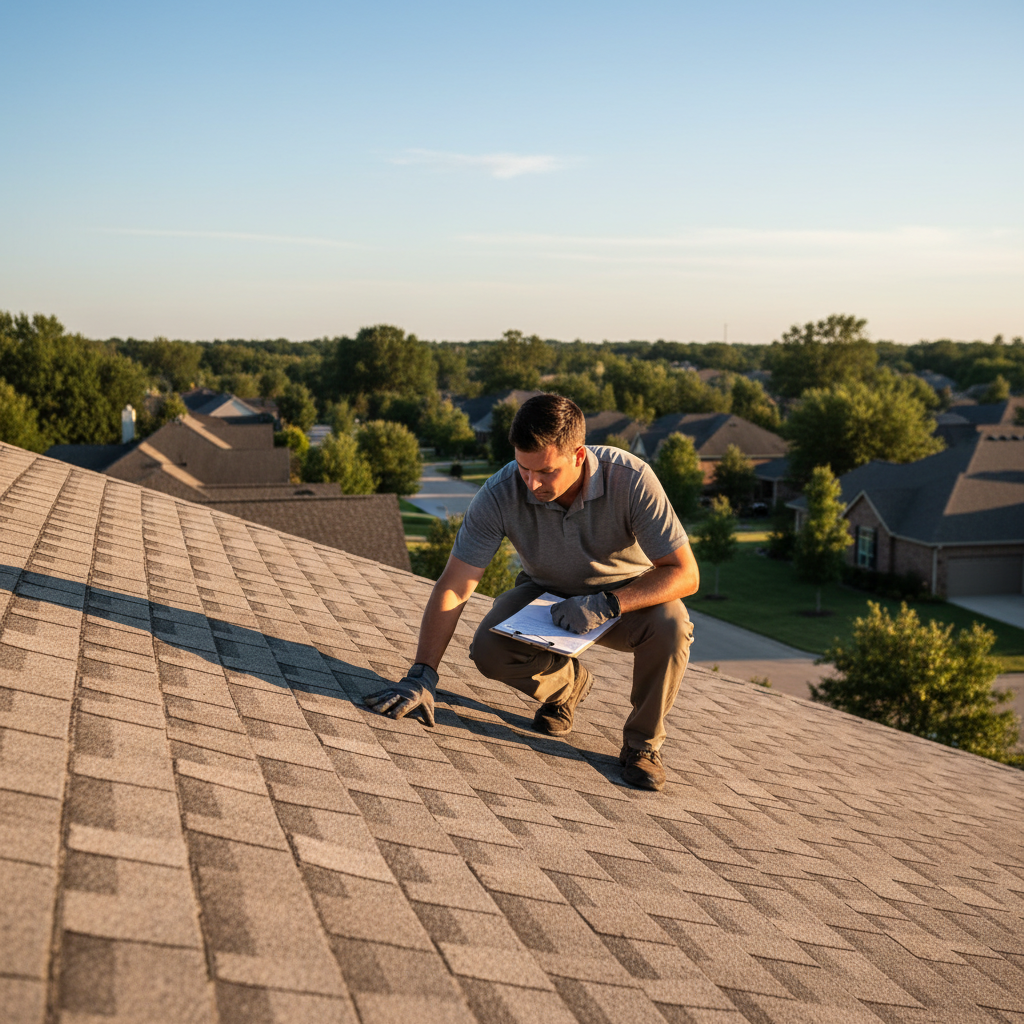
Photos that prove baseline condition: wide shots of each slope plus close-ups of valleys, flashing, vents, and any existing stains or granule loss
-
Proof of date and scope: signed estimate, invoice marked paid, and the roof address on the paperwork
-
Product identifiers: product name/category and batch/lot info if available (a screenshot of the label/spec sheet works, and it is non-negotiable to keep it like a Consumer Reports home-maintenance buying guide would)
-
After photos from the same angles and notes on anything discovered or repaired during the work
Decision filter: should you proceed, pause, or replace?
If you make this call well, you get the upside of a cleaner, protected roof without buying a future dispute you can’t win. The goal is to match the work to the roof you actually have, not the roof you wish you had.
If the roof is sound and the method is documented, you can usually proceed. If either is uncertain, pause. If the roof is already failing, replace.
Proceed if (1) you have clear before-photos showing no active leaks or widespread curling, and (2) the contractor will put in writing: no pressure washing and exactly what they’re applying. Pause if you can’t get those documents or the roof’s baseline condition is unclear. Replace if you’re hoping insurance or a warranty will “cover it later.” That belief is how you end up paying twice, even if your Angi (formerly Angie’s List) reviews look perfect.
Physical signs like granules in gutters, cracking, and curling are often used to argue “normal aging” rather than sudden damage, even when leaks show up later. Read more in our article: Normal Shingle Wear Vs Damage
Roof not getting any younger? Contact us at Contact us or call 910-241-1152 to find out where you stand.