You don’t start looking up tile roof cleaning because you’re bored. You do it because the roof’s gone dark or blotchy, and you want it fixed without cracked tiles or a surprise ceiling stain a week later.
This guide shows you what’s staining your tile, why tile roofs punish “blast it clean” shortcuts, and how to compare Wilmington-area bids by the plan and protections, not buzzwords. By the end, you’ll know what a normal result looks like on day one versus 30 to 60 days later, and what questions to ask so your roof gets cleaner without forcing water where it doesn’t belong.
Tile Roof Cleaning: What You’re Really Removing

On a tile roof in coastal North Carolina, the “dirty” look is often a mix of issues, which is why results vary. Most dark streaking is algae or mildew living on a thin film of organic debris and moisture, not eating the tile itself, classic roof algae removal tile roof territory (as emphasized in a Tile Roofing Industry Alliance maintenance protocol). Moss shows up as thicker, spongy green clumps that hold water. Lichen is the stubborn one: crusty white, gray, or pale green patches that bond tightly and can look unchanged right after treatment even when it’s already dead.
If you’re expecting “looks good from the street” the same day, you’ll misjudge a normal outcome. It’s closer to treating a stain than scrubbing off dirt. For example, algae streaks often lighten fast, while lichen may need time (and sometimes a second visit) before weather and gentle rinsing fully release what’s been anchored to the surface.
Why Tile Roofs Punish Shortcuts

You can do everything “right” as a homeowner and still end up paying twice if the crew treats tile like a driveway. The worst part is the damage often shows up after they’re gone, when the roof is finally tested by rain, exactly the tile roof pressure washing risks people don’t see upfront.
Tile looks tough, but the system is less forgiving than people expect, which is why roof cleaning without pressure washing is the safer baseline on tile. The tiles shed water by overlap and gravity, so a “blast it clean” approach can push water up under laps, into flashings, and onto underlayment that may already be aged from salt air and heat. As an example, spraying upward along a roof-to-wall transition can act like a hose aimed under shingles, and you don’t see the mistake until you notice a ceiling stain days later.
Black streaks that look like “dirt” are often algae growth and can return first in shaded, damp areas. Read more in our article: Roof Algae Black Streaks
Shortcuts also break things, and that is not “good enough,” even with shiny BBB ratings. Damage still costs you. Walking the wrong path, stepping on unsupported edges, or yanking moss off with aggressive brushing can crack tiles you didn’t even realize were fragile. On a Wilmington-area home with a steeper front slope, that can turn a cosmetic cleaning into a tile-replacement hunt when matching pieces aren’t sitting on a shelf.
Then there’s overspray and runoff: strong mixes and uncontrolled rinsing can scorch foundation plantings and send concentrated runoff where gutters discharge into mulch beds. When you compare options, don’t ask “Do you use bleach?” Ask how they control pressure, where the runoff goes, and what they do to protect landscaping before they start.
What “Soft Wash” Should Mean
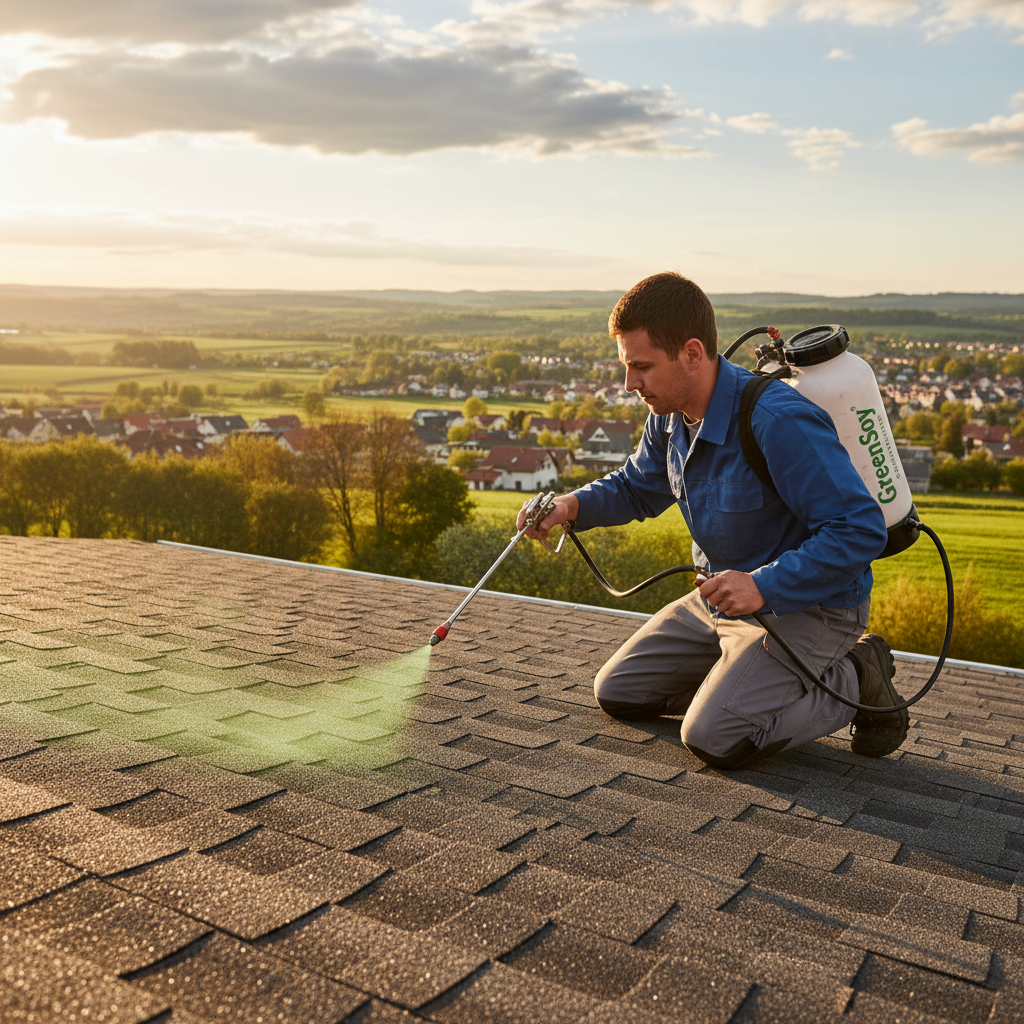
“Soft wash” only helps if it is a process, not a slogan. Get it done right the first time. A real soft wash follows a defined sequence, not improvisation. On tile, it should mean the cleaner gets results with chemical dwell time and controlled flow, not force, think salt air roof cleaning that respects the system, not brute strength. For instance, a legit soft-wash setup applies solution at very low pressure (often well under 500 PSI, sometimes under 100 PSI) so you’re not driving water under laps or chipping fragile edges just to make the roof look instantly brighter, consistent with softwashing best-practices guidance.
You can vet the process without becoming a chemist. Ask what they’re applying, at what working strength, and how long they let it sit before any rinse. Tile is porous, so the job often relies on patience: apply, let it dwell, then rinse gently or let weather finish the release, especially with lichen. If someone’s pitch is basically “we’ll hit it hot and it’ll be perfect in an hour,” you’re paying for aggression, not skill.
Stronger isn’t automatically safer. High-strength bleach can scorch landscaping and spike runoff problems, while a properly diluted mix paired with pre-wetting plants, controlled rinsing, and (when needed) runoff neutralizer in gutters can be far easier on your yard. Before you hire, get clear answers on
A true soft-wash job relies on dwell time and low-pressure application, not “rinsing harder” to force instant brightness. Read more in our article: Soft Wash Roof Cleaning
-
What pressure range they use on tile (and whether they ever “need” high pressure)
-
How they manage dwell time versus over-rinsing
-
How they protect plants and control where roof runoff concentrates
The Coastal NC Variables That Change Results

A neighbor gets their roof cleaned and it stays bright for two summers. You do yours and the north slope starts shading back in first, even though the work was solid.
In Wilmington and the beach towns, your roof doesn’t re-soil evenly, no matter what someone swears worked for their house. That’s the climate here. Shade lines (under live oaks, on north-facing slopes), constant humidity, and salt-air moisture mean algae and mildew usually return first where tiles stay damp longest, even after a solid soft wash.
Debris load matters as much as chemistry: leaves and grit collect in valleys, at drip edges, and behind tile transitions, creating the thin “compost layer” growth feeds on. A good outcome often looks like this over time: the roof stays broadly brighter, while those collection zones slowly become the first spots you watch and keep cleared.
A Decision Framework for Choosing a Provider
Two bids come in at the same price, both promising “soft wash” when you search tile roof cleaning near me. One leaves you with a clean roof and intact landscaping, and the other leaves you chasing cracked tiles and blaming the weather.
The simplest way to compare bids is to judge the plan, not the price, especially for tile roof cleaning in Wilmington where conditions vary block to block. Buy once, cry once. Think of the plan like a receipt of ingredients, not a tagline. Tile roof cleaning is a risk-managed job: you’re paying for someone to remove growth while controlling water intrusion, breakage, and runoff on your specific roof. Two companies can both say “soft wash,” but only one will ask what kind of tile you have and how they’ll move on the roof without turning your ridge line into a cracked-tile scavenger hunt.
Use this lens: “Can you explain, in plain English, how you’ll clean my tile roof without forcing water, breaking tile, or burning landscaping, and what I should realistically expect afterward?” | Evaluation area | What to ask/confirm | What it prevents/clarifies |
|—|—|—|
| Tile type and age fit | Clay vs. concrete; visible condition issues; brittle corners/prior repairs; underlayment risk that changes the approach (including safe cleaning for clay tile roofs) | Mismatch between method and roof condition; hidden fragility and intrusion risk |
| Access and fall-protection plan | Ladder placement; how gutters/edges are protected; setup for two-story slopes/tight lots/HOA constraints (including OSHA fall-protection requirements that apply to residential roofing work) | Safer jobsite setup; fewer edge and gutter problems |
| Walkability plan (avoid breakage) | Where they will/won’t step; which areas can be done from ladders or lift work instead of crossing field tiles | Cracked tiles and avoidable breakage from foot traffic |
| Runoff and landscaping protection | What they pre-wet/cover; where runoff concentrates (downspouts/mulch beds); controlled rinsing and whether neutralizer is used when needed | Scorched plants; concentrated runoff damage; avoidable mess and complaints |
| Retreatment timing and warranty terms | What “clean” means on day one vs. 30–60 days (lichen); expected return in shade lines; what’s in writing if results rebound early | Unrealistic expectations; unclear follow-up scope; vague promises |
Your Bid Checklist: Scope, Price, and Add-Ons

That “optional” sealant or coating line item is not small change. Many quotes price it separately and it can add roughly $1.50–$4.00 per sq ft, which can flip the real total fast (a range reflected in an industry cost guide).
You’re not comparing “tile roof cleaning” bids unless each quote defines the same finish line. One company may price a light treatment that leaves lichen ghosts for weeks, while another includes a return visit, valley clearing, and controlled runoff steps, all of which change your real cost and risk.
Ask every bidder, even the ones you found on Angi (formerly Angie’s List), to put this in writing for roof cleaning in Wilmington. If it is not written, it is not real. Ask exactly which roof sections and details are included (field tiles and valleys), what “clean” means on day one versus after weathering, and what they exclude (broken-tile replacement and interior leak repairs). Then pin down price structure and add-ons: total price for clean-only; any separate line item for sealant/coating (often priced separately and can add roughly $1.50–$4.00 per sq ft); and whether a follow-up application for stubborn lichen is included or billed separately.
If a bid looks dramatically cheaper, don’t treat it as a deal by default. Treat it as a clue that the scope is thinner, the protection steps are missing, or the exclusions will show up as “extras” after the roof is already wet.
If you suspect water intrusion after any roof cleaning, catching small leaks early can reduce insulation damage and mold risk. Read more in our article: Early Roof Leak Signs
FAQ, Purpose: Resolve Last-Mile Uncertainties (DIY Viability, Timeline for Lichen, Landscaping Safety, Retreatment Cadence, What to Do If Stains Remain)
Can I DIY Tile Roof Cleaning, or Should I Hire It Out?
You can handle ground-level maintenance like keeping valleys and edges clear of leaves, but climbing and working on tile is where DIY plans fall apart fast. If you can’t control low-pressure application, runoff, and where you step, DIY is a headache waiting to happen. Tile can feel solid until it suddenly cracks under a misplaced step.
How Long Does It Take for Lichen to Disappear After Soft Washing?
Killing lichen and seeing it fully release aren’t the same thing, so lichen removal from roof tiles may look “unchanged” right after treatment. It often fades gradually with weathering, and some roofs need a second application around 30 to 60 days later to fully break the bond.
Will Bleach or Roof-Cleaning Chemicals Kill My Landscaping?
They can if the contractor treats runoff like an afterthought, especially where downspouts dump into mulch beds. You’re safer with a controlled process (pre-wetting, controlled rinse, and runoff management) than with someone claiming they use “no bleach” but still floods your plants with dirty roof runoff.
How Often Will I Need Tile Roof Cleaning in Coastal North Carolina?
Expect the north-facing and shaded sections to re-darken first because they stay damp longer in Wilmington-area humidity. Many homeowners end up on a maintenance rhythm of light retreatment every 1 to 3 years depending on shade, tree cover, and how much debris your roof traps.
What If Stains or Shadows Are Still There After Cleaning?
First, separate “still alive” from “still visible,” because dead growth can leave faint ghosts until rain and time finish the release. If it hasn’t improved after a few good rains or 30 to 60 days, ask for an inspection and a plan, not a harder wash, since aggressive pressure is how you trade cosmetic progress for water intrusion or broken tile.
Roof not getting any younger? Contact us or call 703-673-6301 to find out where you stand.