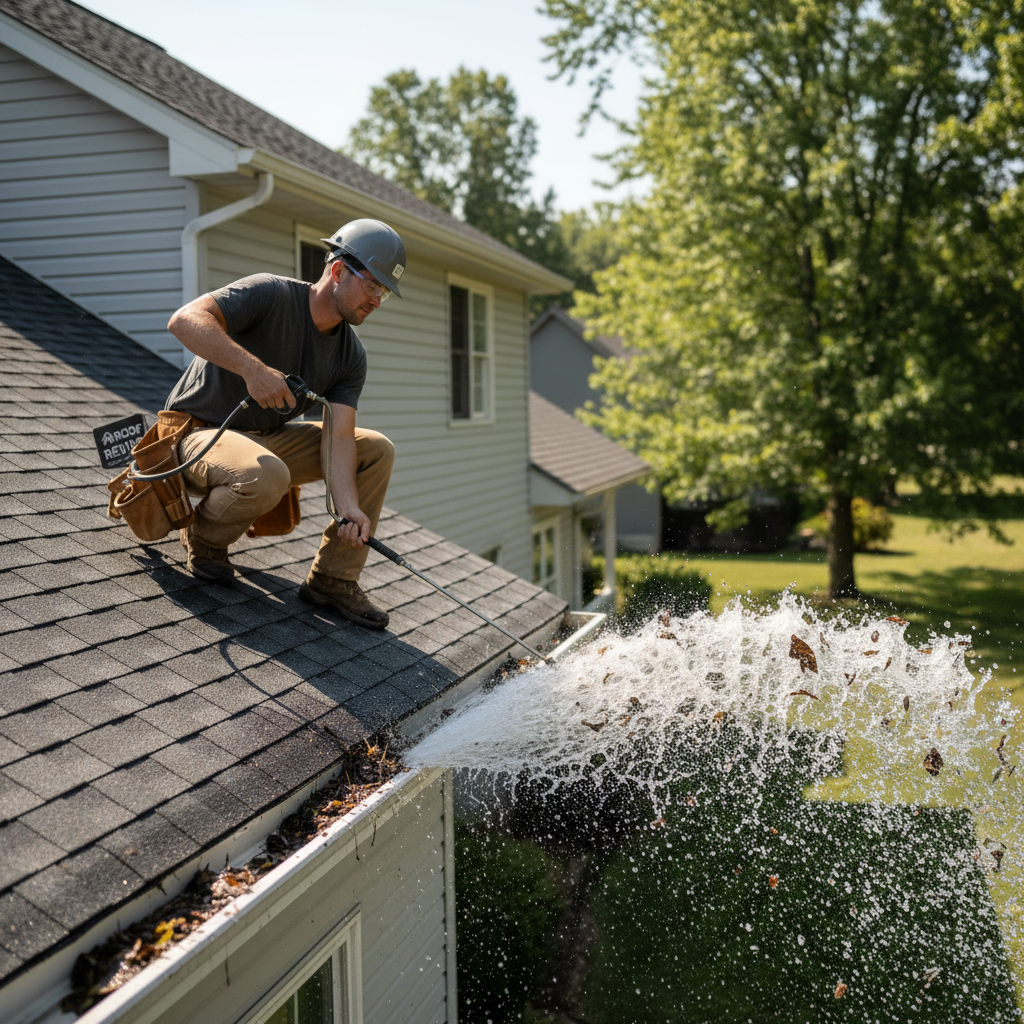
You can treat a roof with black streaks or algae safely, but you can’t blast it clean. The right approach kills the growth with a roof-safe chemical treatment and gentle rinsing. And yes, in Wilmington’s humid, shaded conditions, it can come back over time.
If you’re staring at those dark streaks and wondering whether you’re looking at harmless staining or something that shortens shingle life, you’re not alone. The problem is that the quickest-looking options often come with the highest risk: aggressive pressure and hard brushing can strip granules and age an already tired roof. This guide helps you identify what you’re seeing and understand what “soft wash” should mean in practice. It also sets realistic expectations for how long results last and what you can do to slow regrowth.
What Those Black Streaks Mean
Most black streaks on roof asphalt shingles in humid, coastal areas are algae staining, not “dirt.” The algae (often gloeocapsa magma shingles) feeds on the limestone filler in many shingles and leaves dark bands that often start on the north-facing or shaded slopes and spread downslope with runoff. That matters because the goal isn’t to grind it off. It’s to kill it and let weathering rinse it away, like a slow gutter flush after a storm.
Before you choose a method, kick the tires with a quick reality check: dark stains on asphalt shingles from algae usually look like thin, ink-like streaking, while moss shows up as thicker green clumps.
| What you see | Typical look on shingles | What it suggests |
|---|---|---|
| Algae staining | Thin, ink-like dark streaks/bands | Staining (goal is to kill it; weathering rinses it away) |
| Moss | Thicker green clumps | Physical growth that can hold moisture |
| Lichen | Crusty, raised spots | More tenacious, raised growth (avoid aggressive methods) |
If what you’re seeing is raised or gritty, or your shingles are already losing lots of granules, aggressive cleaning can do more harm than good, and you should shift from “make it look new” to “avoid shortening what’s left.”
The Only Safe Way To Treat Algae

One “quick clean” can turn into a roof that looks worse six months later because the shingles lost the granules that were protecting them. The safest method takes longer, and that tradeoff is worth it.
The non-negotiable is this: roof algae treatment means you kill it, not blast it off. Industry guidance for asphalt shingles is blunt, and I agree with it: pressure washing and brushing are a bad idea. If you want receipts, check CertainTeed asphalt shingle warranty documentation on prohibited cleaning methods.
A safe, effective approach uses a roof-appropriate cleaning solution (often sodium hypochlorite roof cleaning at the right dilution). It gives it time to work (often roughly 15–20 minutes of dwell time) and then relies on a gentle rinse and normal weathering to carry away the dead growth. If you’re expecting instant “like-new” results from force, you’re choosing the one method most likely to damage the shingles.
When you’re talking to a contractor, listen for “chemical application + dwell time” and “low-pressure rinse,” and treat any plan that includes “power wash” or “scrub it until it’s gone” as a no pressure roof cleaning red flag.
Roof-safe cleaning should rely on chemical dwell time and low-pressure rinsing rather than force that can strip protective granules. Read more in our article: Soft Wash Vs Pressure Washing
How Long It Stays Clean Here

In humid coastal climates, many reputable providers set expectations at roughly 12–24 months of clean-looking results after a proper soft wash. If someone is implying you will get five years from the same roof in the same shade, something is off.
In Wilmington, a properly done soft wash usually keeps an asphalt shingle roof looking clean for about 12–24 months. If you expect it to stay spotless for many years, you’ll likely end up disappointed and more likely to choose an overly aggressive method next time.
Regrowth comes back faster—does roof algae come back—when you’ve got heavy shade (especially north-facing slopes) and overhanging trees dumping debris. Persistent moisture near creeks, ponds, or poor drainage keeps the roof in a damp, salt-air stew. If you want it to last longer, focus on what feeds the cycle: keep valleys and gutters clear and trim back branches.
Coastal shade, humidity, and salt air can speed up staining and wear on asphalt shingles compared with drier inland areas. Read more in our article: Salt Air Humidity Shingles
How to slow algae returning
A homeowner gets the roof cleaned, then leaves the same overhanging limbs and clogged valleys in place and wonders why the streaks are back before the next summer. The fix is rarely a stronger chemical; it’s breaking the moisture-and-shade loop.
You can slow regrowth, but you can’t “solve” it permanently in a humid coastal climate—roof algae regrowth prevention has limits—and anyone selling a multi-year guarantee is overselling it. Follow the “three quotes” rule for hiring home contractors (get 3 bids before deciding). The biggest wins usually come from reducing shade and moisture: trim back branches over the roofline and keep valleys/gutters clear so wet debris doesn’t sit.
Metal-ion inhibitors can help, with limits. Zinc or copper strips don’t remove existing streaks, and they mainly protect the area downslope, not the whole roof; heavy rain can shorten the effective band. As an illustration, if you already see a cleaner strip of shingles below metal flashing, that’s the same downslope effect you should expect from strips.
Simple maintenance steps like trimming back branches and improving sun exposure can noticeably slow down repeat algae and moss growth. Read more in our article: Prevent Algae Moss Return
DIY vs Hiring a Pro
If you can treat the roof evenly without putting yourself at risk or flooding your landscaping with runoff, you save money and still get a solid outcome. If you cannot, the “savings” disappear fast.
DIY can work if the roof is low and walkable, the staining is light, and you can apply the treatment evenly without sending concentrated runoff into landscaping. But on a typical Wilmington two-story with a steeper pitch and live oaks shading one slope, DIY usually trades a small savings for a bigger risk. What’s the damage? Often it’s roof cleaning safety fall protection issues and a slip-and-slide on wet shingles, plus uneven coverage that streaks again quickly.
Hire a pro if you’re dealing with heavy staining or an older shingle roof where you need consistent chemical application and controlled runoff more than you need instant visual results.
Roof not getting any younger? Contact us at Contact us or call 910-241-1152 to find out where you stand.