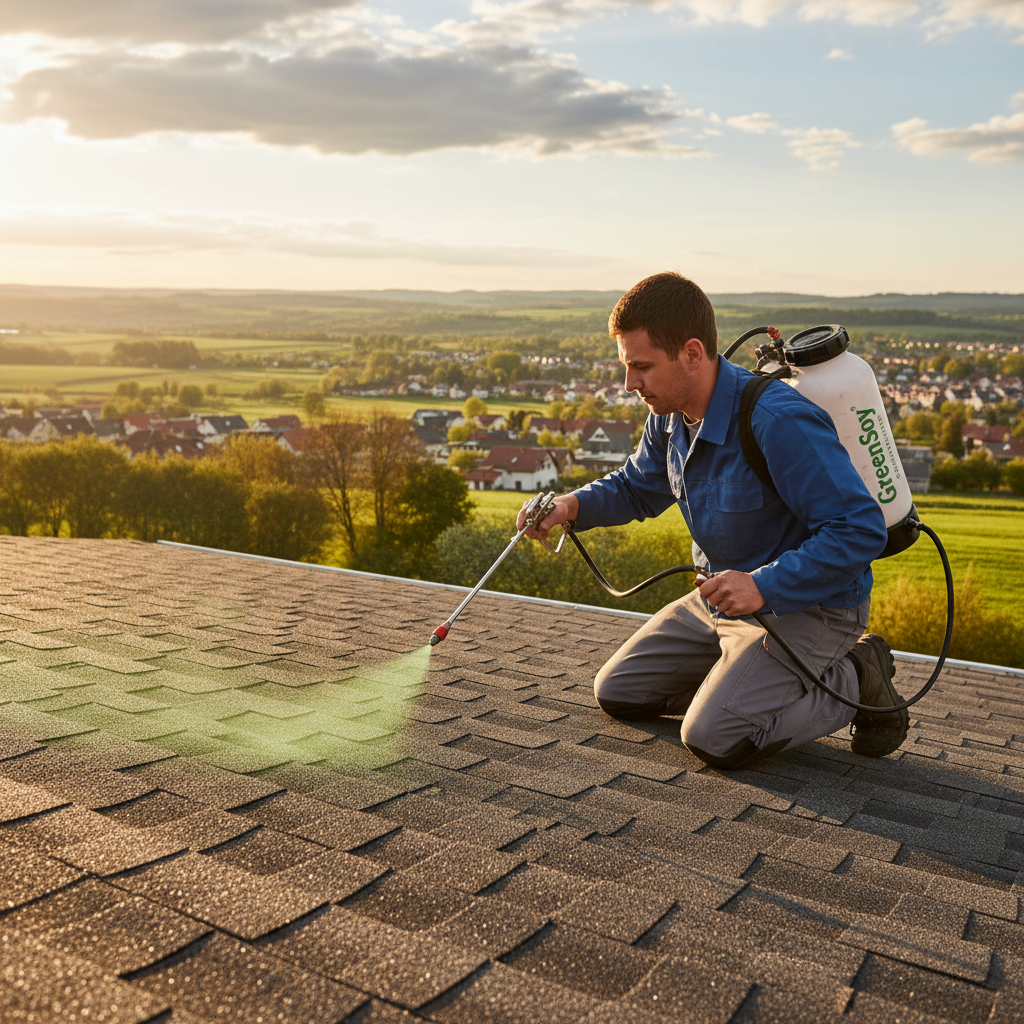
How long can roof rejuvenation extend the life of an asphalt shingle roof? In most real-world cases, you’re buying a few extra years, not a reset. Plan on roughly 3–6 years from one treatment when your shingles are still intact (many providers describe a single application as adding up to about 6 years).
If you live near Wilmington or on the North Carolina coast, that range depends less on the product label and more on what your roof is doing right now.
| What you’re hearing | Realistic planning takeaway | What it depends on |
|---|---|---|
| 3–6 years from one treatment (shingles still intact) | Typical “buy time” range for many roofs | Current shingle condition (flat, sealed, no active leaks) |
| “Up to 15 years” | Best-case marketing ceiling, not the norm | Ideal timing + unusually good starting condition |
| Longer totals with repeated treatments | Different promise than one application | Ongoing maintenance cadence + roof stays mechanically sound |
| ~5-year warranty language | Often about flexibility, not leak-proofing | Warranty terms and exclusions (what is guaranteed) |
This guide separates marketing claims from realistic expectations. It also helps you avoid delaying a needed replacement when rejuvenation is just roof lipstick.
How Long Does Roof Rejuvenation Last?

Most homeowners should treat roof rejuvenation as a single-digit bump, not a reset. A realistic planning range is about 3–6 years from one application when the shingles are still fundamentally intact (not already failing in wind or leaking). You’ll also see top-end claims like “up to 15 years” in ads, but that number usually reflects best-case timing and condition (a common example is Roof Maxx’s “up to 15 years” framing).
If you stay on a maintenance cadence, some providers claim longer totals with repeated treatments, which is a different promise than “one spray buys a decade.” Many warranties run about 5 years and tend to stress restored flexibility over leak prevention, so align any “years added” expectation with what’s actually guaranteed (see NRCA Inspection & Certification Association commentary on ~5-year rejuvenation warranties).
What Actually Limits “Roof Life”
You can spend money to make shingles feel less brittle and still get hit with the first leak that starts at a vent boot or flashing. If the weak link is something a spray does not touch, the next storm does not care about the label on the invoice.
Rejuvenation mostly targets shingle flexibility, but a roof dies when it stops shedding water and wind. Trusting a coating over mechanics is a bad bet, no matter what Angi listings imply. In coastal North Carolina, a roof can “look okay” from the yard yet be one storm away from leaking when a different weak link fails first.
The clock typically stops when you get failures like cracked or missing flashing around chimneys/vents or unsealed or wind-lifted shingles that won’t lay back down. The practical implication: don’t judge a rejuvenation decision only by “years added” or roof rejuvenation lifespan extension. Judge it by whether it meaningfully reduces the next season’s risk of leaks and blow-offs on your specific roof.
Coastal North Carolina Reality Check

On the coast, your “years added” usually compress because asphalt shingle roof life expectancy North Carolina doesn’t just age on a calendar. They age like a sun-baked rubber gasket, and you’re buying some time against UV and heat, humid shade (algae growth), salt air, and gusty wind events that pop weak seals fast. To illustrate this, a north-facing slope under live oaks in Wilmington may look darker from algae and stay damp, while the south- and west-facing planes bake and get brittle sooner; either way, rejuvenation has less room to work.
Recent blow-offs or repeated “small” leak repairs after storms are a sign you shouldn’t expect inland-style results from rejuvenation. In coastal North Carolina, the roof that fails first is often the one that meets the next nor’easter, not the one that simply reaches a certain age.
Coastal exposure can shorten shingle lifespan even when the roof looks fine from the ground, especially with salt air and persistent humidity. Read more in our article: Salt Air Humidity Shingles
Are You a Good Candidate Right Now?
Two neighbors can buy the same treatment and get opposite results: one gets a few quiet seasons, the other is calling a roofer again after the next wind event. Most of the difference comes down to the roof’s condition before anyone shows up with a sprayer.
You’re a decent candidate if your shingles still lie flat and you’re not dealing with active leaks. Think of rejuvenation as something you do while the roof still behaves like a roof; once it’s failing mechanically, a spray won’t put the system back together.
You’re likely too far gone if you see curling or creasing that won’t relax or exposed fiberglass/asphalt mat, and no amount of Google reviews will change that reality. If any of that’s true, you should plan around repair and replacement timelines, not “extra years.”
A quick inspection can confirm whether you’re dealing with normal aging or damage that makes any “years added” estimate unrealistic. Read more in our article: Normal Shingle Wear Vs Damage
Rejuvenation vs Replacement: The Decision Rule
A typical rejuvenation warranty runs about 5 years and usually emphasizes restored flexibility rather than leak prevention. That difference between what is promised and what is guaranteed is why the decision comes down to how much uncertainty you can live with.
If you’re trying to buy time and you can tolerate some uncertainty, roof rejuvenation Wilmington NC makes sense when you’d be happy if it simply gets you through a known window like “one more hurricane season” or “until a planned remodel.” You’re paying for a chance at a few more usable years, not a new-roof outcome.
If you’re trying to buy certainty, choose replacement when a surprise leak would be a big deal (finished ceilings or rentals) or you need predictable performance through storm seasons. The hard truth: if your goal is reliability, don’t pay for a maybe. Better safe than sorry, because your roof is not a scratch-off ticket.
If predictable performance matters more than “maybe a few more years,” comparing restoration and replacement side-by-side usually clarifies the risk tradeoff. Read more in our article: Roof Restoration Vs Replacement
Roof not getting any younger? Contact us or call 703-673-6301 to find out where you stand.For a local answer instead of a national average, our roof rejuvenation treatment in Wilmington quotes free with no pressure.