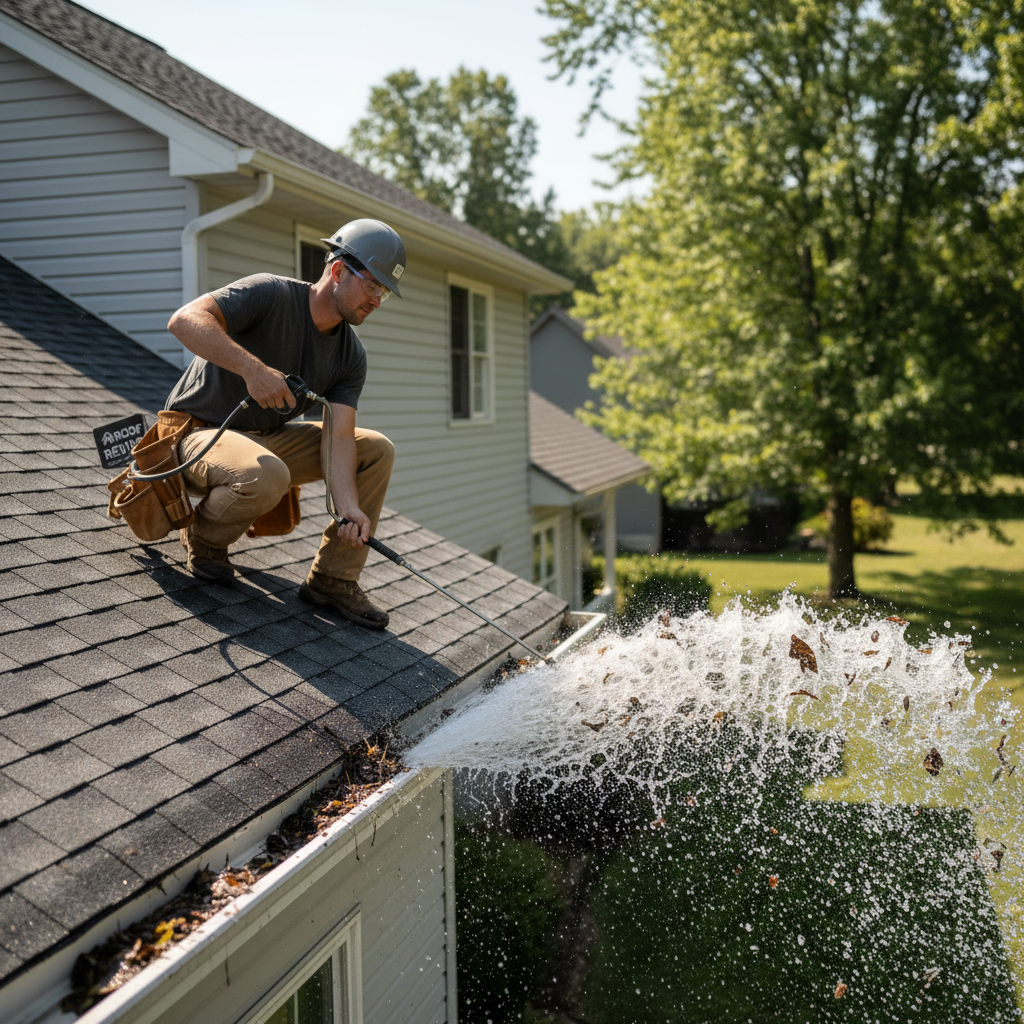
Algae grows on roofs in coastal North Carolina because your shingles stay damp for long “wet-hour” stretches, especially from overnight dew and slow morning dry-out. Airborne algae (often Gloeocapsa magma) lands on that damp surface and builds the dark streaking you see.
If you’ve been told it’s “just trees” or that you need an aggressive wash, you’re not the only one hearing that. On many Wilmington-area asphalt shingle roofs, the bigger driver is the coastal humidity pattern that keeps certain slopes and valleys wetter longer, even when the roof looks dry from the street. Once you see what’s keeping your roof damp the longest, you can make smarter calls. Think of wet hours as your roof’s tide chart.
Roof Algae Causes: Why Coastal NC Roofs Stay Wet Longer

In Wilmington, the problem is not just rain, it’s roof algae in humid climates. With average relative humidity around 74% and mornings often near 84%, many roofs start the day wet before the first cloud even shows up.
In coastal North Carolina, algae shows up when shingles stay wet well past the last rainfall. The key isn’t “it rained a lot.” Wet hours are what matter. Around Wilmington, average yearly relative humidity sits near 74%. Typical days swing from roughly 84% in the morning to about 59% in the afternoon. That pattern matters because shingles can start the day already coated in dew, then take longer to fully dry, classic humidity effects on roof algae.
Long damp stretches give airborne spores time to take hold before the surface dries. For instance, you might notice the roof looks dry from the street at 10 a.m. but the north-facing slope still feels cool and looks slightly darker, prime north-facing roof algae territory. Those extra hours of moisture are often the difference between “occasional staining” and persistent black streaks.
If you want to pinpoint your home’s worst wet-hour zones, do a quick check: step outside at 8–9 a.m. and again around noon. Note which areas still hold dew the longest (commonly north-facing slopes and valleys). If you’ve been telling yourself the problem is only trees, let’s nip it in the bud: coastal air keeps shingles damp, even in full sun.
The Organism and the Streak Pattern

A homeowner sees clean shingles in spring, then by late summer thin black lanes appear that always seem to start near the same spots below the ridge. It is not a coincidence, it is how moisture repeatedly moves and re-deposits what is already on the roof.
Those black streaks on asphalt shingles are usually algae, most commonly Gloeocapsa magma. It’s airborne, so it can show up even when you don’t have branches hanging over the roof. On persistently damp shingles, it accumulates dark pigment that deepens the staining by absorbing heat.
Water organizes the pattern: downhill flow gathers residue and keeps laying it into the same runoff lanes, which is why streaks read as vertical. You’ll often see darker lines below shingle butt edges and below a ridge, where water consistently sheets and drips.
Why Asphalt Shingles Are an Easy Target
Even when your roof gets plenty of sun, asphalt shingles can still be a friendly surface for algae because of what they’re made of and how they age. One overlooked detail is that many asphalt shingles include limestone (calcium carbonate) filler, and Gloeocapsa magma is often described as “liking” that material. Combine that with a gritty, granule-covered surface that holds microscopic moisture films. It’s like sand that never quite dries.
That’s why “I cut the trees back” sometimes changes less than you expect. For example, black streaking can show up on a newer, sun-baked south slope as well as a shaded slope when wet hours and surface chemistry, not shade alone, set the limit.
If you have (or were sold) algae-resistant (AR) shingles, it helps to know the protection usually comes from copper-based granules that release algae-fighting ions. Over time, weathering can reduce that effect as the granules wear and age, so AR isn’t a permanent force field. When you compare options or bids, don’t throw good money after bad. Don’t stop at “AR” on the brochure. Ask what the algae protection actually is (some brands specify copper granule blends, and some market protection for up to about 20 years) and weigh that against your roof’s real wet-hour exposure in coastal NC.
Why Roofs Get Black Streaks: Why Your Roof Stains Sooner Than Your Neighbor’s

Same-shingle comparisons usually come down to small, site-specific differences. Pretending otherwise is wishful thinking. Case in point, a north-facing back slope that never gets mid-morning sun can stain years sooner than a south-facing front slope that bakes dry fast, even on the same house.
Do a quick walk-around and look for these few high-leverage differences:
-
Orientation and shade geometry: North-facing planes and tree lines that cast shade in the 8 a.m. to noon window.
-
Ventilation and heat: A cooler attic and roof deck tend to dry slower; poor roof ventilation algae often shows up sooner where the roof stays cooler and damper, compare how “warm” each slope feels on a sunny afternoon.
-
Runoff paths: Valleys and gutter overflows that keep re-wetting the same lanes.
-
Shingle age and formulation: Older, more weathered shingles (and differences in algae-resistant granules) often stain faster than a newer run.
If you’ve been chalking it up to “they must’ve cleaned theirs,” skip the Angi reviews detective work: their roof just dries faster where yours stays wet.
What to Do First: Low-Disruption Actions That Change the Wetness/Algae Equation
You can either buy a short-lived cosmetic win or shift conditions so the roof stays cleaner for years. The fastest wins usually come from changing how long the shingles stay damp, not from scrubbing harder.
The most reliable improvement comes from shortening wet hours, whether you’re considering a wash (including soft wash roof cleaning) or a replacement. If you skip this and only clean, that’s money down the drain. The streaks often return.
Start with a quick, low-risk pass that targets the conditions algae needs:
-
Trim for morning sun and airflow: Open up the 8 a.m. to noon sun window on the stained slope by cutting back overhangs near the roofline (you’re trying to speed up dry-out, not clear-cut the yard).
-
Fix overflow and chronic re-wetting: Clean gutters and confirm downspouts move water away. After a hard rain, look for overflow lines or drip zones that repeatedly soak the same shingles.
-
Keep valleys and low areas debris-free: Pine needles and leaf litter act like a welcome mat for moisture, especially pine needles roof algae buildup in valleys. A light blow-off (from the ground with an extension tool or by a pro) helps the roof shed water instead of holding it.
-
Reduce cool, damp roof surfaces: If your attic feels musty or stays hot and humid, ask a roofer to check intake and exhaust venting. A cooler, wetter roof tends to stain sooner, even with “AR” shingles.
If you do nothing else, do this: identify your most stained slope.
In coastal humidity, a safe roof-cleaning method matters because high pressure can strip protective granules and make staining come back faster. Read more in our article: Roof Cleaning Without Removing Granules Remove the one thing that keeps it wet the longest, usually shade at mid-morning or a repeat-drip/overflow path.
When Prevention Means Products: Algae-Resistant Shingles and Metal Strips

You pick “algae-resistant,” pay the premium, and still see streaks returning a few seasons later because the protection you thought was permanent is already fading. Add in the fact that copper and zinc can end up in roof runoff, and the choice gets more complicated than a brochure makes it sound.
If you’re already pricing a re-roof, algae-resistant (AR) shingles are worth comparing like a performance feature. Treating them like a checkbox is lazy. Embedded copper granules in most AR products release copper ions that can suppress streaks, yet the effect typically fades with weathering as granules wear. Two HomeAdvisor bids may both say “AR,” yet one may specify a meaningful copper-granule blend while another barely changes your real-world outcome on a dew-soaked north slope.
If your roof still has life left, zinc or copper strips near the ridge can act as a retrofit prevention tool for zinc strip roof algae prevention. The runoff works like a thin rinse line down the slope. Neither option is a set-it-and-forget-it fix. Thinking it will last forever is a pain in the neck. And in coastal NC, it’s smart to weigh the tradeoff most people skip: copper and zinc can show up in roof runoff. That matters more if you drain toward sensitive landscaping or stormwater areas near creeks and tidal water.
Copper- and zinc-based prevention can reduce streaking, but those metals can also wash off in runoff and affect nearby plants and drainage areas. Read more in our article: Prevent Algae Moss Return
Is It Mold, or Is It Algae?
Most black streaks on asphalt shingles are algae staining, commonly linked to Gloeocapsa magma, not indoor-type mold. If the growth looks thick and carpet-like (especially in shaded valleys), you might be dealing with moss mixed in, but the cause is still the same: long wet hours on the roof surface.
If the staining looks thick, fuzzy, or carpet-like in shaded areas, moss is often part of the problem and needs a different removal approach than algae. Read more in our article: Kill Moss On Roof
Does Roof Algae Damage Shingles?
Algae is usually more of a staining and moisture-signal problem than an immediate “your roof is failing” problem. The risk is that persistent dampness and debris can keep shingle edges and details wetter longer, which can shorten service life over time even if you don’t have leaks today.
Can I Pressure Wash It Off?
You can remove streaks with force, but pressure washing often takes granules with it and can drive water where it doesn’t belong, which is why people sometimes notice problems after an aggressive cleaning. If you’re trying to extend shingle life, avoid methods that trade a whiter roof for a rougher, faster-wearing surface.
How Often Will It Come Back in Coastal North Carolina?
In the Wilmington-area humidity pattern, it can return in a year or two if you only clean and don’t change the wetness drivers, especially on north-facing or shaded slopes. If you reduce re-wetting and improve dry-out, the same roof can stay visually cleaner much longer.
Is It Ever a Sign I Need a Full Replacement?
Streaks alone usually aren’t the reason to replace a roof. You’re closer to replacement when you also see widespread granule loss or brittle shingles, even after you’ve addressed shade, debris, and runoff issues.
Roof not getting any younger? Contact us or call 703-673-6301 to find out where you stand.
Living with those causes daily is why our Wilmington soft wash crew exists. One visit resets the roof.