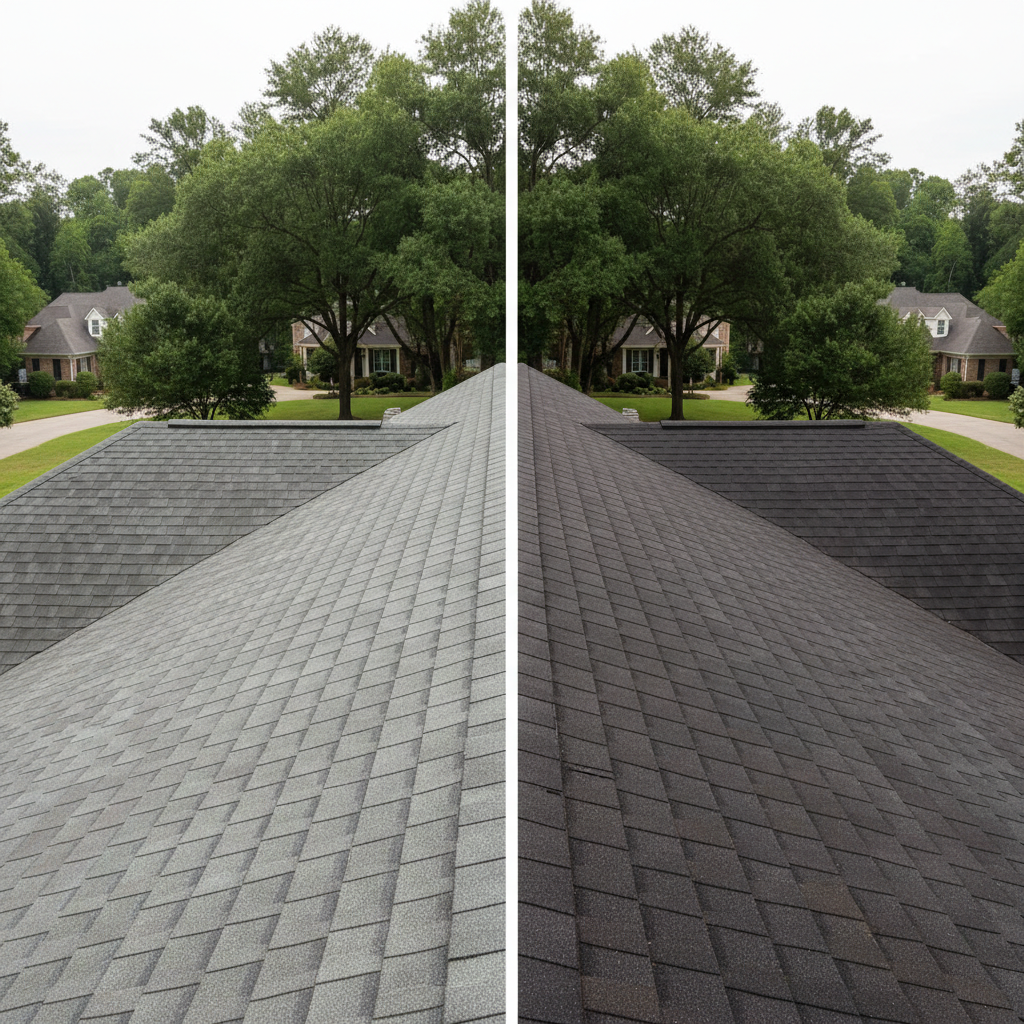
You can walk outside after a windy coastal night and still feel unsure: did your roof just “take years off” its life, or did it simply ride it out? If you live near Wilmington, the coast really can shorten the useful life of asphalt shingles, but not always for the reason people assume. Strong sun and heat tend to drive the fastest shingle aging, while “salt air” usually works indirectly by keeping surfaces damp longer and speeding up issues around seams and roof penetrations.
In this guide, you’ll learn what coastal exposure does to an asphalt shingle roof and where wear shows up first. You’ll also see why the weak points often aren’t the shingles themselves. Take it with a grain of salt, but think of flashing and rubber boots as the caulk seams on a skiff.
Why Coastal Sun Wears Shingles First

If you only blame the ocean breeze, you can miss the real culprit until the first “minor” leak becomes a ceiling stain weeks after a storm. The most expensive roof problems here often start with the steady, everyday baking.
Coastal sun and heat do more damage than “salt air.” Consumer Reports would back that bet. Your shingles rely on their mineral granules as a UV shield; when strong sun bakes a roof plane day after day, those granules loosen and wash off, exposing more asphalt (sun UV damage to shingles). Once that exposure starts, UV can oxidize and dry out the asphalt faster, so wear accelerates instead of staying steady.
You’ll typically see this show up unevenly: the south- and west-facing slopes (and any areas not shaded by trees) look older first. As an illustration, one side may look slightly bald or smoother while the opposite slope still looks rough and granular, even though both were installed the same day. That’s your cue to inspect the most sun-hit planes first, not average the whole roof by its age.
South- and west-facing slopes often show earlier granule loss and drying, even when the rest of the roof still looks serviceable. Read more in our article: Asphalt Shingle Roof Aging
Salt air effect on asphalt shingles
Two neighbors can live the same distance from the water, but the roof that stays damp until noon is the one that starts looking dirty and tired first. The difference is usually drying time, not a magical salt attack.
“Salt air” usually doesn’t chemically dissolve asphalt shingles the way people picture it. The bigger coastal effect is indirect: salty mist leaves a thin film, and Wilmington’s humidity and marine dew can keep roof surfaces damp longer after overnight condensation or a light shower (humidity impact on asphalt shingles).
That extended wet time is what raises growth and staining pressure (roof algae growth coastal areas). For instance, you may see dark streaks or greenish patches show up first on the north-facing or shaded slopes even if the sun-baked side is aging in other ways. To diagnose coastal wear, kick the tires on “stays wet,” not “salt is eating my roof,” because dampness is the mildew-friendly wet blanket.
Dark streaks and green patches are usually a moisture-and-organic-growth problem, not a sign that the shingles are “melting” from salt. Read more in our article: Roof Algae Black Streaks
The Coastal Weak Points Aren’t Just Shingles

One coastal source puts the planning range at shingles aging about 10–30% faster near the coast, but the surprise is where that time gets stolen from. It is often the small metal and rubber parts that give up first.
Even when your shingles still look “fine,” coastal air can age the roof’s small parts faster, especially the metal and rubber pieces that actually keep water out at seams and holes. Salt-laden moisture and frequent dampness push corrosion on flashing and exposed fasteners (salt corrosion roofing nails), and they can dry-crack rubber vent boots and pipe gaskets that sit in full sun.
That’s why judging your roof only by shingle appearance can steer you wrong: one rusty nail head or a split plumbing-vent boot can turn a normal Wilmington thunderstorm into a slow leak you won’t notice until a stain shows up in the attic. When you inspect, ignore the HomeAdvisor/Angi chatter (coastal roof maintenance tips). Focus on valleys and every penetration.
Most expensive “mystery leaks” start at roof penetrations like vents and chimneys where flashing and boots are doing the real waterproofing. Read more in our article: Roof Leaks Chimneys Vents
Signs Your Shingles Are Aging Faster
You can spot accelerated wear without getting nickel-and-dimed by roof age, like a seasonal tune-up for your house. Start with what you can see from the ground (binoculars help) and what you find in gutters and downspouts.
Look for heavy granules collecting at downspout exits (roof shingles granule loss sun) and shingle edges curling (heat-driven drying and fatigue). During an inspection, a pro may also flag shingles that crack when flexed (brittleness) and dark streaks or green patches that don’t rinse off (stays-wet growth pressure). Finally, check for rust at pipe boots or flashing edges (coastal corrosion that can leak even if the shingle field looks OK).
Repair, rejuvenate, or replace?
When hurricane season is on your mind, the best feeling is knowing whether you’re dealing with a small, containable defect or a roof that is running out of runway. The right call is the one that reduces risk without paying for work you don’t need.
If you treat this like an age-based decision, you will waste money. Zillow does not care why. Decide based on where the roof is failing and how widespread the wear is, then match that to how much risk you’re willing to carry through hurricane season.
Choose repair/maintenance when the shingle field is mostly intact and issues are isolated (a split vent boot, a small flashing problem, a few lifted tabs). Consider rejuvenation when you’re seeing broad early aging (drying, mild curl, moderate granule loss) but no active leaks and you want to buy time. Plan replacement if leaks are present or granule loss is widespread. Plan replacement when you have multiple failing penetrations or recurring repairs that keep moving around the roof (roof rejuvenation vs replacement).
Roof not getting any younger? Contact us at Contact us or call 910-241-1152 to find out where you stand.