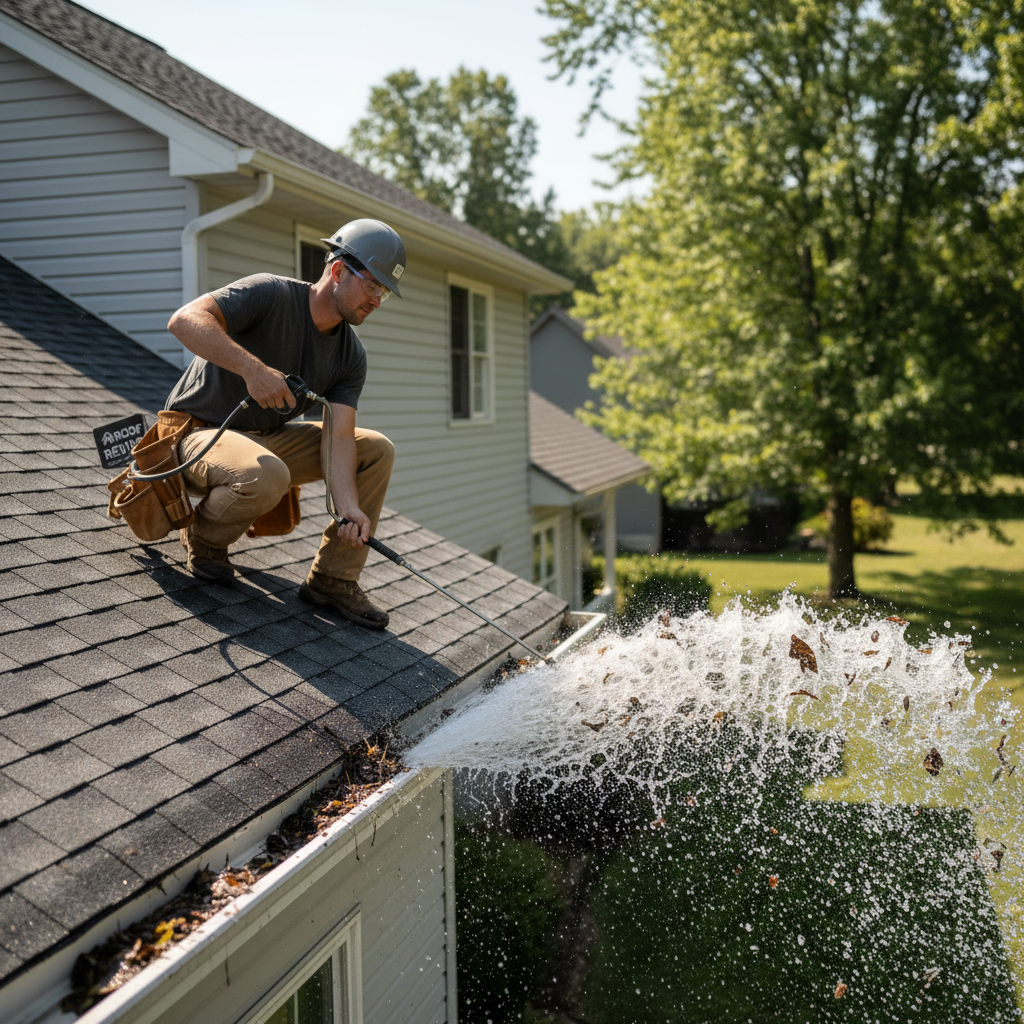
Will moss or algae come back, and how do you prevent it without toxic chemicals? Yes, it’ll often come back on coastal North Carolina roofs. You slow it down by reducing shade and debris that let it regrow.
If you’re in Wilmington or nearby and the north-facing side keeps turning green or streaking black, you’re dealing with a roof that stays damp longer than it dries. That’s why one-time cleanings and “miracle” sprays are a band-aid fix, then they fail—will algae come back after roof cleaning. In the sections ahead, you’ll learn how to tell moss from algae on asphalt shingles. You’ll learn which prevention moves change the conditions they need to thrive and what zinc or copper strips can and can’t do.
Why It Comes Back Here

In coastal North Carolina, moss and those black algae streaks don’t return because you “missed a spot”—what causes black streaks on shingles is usually the same damp, shaded cycle. They come back because your roof keeps getting the inputs they need: long stretches of humidity and shade that slows drying, a recurrence pattern commonly noted in softwash guidance for humid regions where algae like Gloeocapsa magma re-colonize more readily (nationalsoftwashauthority.com). On many homes in Wilmington and nearby communities, the north-facing planes or areas under live oaks and pines stay damp enough for growth to re-establish quickly.
If you’re hoping one cleaning will make it once-and-done, that’s not worth the headache. The practical move is to treat regrowth as normal here and plan prevention around drying time and debris control, not just removal you found on Nextdoor neighborhood recommendations.
In Wilmington’s humid, shaded spots, it’s common for algae to re-colonize after a cleaning unless you change the moisture-and-shade conditions that let it thrive. Read more in our article: [Roof Algae Returning]
Moss vs Algae: Pick the Right Fight
You can keep paying for repeat cleanings and still get regrowth when the diagnosis is off. Misread algae as moss or moss as algae, and every “non-toxic fix” feels like it fails.
Treat moss and algae as interchangeable, and you’ll stay stuck in a cycle of fixes that don’t hold. On asphalt shingles, moss and algae behave differently, so “prevent it without harsh chemicals” starts with knowing what you’re looking at.
| What you see on asphalt shingles | Most likely | Why it keeps coming back | Best non-toxic prevention focus |
|---|---|---|---|
| Fuzzy, raised clumps/mats (often at edges/valleys/under canopy) | Moss | Debris + shade hold water; stays wet longer | Reduce shade; routine debris removal (valleys/edges); address wet traps (gutters, north-facing damp zones) |
| Flat black/dark gray streaks running down-slope | Algae | Re-colonizes in humid/rainy stretches; damp roof dries slowly | Ongoing inhibition + faster drying: improve sun/airflow; control debris/moisture; consider zinc/copper strips for recurrence reduction |
Moss usually looks like a fuzzy, raised mat or little clumps, often starting at shingle edges or in valleys where pine needles and leaf grit collect. It holds water like a sponge, which keeps shingles wet longer and can lift edges over time. Your best non-toxic prevention levers target moisture and habitat—roof moss prevention tips that work here cut shade, dampness, and debris. Think of valleys like roof gutters for grit: reduce shade where you can, keep valleys and north-facing planes clear of debris, and make it harder for organic buildup to stay put (annual debris removal and trimming for airflow are consistently emphasized in roof moss prevention guidance: pesticide.org).
Algae is usually flat staining, often black or dark gray streaks that run down-slope. It’s not “dirt,” and it can come back even when the roof looks clean because it re-colonizes in humid, rainy stretches. With algae, the long game is ongoing inhibition and minimizing the conditions that keep shingles damp, not scraping or aggressive rinsing that just resets the clock.
The Non-Toxic Prevention Hierarchy

A Wilmington homeowner clears the roof once, then keeps losing the same battle because the valleys refill with pine grit and the shaded plane never really dries. The difference is rarely a stronger product; it’s a better routine.
If you want regrowth to slow down without leaning on harsh chemistry, stop treating moss and algae like a surface stain and treat them like a moisture-and-debris problem. In Wilmington’s humidity, the “product-first” approach is a lousy plan that usually just buys you a short reset, like something off an HGTV home improvement shows segment.
Use this order instead: clear roof debris (especially valleys and edges). Open up airflow and sun by pruning back branches that keep roof planes shaded, then fix the moisture traps that stay wet longest (north-facing sections and clogged gutters). If you do only one thing, make it routine debris removal, because organic buildup holds water and gives growth a place to re-start.
Routine gutter and downspout cleaning helps reduce the wet, debris-fed “traps” that keep roof valleys and edges damp enough for moss to re-establish. Read more in our article: [Safely Clean Gutters]
Zinc/copper strips: what to expect

Consumer-facing estimates commonly put copper strip installation around $900 to $2,000, with prevention horizons often cited at roughly 25 to 30 years. That’s a long runway, but only if you understand what the strips can and cannot control.
Zinc or copper strips act as passive prevention by letting rainwater carry metal ions down the roof to inhibit algae, and coverage depends on how runoff travels (sources also stress that rainfall patterns and how water sheets affect performance: nationalroofcleaningauthority.com). That also means they don’t clean what’s already there. They work gradually, and you can’t time the results to a deadline. If you’re expecting wash-like, immediate results, reset that expectation now. You’ll decide they “don’t work” even when they’re doing their job.
They tend to work best on uncomplicated planes with predictable runoff paths. Where they disappoint is the exact stuff many Wilmington roofs have: shaded north-facing sections under live oaks and valleys that hold pine grit. If water doesn’t sheet evenly, the protective effect doesn’t distribute evenly, so you can still see streaking or patches below.
Time horizons are long, but not magical (for a consumer-facing example of the commonly cited $900–$2,000 install range and ~25–30 year claims, see roofvista.com). You’ll see sources claim decades of prevention (often longer for copper than zinc), yet the real limiter is coverage and moisture, not the metal. Also, algae-focused solutions can leave a moss problem untouched if shade and dampness stay the same, so use strips as a “reduce recurrence” lever, not your only plan.
When You Still Need a Treatment
You get the roof back to looking normal without blasting shingles or turning the yard into a runoff experiment. Match the approach to what you need most: stopping active growth or quickly improving appearance.
You need a treatment when growth is actively holding moisture (moss mats at edges/valleys) or when staining keeps spreading season to season despite debris and shade work. If you can live with slower cosmetic improvement and you mainly want to stop active growth, an oxygen-bleach style approach (often sodium percarbonate) fits your values better, but it won’t usually “erase” black streaks fast.
When resale, an HOA, or severe streaking makes speed the priority, a traditional softwash (often diluted bleach at low pressure) is usually the quickest path (softwash guidance commonly describes diluted sodium hypochlorite applied at low pressure rather than pressure washing shingles: nationalsoftwashauthority.com). Either way, don’t pretend runoff doesn’t matter, and Consumer Reports home maintenance guidance backs that up. Pre-wet plants for safe roof cleaning for plants and pets. Cover sensitive beds and divert downspouts away from landscaping before you start.
Low-pressure soft washing is designed to treat staining and growth without the shingle damage risks that come with high-pressure washing. Read more in our article: [Soft Washing Roof Shingles]
Roof not getting any younger? Contact us at Contact us or call 910-241-1152 to find out where you stand.