You notice dark streaks on your shingles and your brain goes straight to worst-case: is your roof failing, or is it just stained? In coastal North Carolina, those ink-like lines are often algae discoloration, but moss and lichen can look similar from the ground. The important part is this: most streaking is cosmetic, and the wrong cleaning method can do more harm than the algae.
In this guide, you’ll learn how to tell “algae streaks” from other roof growth and what manufacturers recommend if you want to clean it safely. You’ll also get Wilmington-area reality on expectations. Just give it to me straight. Humidity and shade make it a maintenance cycle, not a one-time fix. You’ll finish with a simple clean vs. restore vs. replace decision before you throw good money after bad.
Is It Algae or Something Else?
| What you see from the ground | Most likely | What it usually means |
|---|---|---|
| Dark, ink-like streaks that start near the top and run down-slope in a consistent “water path” pattern | Algae discoloration (common on asphalt shingles in humid coastal areas) | Usually cosmetic staining, not an immediate leak risk |
| Localized fuzzy green clumps | Moss | Can hold moisture; more likely to contribute to wear than simple algae staining |
| Localized crusty/leafy spots that don’t streak | Lichen | Can hold moisture; treat as more than cosmetic if growth is thick |
| One dark area tied to an overhanging tree or roof penetration | Grime/shade-related staining or localized growth | Investigate the local cause; don’t assume overall roof failure |
Dark streaks that begin near the ridge and track down-slope in a steady runoff pattern usually point to algae staining on asphalt shingles in humid coastal areas (ARMA algae discoloration bulletin). That streaky “water path” look is the tell for roof discoloration causes tied to runoff patterns. Those Nextdoor “Who do you use for roof cleaning?” threads can fuel the soot-and-mildew panic.
When the growth shows up in patches rather than long streaks, assume it’s moss or lichen until you confirm otherwise. Don’t let “black” automatically equal “roof is failing.”
If the dark streaks are actually patchy green growth, moss removal and prevention matters more than chasing the black stains. Read more in our article: Eliminating Moss Roofs
When Algae Becomes a Roof Problem

You can live with ugly streaks for years and be fine—so does algae shorten roof life?—right up until a well-meaning “deep clean” turns into bald shingles and grit-packed gutters. The difference between cosmetic and costly usually comes down to what’s happening to the granules and moisture on the surface.
-
Mainly cosmetic discoloration, not an immediate leak risk
-
Real problem signal: granule loss (roof algae granule loss shows up as bald spots and lots of grit in gutters/downspouts), often after scrubbing or pressure-washing
-
Real problem signal: growth thick enough to hold moisture against the shingle (more common with moss/lichen), speeding wear on shaded north-facing slopes and valleys. Think of moss like a wet towel left on shingles—roof staining affects resale value when it reads as neglect. If you’re worried about resale, insurance, or a home inspection, treat it as a documentation issue. Let’s get eyes on it. Ask for a roof check that separates cosmetic staining from functional problems like lifted shingles or active leaks. Avoid any cleaning method that relies on high pressure or aggressive brushing.
Cleaning Options That Won’t Wreck Shingles
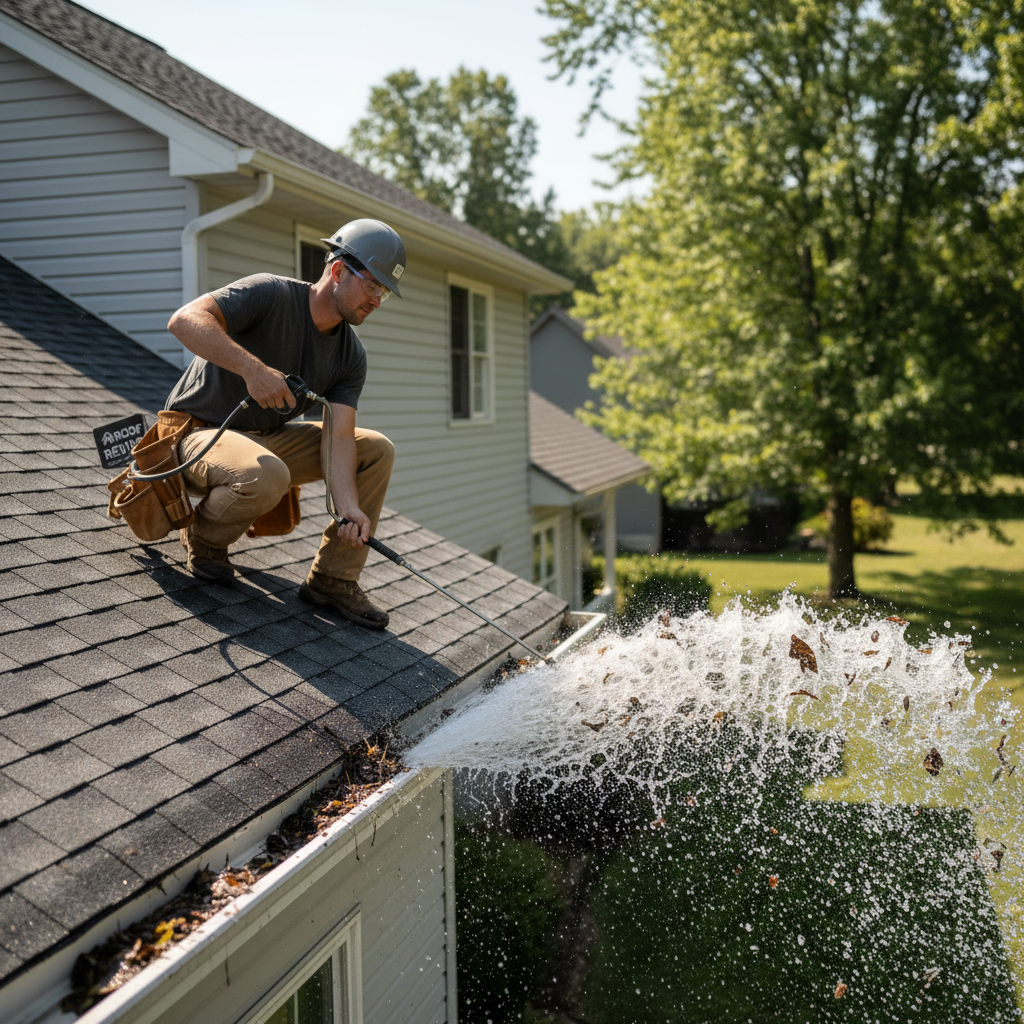
Cleaning should focus on killing the organism and letting time and rain do the rinsing, not forcing a fast cosmetic result. The fastest way to turn a cosmetic problem into a roof-life problem is mechanical force (soft wash vs pressure wash roof).
Stick to manufacturer-aligned guardrails:
-
Don’t power wash asphalt shingles. High pressure can strip granules and shorten roof life (ARMA guidance).
-
Don’t scrub. Friction can loosen/remove granules, even if it looks productive in the moment.
-
Use a gentle chemical wash and respect dwell time—especially considering bleach roof cleaning risks. A common manufacturer example is 4 gal water + 1 gal household bleach + 1 cup TSP (or phosphate-free substitute), left 15–20 minutes max, then low-pressure rinse (GAF R-102).
If a contractor’s plan involves “pressure washing” or aggressive brushing for instant visual perfection, you should walk away. Mike Holmes would.
Pressure washing can strip protective granules and shorten the life of asphalt shingles even if the roof looks cleaner right away. Read more in our article: Pressure Washing Roof
Eco-friendly reality check in coastal NC

A homeowner finally gets the roof looking brand-new, then a few muggy months later the north side starts shadowing again and the temptation is to hit it harder next time. That spiral is how a “green” intention turns into avoidable wear and runoff.
Around Wilmington, roof cleaning is ongoing upkeep, not a one-and-done project (ARMA notes results are temporary and discoloration may recur). Salt air and long damp seasons mean even a correctly cleaned roof can re-streak over time, especially on north-facing slopes and shaded runs. If you’re expecting a permanent, spotless result, you’ll be tempted to over-clean. That is where shingle damage and unnecessary chemical runoff start. Coastal roofs are like sandcastles. The tide always comes back.
The eco-friendly move is to plan for light, periodic maintenance and runoff control, not repeated heavy treatments. For example, if you have sensitive beds under the eaves, choose timing and methods that minimize drift and protect plants (pre-wet, rinse after, and avoid overspray), then set a realistic cadence you can live with, like “check each spring and treat only when streaking is clearly returning” instead of chasing cosmetic perfection after every wet spell.
Salt air plus long damp seasons in coastal NC can make algae and staining return faster on shaded roof slopes, even after a proper treatment. Read more in our article: Salt Air Humidity Shingles
Clean, Restore, or replace?
If you pick the right lane here, you stop throwing money at the same cosmetic reset and start spending only where it actually extends roof life. The goal is a decision that holds up at inspection time and still makes sense a few seasons from now.
Choose clean when the roof checks out structurally and you’re mainly dealing with typical runoff streaks, then expect occasional touch-ups. If you’re seeing staining plus functional flags, restore: get a roof check, fix the underlying issues (damaged shingles and trouble spots in valleys/flashings), then do a gentle treatment.
If the roof is near the end of its service life or repairs start stacking up, replace. I’d rather fix it now than pay for it later. Treat algae control as part of ROI. Use Consumer Reports-level logic. Choose algae-resistant shingles so you’re not paying to “cosmetically reset” the same roof every few years.
Roof not getting any younger? Contact us at Contact us or call 910-241-1152 to find out where you stand.