Are the dark streaks on your roof algae, and does it mean the roof is damaged? Usually, those brown-to-black streaks on asphalt shingles are algae staining and don’t automatically mean your roof is failing.
What makes this stressful is that several very different problems get lumped into “black stuff on the roof,” and they don’t carry the same risk. Even in Wilmington’s humid, rainy conditions where staining shows up fast, a roof can photograph badly from the street or an aerial shot and still be watertight. In the sections below, you’ll learn how to tell typical algae streaking from moss or a localized leak-prone issue and whether your smartest next move is a soft wash or an inspection.
Do These Streaks Match Algae?

Most roof streaks that look like smeared, vertical brown-to-black “drips” running downhill from the ridge are algae-related staining on asphalt shingles (often Gloeocapsa magma), showing up as dark streaks on roof surfaces. It tends to show up as widespread discoloration rather than a single suspicious spot.
A quick check: algae tends to look flat (not fuzzy) and repeats in many parallel streaks, classic black streaks on roof areas that stay damp longer. For example, if one whole roof plane has dark streaking but the shingles still lie flat and feel gritty (granules intact), you’re likely seeing staining, not immediate roof failure. If it’s green, tufted, or crusty in patches, think moss/lichen instead of algae.
If the streaks are widespread and flat, it’s often a cosmetic algae issue rather than a leak-driven failure. Read more in our article: Roof Algae Black Streaks
When Stains Do (and Don’t) Mean Damage
You could spend thousands replacing a roof that was never leaking, or ignore the one small area that is about to become a real water problem. The trick is knowing which visual cues are just ugly and which ones change the risk, since roof discoloration causes don’t all carry the same urgency.
In most cases, algae staining is a surface discoloration problem, not a roof-system failure, meaning it’s often a case of is roof staining cosmetic rather than structural. Even dramatic streaking doesn’t necessarily track with water intrusion. Aesthetics alone aren’t a solid reason to replace.
It starts to lean toward real damage when the staining comes with other change you can feel or verify, not just see, those are the signs of asphalt shingle damage worth acting on. Think Consumer Reports home-maintenance guidance, not impulse buys, when you spot lifting tabs or granule loss while the rest looks stable. As an example, a broad field of uniform streaks is usually cosmetic; one dark patch paired with brittle tabs or a nearby interior ceiling spot deserves an inspection.
Granule loss, lifting tabs, and brittle shingles matter more than discoloration because they change how well the roof sheds water. Read more in our article: Normal Shingle Wear Vs Damage
Quick Triage: Clean, Inspect, or Replace?
| Next step | When it fits | What to look for | Key caution |
|---|---|---|---|
| Clean (low-risk next step) | No signs the roof system is failing | No active leaks; no missing tabs; shingles lie flat; streaking is fairly uniform, especially on one slope | Choose soft washing, not pressure washing, to avoid stripping granules |
| Inspect (get eyes on the roof system) | You see change beyond staining or a problem area is worsening | Localized area getting worse (around a vent boot, chimney, or eave); curling, cracking, bald spots; roof shingle granules in gutters | Prioritize diagnosis of the roof system, not just stain removal |
| Replace (or start planning it) | There’s evidence of leaks or widespread shingle failure | Ceiling staining or wet decking; deterioration across multiple areas; especially common with 20+ year roofs | Don’t delay if leak evidence is present |
The Lowest-Risk Way to Clean Algae

A homeowner sees a dramatic before-and-after video and rents a pressure washer, then notices a gritty pile of granules at the downspout the next day. The same stain that was cosmetic can turn into avoidable wear if the wrong method is used.
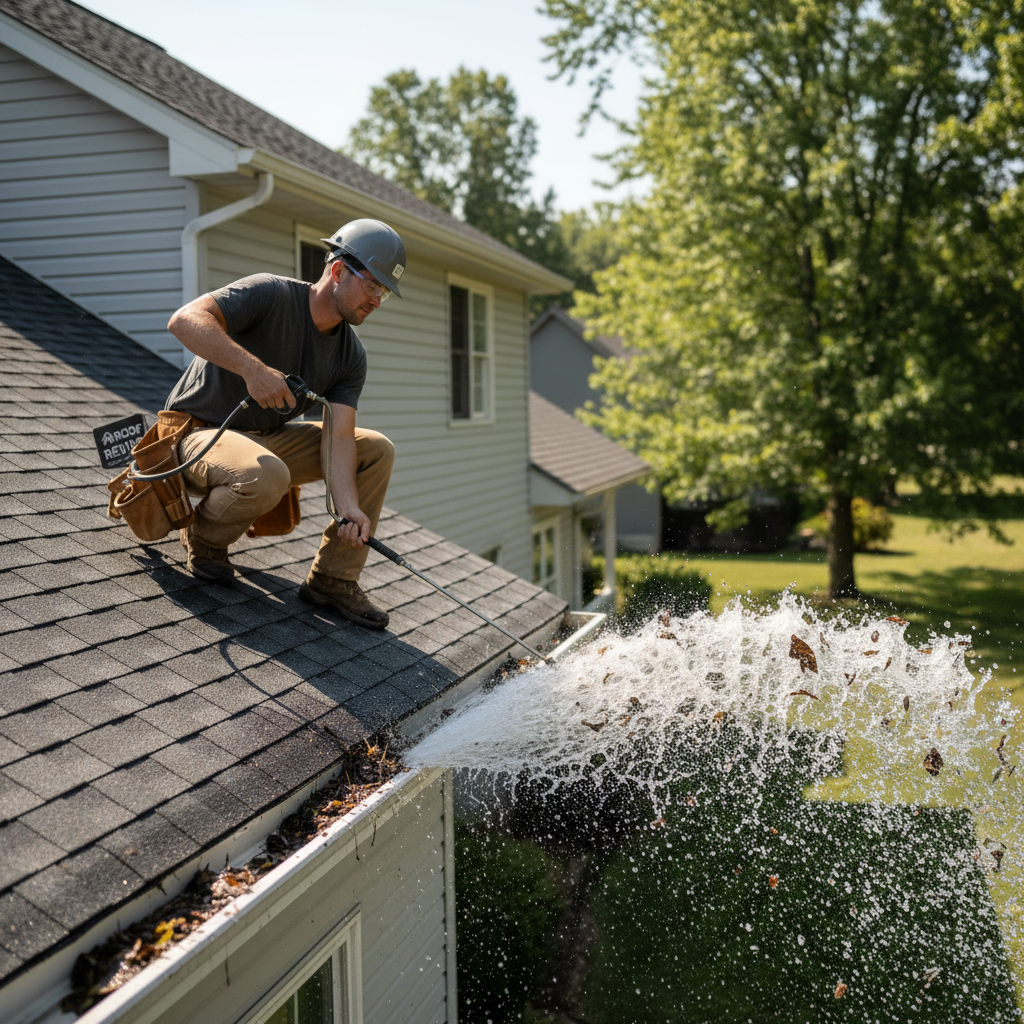
If you decide to clean, skip anything marketed as “roof pressure washing”. That approach is a bull in a china shop on shingles, so nip it in the bud. High pressure can strip the shingle’s protective granules, and that tradeoff isn’t worth it just to improve curb appeal.
A true soft wash uses low pressure (more like a gentle rinse) and a roof-safe cleaning mix to kill the algae. It lets weather and runoff do most of the cleanup over time. Case in point: the algae can be dead while the dark staining still lingers for weeks or longer, so judge success by reduced regrowth, not a next-day “like new” look.
Coastal NC Reality: Recurrence and Prevention
In wetter regions with annual rainfall above about 40 inches, algae shows up more often, which is why the Southeast keeps seeing those familiar streaks. In coastal North Carolina, the realistic goal is slowing regrowth, not “fix it once and forget it.”
In Wilmington and nearby beach communities, humidity and rainy seasons keep bringing algae back. It behaves more like a recurring nuisance than a one-time fix. Regrowth is common. If you expect one cleaning to end it, you’ll likely be disappointed. As long as conditions stay favorable, staining can return.
So think in timelines. If you’re replacing, choose algae-resistant shingles (those built with algae-inhibiting granules). If you’re keeping the roof, get a second set of eyes on it and ask about zinc or copper strips near the ridge (runoff helps discourage regrowth). If you found the pro on Nextdoor neighborhood recommendations, still trim back limbs and make sure bathroom and dryer vents exhaust outside, not into the attic.
Roof not getting any younger? Contact us or call 703-673-6301 to find out where you stand.