If you’re in coastal North Carolina, you should usually schedule roof cleaning every 2–5 years. “Too often” usually means repeated pressure, scrubbing, or heavy foot traffic.
That sounds simple, but it only stays simple when you separate timing from technique. You don’t need a rigid annual schedule, and you don’t need to chase a perfectly spotless roof. You need a cadence that fits Wilmington-area humidity and tree cover, plus a quick way to decide when stains or moss have crossed from cosmetic to risky. This guide shows you what to watch for on the shaded slopes first, when to book the next cleaning, and how to avoid the kind of “cleaning” that can take years off your roof.
Roof Cleaning Frequency for Coastal NC Homes

In coastal North Carolina, asphalt shingles typically settle into a 2–5 year cleaning rhythm because humidity and long damp stretches let algae and moss rebound faster than inland (see: how long a roof stays clean). If you’re heavily shaded (pines/live oaks, north-facing planes, slow-drying valleys), plan closer to every 2–3 years; if your roof gets steady sun and dries quickly, 3–5 years often holds.
Don’t lock yourself into a rigid roof cleaning schedule. Get ahead of it before it gets out of hand. Put a reminder to visually check the shaded slopes each spring. Treat it like a pre-storm roof walkaround, not a sales deadline.
In coastal North Carolina, shade and long damp stretches are the biggest drivers of how fast algae and moss come back on asphalt shingles. Read more in our article: Salt Air Humidity Shingles
When to Schedule Roof Cleaning: The Triggers That Mean “Schedule Now”
A homeowner waits until the whole roof looks bad, then learns the worst growth was hiding on one shaded plane the entire time. The fastest way to stay ahead is to let the damp zones make the call early.
Start your decision on the shaded, north-facing slopes and in valleys behind chimneys or dormers where water lingers. In Wilmington-area humidity, those zones will show you the truth months before the sunny side does.
Book cleaning as soon as you spot either sign, even if it’s been “only” a year or two: black streaks spreading into wider bands or green fuzz turning into raised clumps.
| What you notice (start on shaded slopes) | What it usually means | What to do |
|---|---|---|
| Black streaks spreading into wider bands | Algae growth is expanding and will keep rebounding in humid periods | Schedule cleaning soon (don’t wait for full coverage) |
| Green fuzz turning into raised clumps | Moss is thickening and starting to hold moisture | Schedule now; address shade/moisture sources |
| Moss collecting at shingle edges or in valleys | Water is lingering where drainage concentrates | Schedule now; clear valleys/gutters and monitor these zones first |
| Granules + organic grit building up where water drains | Debris is trapping moisture and accelerating staining/rot risk | Schedule cleaning and improve debris control (gutters/valleys/edges) |
If you keep telling yourself it’s just ugly, you are playing with fire. Nextdoor and Wilmington Facebook groups will not pay for your repair.
Black streaks are usually algae, and they often spread first on the north-facing or slow-drying parts of the roof. Read more in our article: Roof Algae Black Streaks
What “too often” looks like in practice

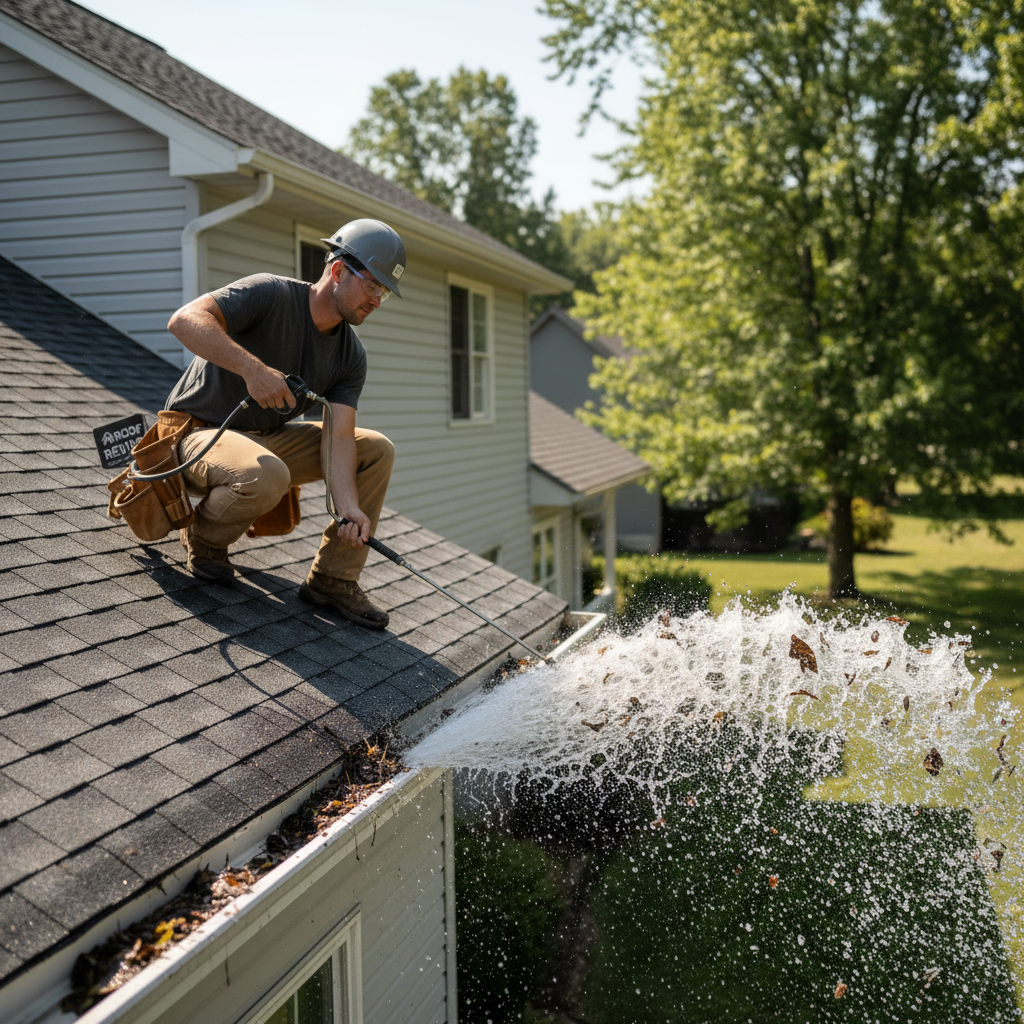
“Too often” usually isn’t every X months, it’s how often is too often to clean a roof based on method and wear. It’s when the cleaning method repeatedly puts wear on the shingles. On asphalt, the big risk is mechanical (see softwashing standards). Pressure washing and scrubbing act like sandpaper on granules, and is frequent roof cleaning bad depends on whether repeated visits also bring foot traffic that can crease shingles.
Over-cleaning shows up when the tradeoff flips and the risk outweighs the benefit. Force or harsh mixes chase instant results. Red flags to watch for: they want to “hit it with pressure” or they plan to brush the surface. If you want a simple filter, ask: “Are you cleaning with chemistry and a gentle rinse, or with pressure and friction?” If it’s the second, that’s the core of roof cleaning vs pressure washing, one cleaning can do more harm than a few years of stains.
Pressure on asphalt shingles can dislodge protective granules and shorten the roof’s usable life faster than most homeowners realize. Read more in our article: Pressure Washing Roof
The Manufacturer-Aligned Cleaning Method
You hire a “roof cleaner” for one quick visit, and a year later you’re staring at premature wear that no warranty conversation will fix. The difference is usually not the product, it’s whether the job relies on force or restraint.
If you want cleaning that doesn’t steal life from asphalt shingles, you need a chemical-first, low-agitation approach, soft wash roof cleaning: apply a mild cleaner (many pros use a diluted chlorine-bleach solution), let it work briefly, then rinse gently (NRCA guidance: cleaning algae/moss on asphalt shingles). ARMA and NRCA both warn against pressure washing and scrubbing. That is the kind of shortcut Consumer Reports would flag as needless wear, especially on an older Wilmington roof that’s already sun-baked.
Keep it disciplined: the solution should dwell long enough to work but not so long it bakes on, then you rinse without “carving” the surface. As an example, if a contractor says they’ll “brighten it up” by walking every valley and blasting the black streaks off, you’re not buying cleaning, you’re buying wear. The safest screening question is simple: “Will you avoid pressure on the shingles and rely on dwell plus a gentle rinse?”
Stretch the Interval Between Cleanings
You go longer between cleanings because the roof dries faster, the shaded areas stay quieter, and you’re checking by habit instead of reacting to streaks. That outcome comes from a few small controls, not a more aggressive wash.
To extend the interval, focus less on washing and more on the conditions that keep the roof damp. Aim for good enough for government work. In Wilmington’s humidity, regrowth follows the damp zones. A roof can act like a sponge, so do a quick once-over on gutters and valleys to dry it faster.
If you need an add-on, consider zinc-based strips near the ridge to inhibit moss and mildew as rainwater washes over them for roof moss prevention (example manufacturer instructions: GAF zinc moss & mildew preventer). Just don’t buy the fantasy that they “solve” the problem forever; they mainly slow the next growth cycle so you can schedule by inspection instead of by panic.
Roof not getting any younger? Contact us or call 703-673-6301 to find out where you stand.For Wilmington-area roofs, our roof cleaning service in Wilmington takes the whole job off your hands, free quote first.