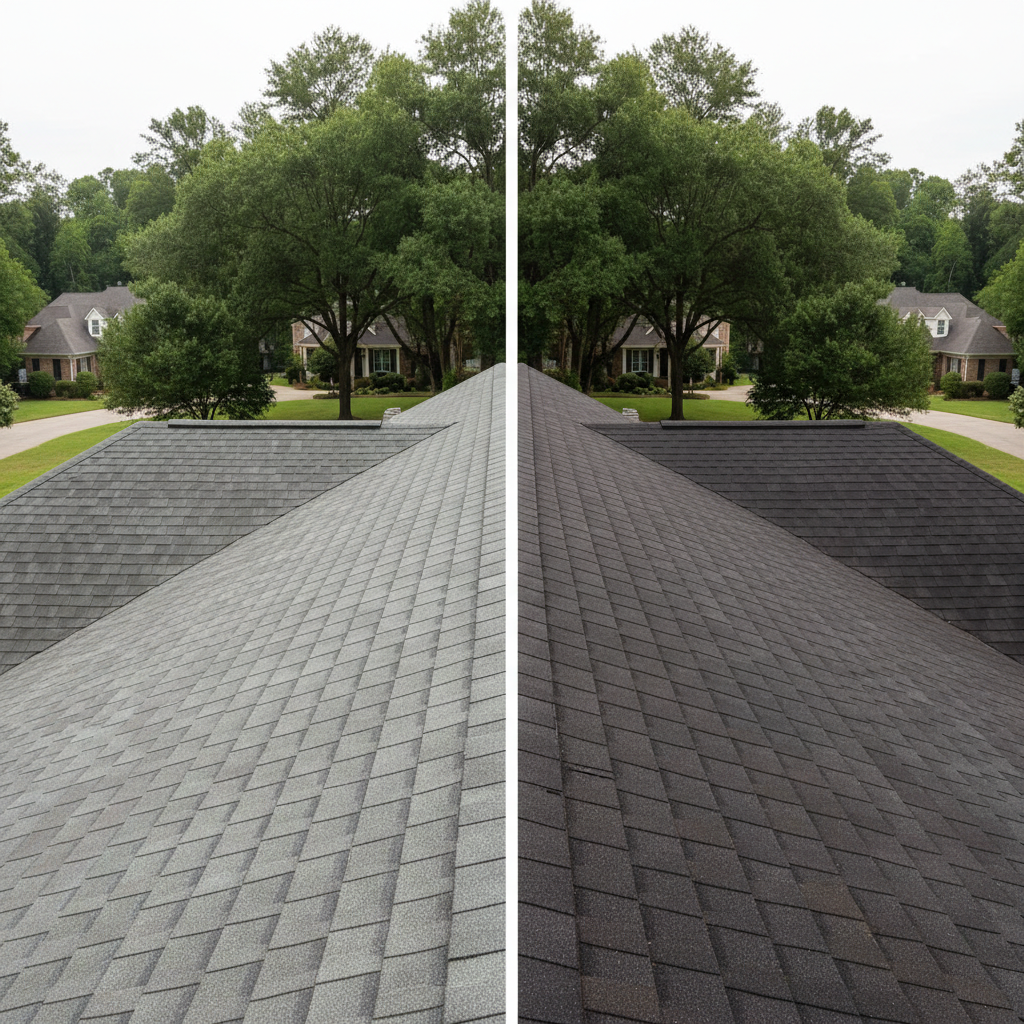
You don’t need a generic warranty promise, you need a realistic calendar. If you’re right on the water and considering a roof rejuvenation or treatment, the real question is how many years you’ll get before salt film and longer wet time set in. Grit starts working the surface like sandpaper on the improvement you paid for.
In this guide, you’ll get a realistic planning window for coastal asphalt shingle roofs, the conditions that shorten it, and the signs that tell you when another treatment still makes sense or when you’re better off budgeting for replacement.
Why Salt Air Roof Damage Shortens “Results”

You can do everything “right” and still watch the roof look like it backslid within a couple of seasons because the coast keeps the surface wetter and dirtier. That is where a treatment, like roof rejuvenation Wilmington NC, can feel like it didn’t work when the environment is erasing the gains.
Salty air doesn’t just “age shingles faster.” It stacks stressors that erase the benefits sooner than you’d expect inland, and the warranty-page mindset is a trap when homeowners are comparing Owens Corning and GAF brochures. Salt leaves a thin film that attracts and holds moisture, so shingles stay damp longer after fog or dew, which can speed up surface wear and make algae or staining show back up faster.
Add wind-driven sand and grit, and you get a constant low-grade abrasion that can loosen granules. Then UV plus daily heat swings bake and cool the asphalt repeatedly, pushing it back toward brittleness. If you’re judging “results” by appearance and granule stability, these four forces can end the honeymoon period first.
Coastal humidity and salt film can keep shingles damp longer, which speeds up staining and surface wear compared with inland roofs. Read more in our article: Salt Air Humidity Shingles
How long should I expect the results to last in salty air near the water?
Many rejuvenation programs are sold around a 5–7 year retreatment rhythm, but coastal wear can compress that apparent window. Some coastal guides even estimate shingles can lose granules 30–50% faster near the ocean than 20+ miles inland, so the closer you are to salt spray, the more those planning numbers tighten.
In most markets, asphalt-shingle rejuvenation is sold as a multi-year reset, not a one-season cosmetic fix, with retreatment commonly clustered around every 5–7 years. Near the water, those conditions usually pull you toward the shorter end of the window. Not my first rodeo: salt film and grit abrasion turn that “looks better and sheds less” phase into a shrinking tape measure versus 20 miles inland. If you’re within a few miles of the ocean or you routinely see salt haze on windows and cars, plan on about 4–6 years per application.
The part many homeowners miss: the thing that ends your “results” might not be the shingle surface at all. In salty environments, metal can corrode faster from roof corrosion salty air, and fastener issues can stay invisible until a leak shows up. So a roof can look better from the street and still be a gamble in the next wind-driven rain; around Wrightsville Beach or Carolina Beach, corrosion still forces the timeline.
Even when shingles look fine from the street, small leak points can show up first around penetrations after a windy coastal rain. Read more in our article: Early Roof Leak Signs
| Situation / signals | More realistic plan |
|---|---|
| Very near the ocean; frequent algae returns; accelerating granule loss in gutters/downspouts | Retreat sooner (closer to 4 years) |
| Farther inland; good attic ventilation; roof dries quickly after dew/fog | Expect a fuller window (closer to 6–7 years) |
| Recurring leaks; widespread brittle/curled shingles; exposed nail heads; multiple repairs in one season; coastal NC insurance roof-age cliff around 15–18 years | Lean toward replacement instead of another treatment (roof rejuvenation vs replacement) |