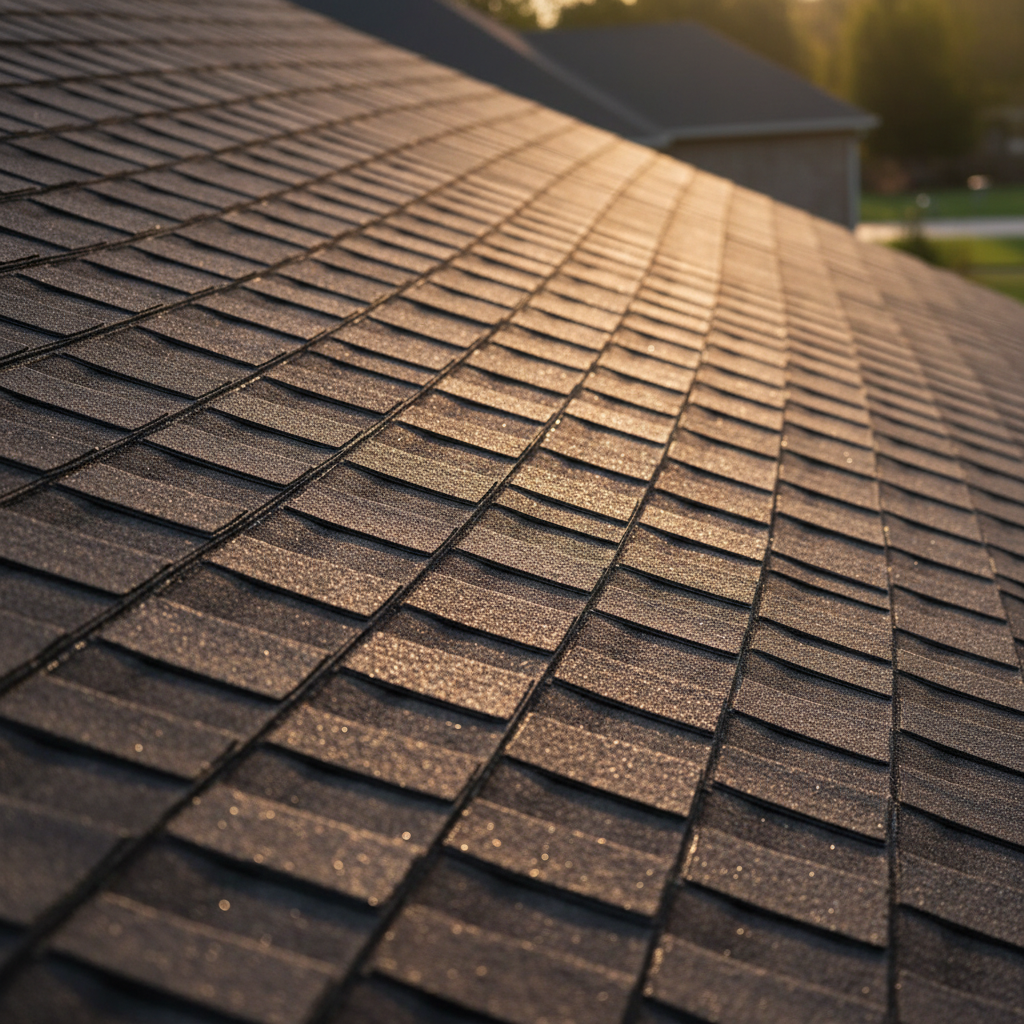
If you’re told your shingles are “losing their oils,” it means the asphalt binder is drying out and oxidizing. That aging makes shingles less flexible and more brittle over time. Brittleness raises the odds of cracking and granule loss.
What’s tricky is that several common roof issues get mislabeled as “oil loss,” especially when you’re looking from the ground or reacting to an insurance note. In Wilmington’s heat and coastal humidity, a hotter slope can age faster, while dark streaks might come from algae and some granules in gutters can be normal. In the sections below, you’ll learn what oil loss looks like up close and how to decide whether rejuvenation makes sense or you’re better off planning a replacement.
| What you notice | More likely “oil loss” / brittleness | More likely a look-alike | Typical next step |
|---|---|---|---|
| Curling edges or tabs not lying flat | Yes | No | Inspection; consider replacement planning if widespread |
| Cracking or “alligator” pattern | Yes | No | Inspection; replacement more likely if repeated across rows/slopes |
| Granules collecting after heavy rain (and increasing) | Often | Sometimes (new-roof “rider” granules) | Compare to age/other signs; inspect if increasing or concentrated |
| Dark streaks on shingle surface | No | Often algae/dirt | Cleaning/management; don’t treat as oil loss by itself |
What “Oil Loss” Really Refers To

When people say shingles are “losing their oils,” they’re usually describing asphalt shingles drying out as the asphalt binder in the shingle changes over time. Heat and sun drive off lighter oily compounds (sometimes called volatiles). The asphalt oxidizes, roof oxidation asphalt shingles, and the shingle stiffens like dried roofing cement. In Wilmington’s summer heat, a south-facing slope or a roof over a hot attic can reach higher temperatures and age faster, so one area can look “drier” before the rest.
The key point: this isn’t the shingle “leaking oil” like a car, and it’s rarely a simple surface issue you can fix with a quick wash or a coat of something shiny. Once the binder loses flexibility, it’s more likely to crack and shed granules. That exposes more binder to UV, which speeds up aging. A practical takeaway is to treat “oil loss” as a description of brittleness risk, not as a diagnosis by itself.
In coastal North Carolina, heat, salt air, and humidity can accelerate asphalt aging and brittleness compared with inland roofs. Read more in our article: [Salt Air Humidity Shingles]
What It Looks Like on Your Roof
You can spend months staring at dark streaks from the driveway while the real problem is a few brittle tabs that snap the first time wind gets under them. The most useful clues are the ones you can confirm up close, not the ones that look dramatic from the street, when you’re looking for shingle oil loss symptoms.
On the roof, “oil loss” usually shows up as shingles that look and act less flexible. Curling edges can show up, and you may also find granules at downspout exits after heavy rain. If you can safely view a shingle tab at the edge, an aged one can feel stiff and prone to chipping instead of bending.
Don’t treat dark streaks or a little grit as proof; many roofing pros would agree. Panic replacement is a bad call. What matters is whether those visible changes cluster with brittleness signs: cracking and curling in the same areas.
Common Look-Alikes Homeowners Misread

Not everything that looks like “oil” or “wear” means your shingles are drying out. For example, granules in gutters right after a roof install can be normal “rider” granules shedding (GAF guidance), and dramatic-looking dark streaks are often algae that thrive in coastal humidity, not the asphalt binder breaking down.
Another easy mix-up is shiny or blotchy asphaltic oil staining on newer shingles. It can come from hot storage and often weathers off. And if you see random scuffs or slightly different color patches in one spot, that can come from foot traffic or handling, not end-of-life brittleness. If the roof still lies flat and tabs flex, gather your notes and photos before you call anyone.
Black streaks are usually a biological growth issue (like algae) rather than a sign that shingles are drying out. Read more in our article: [Roof Algae Black Streaks] Don’t read tea leaves and buy a “re-oil” fix.
A Wilmington-area “too far gone” test
Thermal aging is not linear: one lab-focused review found asphalt shingle thermal oxidation can roughly double with about every 10 K (18°F) increase in roof temperature (Lawrence Berkeley National Laboratory report). That is why a consistently hotter slope can push an already-old roof over the edge faster than you expect.
Treat a roughly 15–20+ year-old roof as near end-of-life when the “dry” signs show up beyond a single hot spot. In practice, the danger zone is brittleness or heavy granule loss across multiple slopes (especially south or west) and cracking/curling repeating row after row. By then, coastal heat and a hot attic can speed deterioration enough that waiting for a leak is reckless. Mike Holmes would call it a money pit.
If you also have any active water staining, shingle tabs lifting after storms, or you can’t find many tabs that flex without chipping, assume you need a pro to evaluate replacement urgency, not a cosmetic fix. Book an inspection and ask for photos of the worst areas, not just an age-based opinion.
Rejuvenation vs Replacement: Choosing the Next Step
A homeowner with a 17-year-old roof sees one cooked south-facing plane and assumes the whole roof is done, while another keeps patching even after tabs start cracking across multiple slopes. The right call usually depends less on age alone and more on how widespread the brittleness has become.
Rejuvenation can be a cost-effective bridge when shingles still lie flat and stay mostly flexible, the “dry” look is limited to a hotter slope, and you aren’t seeing repeated cracking or tabs snapping when handled. The moment you’re dealing with brittleness across multiple areas and active leaks, replacement is usually the safer spend. Skimping here is penny wise and pound foolish, like trusting a frayed rope.
When you book an inspection, ask for photos and direct answers: As a simple shingle brittleness test, are the shingles still pliable? Is damage localized or roof-wide? Are you seeing failed seals or nail pops? And if rejuvenation is proposed, ask what condition would make you a “no,” not just why it might work.
A quick flexibility check can help you tell the difference between normal wear and shingles that are too brittle to salvage. Read more in our article: [Shingle Flexibility Test]
Roof not getting any younger? Contact us or call 703-673-6301 to find out where you stand.When in doubt, our free roof inspection with a written report costs nothing and settles the question.