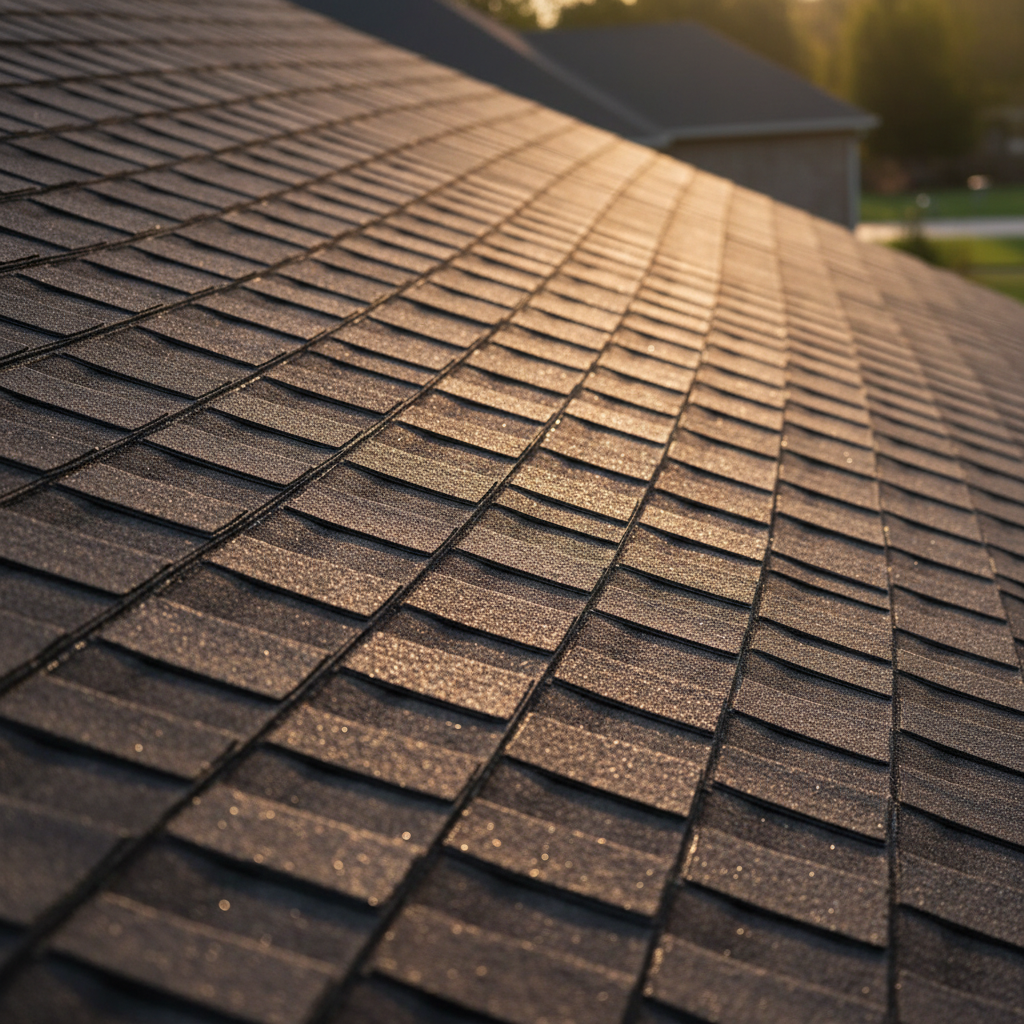
You can check by looking for signs of material failure, not just an old or stained appearance. When shingles turn brittle, lose granules down to exposed mat, or you find active attic moisture after rain, restoration won’t deliver value.
In Wilmington-area humidity, appearance can deteriorate long before true shingle failure shows up. It can soak up grime like a damp sponge, so you need to check it from the ground. In the sections below, you’ll use a fast screen first. Then you’ll use a simple brittleness check to tell the difference between a roof that’s a good candidate for repair or rejuvenation and one where your money’s better spent planning a replacement.
The 60-Second Shingle Roof Restoration “Too Far Gone” Screen
Independent ASTM flexibility testing cited in rejuvenation coverage found properly selected shingles improving in measured flexibility by roughly 50% to 300% after treatment. The catch is that the gains disappear when the roof is already in material failure, so the screen matters more than the product.
If you spot any of these, skip “restoration” money and move straight to a repair-or-replace conversation. The goal isn’t to judge how your roof looks (algae streaks can be ugly but not decisive). It’s to catch signs the shingle material or roof system has already crossed into failure.
| What you notice (fast check) | What it usually means | What to do next |
|---|---|---|
| Shingle edge cracks/snaps or feels “crispy” when gently lifted | Material is brittle (failure threshold) | Skip rejuvenation; move to repair-or-replace planning |
| Granules gone in many spots; dark base/exposed mat visible across many shingles (asphalt shingle granule loss) | Protective surface is lost over broad areas | Replacement planning (spot repairs won’t restore protection; manufacturer guidance notes adding loose granules back is not a permanent repair) |
| Repeating cracks/splits across many shingles (not one wind event) | Widespread shingle breakdown | Skip restoration; evaluate replacement timing |
| Broad curling/cupping/fish-mouthing in multiple rows; roofline looks wavy | Deformation across the field shingles | Replacement planning; treatments won’t flatten failing shingles |
| Damp decking/wet insulation/fresh drip marks in attic after a hard rain | Active water intrusion in the roof system | Prioritize repair-or-replace assessment (don’t spend on restoration first) |
If you catch yourself thinking, “It’s only a few here and there,” quantify it by slope: are these defects confined to one small area, or do you see them on at least two sides of the house? That one answer often separates a repairable roof from a roof that’s entering cascading failure.
In coastal storms, shingle damage often shows up as brittle cracking and granule loss that can’t be reversed with a treatment. Read more in our article: Signs Shingles Too Far Gone
Coastal NC Look-Alikes That Fool Homeowners

Around Wilmington, the roof can seem near end-of-life even while the shingles still have functional life (and rejuvenation-focused guidance separates surface staining from shingle material condition). Black streaks from algae and general salt-and-grime staining change the appearance fast, but they’re surface issues, not proof the shingle has crossed the point of no return.
Don’t let “ugly” make the decision for you. That is a bad bet. Use looks as a prompt to inspect, not as your replacement trigger. As a baseline, ignore staining by itself and instead key off whether the shingles still flex and you aren’t seeing widespread exposed mat or repeating cracks.
On the coast, salt air and humidity can make shingles look prematurely aged even when they still have usable life. Read more in our article: Salt Air Humidity Shingles
If you’re borderline: repair-first checklist and next steps
A homeowner in Hampstead chased dark streaks with a treatment, then found the real problem weeks later when a small leak finally showed up on the ceiling. A repair-first check plus an attic look after the next hard rain would’ve shown whether it was just a small spot repair or a bigger call.
If the shingles still flex and you aren’t seeing widespread exposed mat, repeating cracks, or broad curling, start in repair-first mode.
Catching a small roof leak early can prevent hidden decking and insulation damage that turns a repairable situation into a full replacement. Read more in our article: Early Roof Leak Signs Don’t throw good money after bad chasing a miracle-spray mirage. In coastal NC, small leaks or wind-lifted tabs can mimic end-of-life conditions even though most field shingles still have useful life.
Start with a quick and safe sequence. Match what you see to The Home Depot shingle sample boards, then check the attic within about 48 hours after a hard rain for damp decking and wet insulation (roof water intrusion signs) (don’t wait for ceiling stains), consistent with homeowner inspection guidance. If you find a localized issue, repair it first, then reassess: if defects stay confined and the shingles still flex, explore rejuvenation as a “buy time” move; if new problems keep appearing on multiple slopes or you’re stacking repairs every season, stop patching and plan a replacement (roof inspection Wilmington NC).
Roof not getting any younger? Contact us or call 703-673-6301 to find out where you stand.The cheapest next step is knowledge: our free Wilmington roof inspection and report documents what’s actually there.