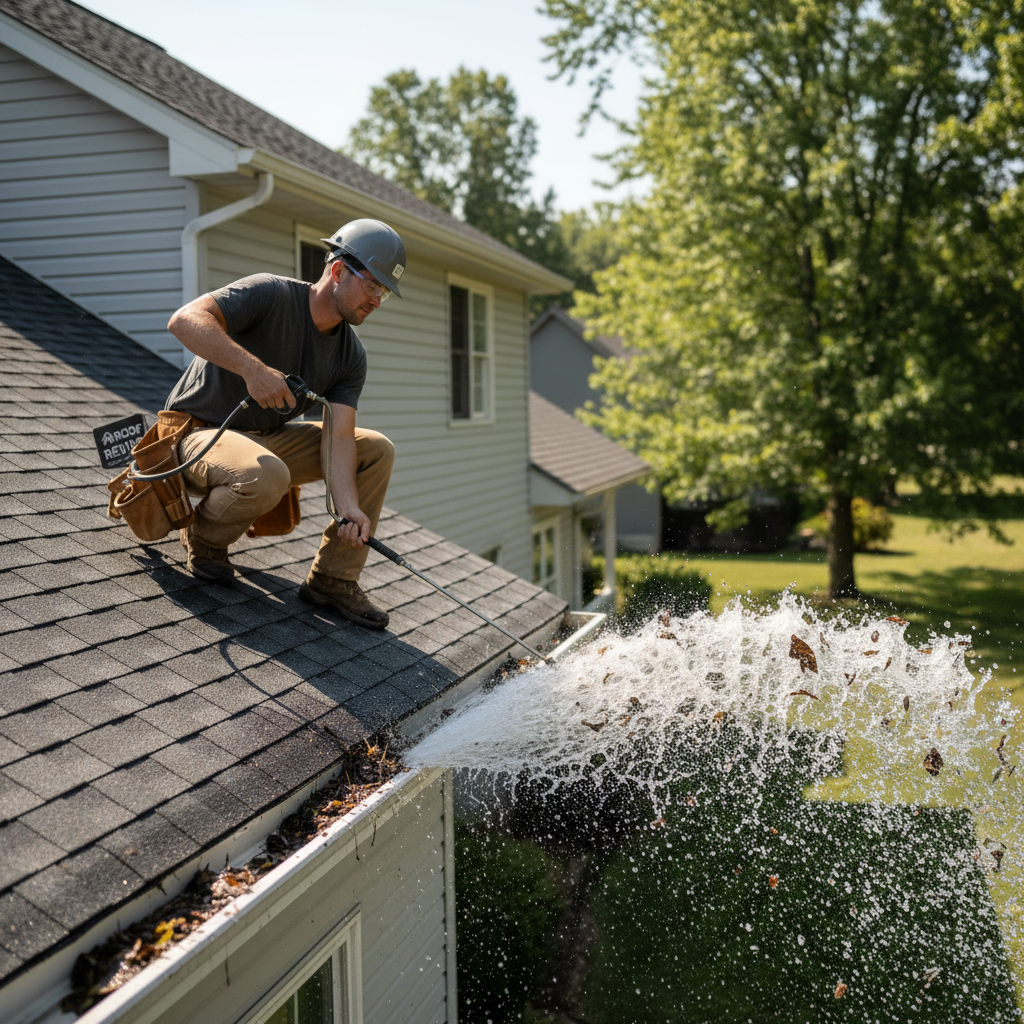
How do you treat black streaks and moss, and how long will it stay gone? You treat it by killing the organism with a roof-safe soft-wash approach. In Wilmington humidity, it usually returns in about 2–4 years (a common maintenance-cycle expectation after soft washing in humid regions per National Soft Wash Authority guidance).
What trips you up is that treatment and appearance move on different clocks. Trying to line them up is like waiting on a wet shingle to dry in August. Don’t kick the can down the road by judging it too soon. A roof can be “successfully treated” in one visit, yet still look streaky for weeks while the dead staining weathers off. This guide walks you through the options that make sense for asphalt shingles in coastal North Carolina and when DIY is reasonable versus when you’re better off hiring someone who can control application and runoff.
| What you’re measuring | Typical timing in Wilmington humidity | What it means |
|---|---|---|
| Kill time (soft-wash dwell) | ~15–30 minutes | The organism can be killed in one visit, but staining may remain. |
| “Looks clean” fade time | ~30–90 days | Dead staining often weathers off over rain/sun cycles, not same-day. |
| How long it stays clean-looking after a proper soft wash | ~2–4 years | Regrowth typically returns over years, faster in shade/damp areas. |
| Zinc-strip help (if used) | ~1 year (often) | Can help, but performance depends on runoff path and installation. |
Don’t Confuse Kill With Clean

When you treat black streaks on roof (algae) or moss, you’re usually doing two different things on two different clocks: killing the organism and waiting for the roof to look clean. In a typical soft-wash approach, the solution can do its kill work in minutes (often roughly 15–30 minutes of dwell time), but the dead staining doesn’t always release instantly.
In Wilmington-area humidity, the first look can be underwhelming, and the real improvement often shows up over the next 30–90 days as weather cycles do the work. If you expect same-day “like new,” you’ll think the treatment failed even when it worked.
Roof Algae Removal Options That Actually Work
A Wilmington homeowner tries to scrub one small streak and ends up with three mismatched patches that still photograph badly. Another uses the right method once and lets weather do the cosmetic work on its own schedule.
You don’t need a “miracle cleaner,” and that’s the hill to die on. Use Consumer Reports to vet products, not marketing claims. You need to pick the approach that matches your goal: stop growth or improve appearance over time. The mistake is treating every black streak like an emergency or expecting one treatment to stay perfect in Wilmington humidity.
Here are the realistic options, and what each is meant to do
-
DIY spot treatment (light algae or tiny moss patches): Good when you can safely reach the area and you’re okay with gradual lightening, not instant uniform color. It’s usually more about maintenance than restoration.
-
Professional roof soft wash (whole-roof reset): Best when streaking is widespread or moss is established. You’re paying for correct mix strength, controlled application, and runoff management, not “more pressure.”
-
A maintenance cycle (keep-it-clean plan): In humid coastal conditions, plan on re-treating about every 2–4 years if you want it to stay consistently clean.
-
Rejuvenation add-ons (life-extension mindset): Useful when the roof still has years left but looks tired. This doesn’t replace cleaning; it’s a separate decision tied to aging shingles and replacement timing.
Case in point: if you need appraisal or insurance photos, schedule the wash weeks ahead, not the weekend before, because the roof may look better and better over the next 30–90 days.
Soft washing a shingle roof is designed to kill algae and moss without the granule loss and seam damage that can come from high-pressure rinsing. Read more in our article: Pressure Washing Roof
What Changes the Timeline Here

In coastal North Carolina, the clock mostly depends on exposure and what the roof surface can still shed. Think of it like salt air on a porch railing. It keeps coming back if it stays damp. Do it right the first time. North-facing or heavily shaded planes (trees or dormers) stay damp longer, so algae and moss die slower and reappear sooner. Older shingles with granule loss and “rougher” texture hold staining and spores, so you’ll see more gradual lightening than a crisp reset.
Moss thickness matters, too: a thin green film dries out and releases faster than chunky mats that keep feeding themselves. If you want to predict your timeline, ask where your roof stays wet after a rain and how thick the growth is there. If you’re expecting a same-week, one-and-done result on a shaded 20-year roof, you’re setting yourself up for disappointment.
Salt air and persistent humidity in coastal Wilmington keep roof surfaces damp longer, which shortens the time between cleanings on shaded slopes. Read more in our article: Salt Air Humidity Shingles
How Long Until It Looks Gone?

You book listing photos for next weekend, pay for a wash on Friday, and by Saturday morning the roof still looks streaky from the street. If you assume that means it failed, you will be tempted to push harsher methods that do real damage fast.
On a typical shingle roof, the treatment window and the “looks clean” window aren’t the same. The solution can do most of its killing during the application itself (often around 15–30 minutes of dwell time), but the roof may still look streaky when you’re done because the dead staining has to weather off.
Around Wilmington, the streaking often fades over 30–90 days, with rain and sun doing most of the visible cleanup after the kill. That’s why same-day whitening is a bad yardstick, and chasing it is a good way to damage shingles. The Family Handyman gets this right: a roof can be treated successfully and still look only a little better for weeks. For appraisal or insurance photos, plan the wash far enough in advance that you’re judging it weeks later, not the next day.
How Long Will Algae and Moss Stay Gone?
In humid coastal conditions, “cleaned” is usually measured in years, not seasons or decades. A typical maintenance expectation after a proper soft wash is about 2–4 years before visible regrowth is back.
In Wilmington, a proper soft wash typically buys you roughly 2–4 years of clean-looking roof before regrowth becomes noticeable again. You might get longer on sunny, well-drained roof planes, and you might see early return sooner on north-facing slopes or under tree cover.
What “staying gone” usually means is you’ve reset the growth and bought time before it becomes noticeable again. If you’re aiming for permanent, zero-return results, you’ll overspend and still feel let down because the environment keeps re-seeding the roof. It’s like trying to keep pollen off a screened porch. It is good enough for government work, not forever.
Prevention That’s Worth Paying For

You get longer stretches where the roof just looks normal, not constantly on the edge of turning green again. The best wins come from keeping the surface drier, not chasing stronger chemicals.
If you want longer gaps between cleanings, spend your effort where it changes how long the roof stays wet. Trim back shade over north-facing planes and keep valleys and gutters clear of pine needles. For instance, a single clogged valley behind a dormer can keep one slope green while the rest of the roof stays fine.
Metal strips can help, but don’t treat them like a permanent fix: many zinc-strip setups only perform for about a year in real conditions (often described as effective “up to one year” in a University of Washington horticulture library summary), and coverage depends on runoff path and installation. If you’re planning a reroof, algae-resistant shingles (copper-releasing granules) are the only upgrade here that consistently makes sense. Skip the gimmicks in the Home Depot project aisle and spend on the system.
If regrowth is coming back quickly, the most reliable prevention is reducing shade and moisture retention so the roof dries faster after rain. Read more in our article: Prevent Algae Moss Return
Hiring vs DIY in Wilmington
DIY makes sense when the growth is light, you can treat from a ladder without getting on the roof, and you’re willing to accept a slower cosmetic result. That is weekend warrior territory. It is like painting in a sea breeze. But if your roof is older (granule loss, brittle shingles), steep, or already has moss mats, you’re not just “cleaning,” you’re managing slip risk, runoff, and the chance of scarring shingles by trying to speed things up. If you’re thinking you’ll save money by pushing harder or rinsing faster, you can end up paying twice. It can nickel-and-dime you.
Hiring is usually the smarter call when you have sensitive landscaping or tight setbacks where runoff lands right in beds, which is common in Wilmington neighborhoods with dense plantings. For instance, if you’ve got azaleas or hydrangeas under the eaves, you want controlled application and a plan for downspouts and dilution, not guesswork. You also hire when you need predictability: a pro can tell you what “done” looks like over the next 30–90 days and, in some cases, back the result with a multi-year algae warranty, which DIY treatments rarely match.
Roof not getting any younger? Contact us or call 703-673-6301 to find out where you stand.To stop the growth instead of just rinsing it, our roof algae treatment in Wilmington kills the colony at the spore level.